
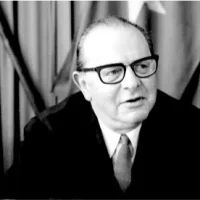

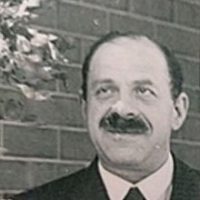
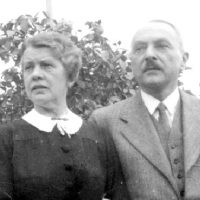
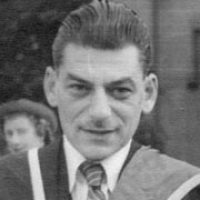
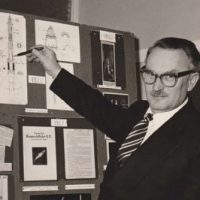
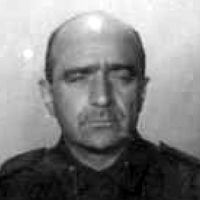
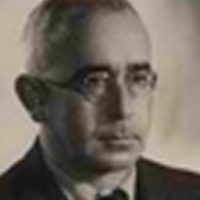
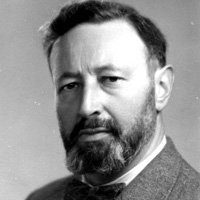
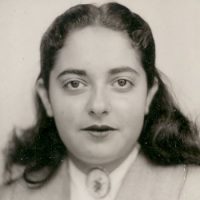
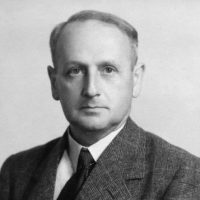
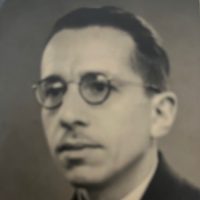
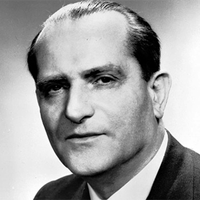
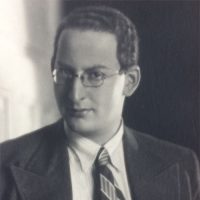
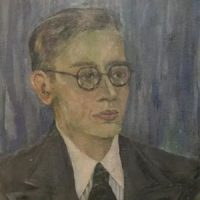
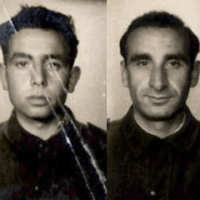

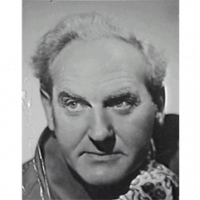
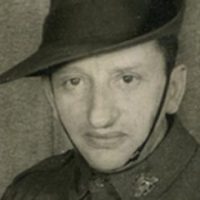
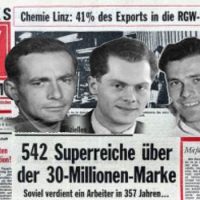
After the end of World War II, many of the “Dunera Boys” helped build democratic societies in their home countries and prevent the resurgence of fascism. This was the goal of many exiled communists, some of whom had been active in the resistance and imprisoned in concentration camps before emigrating. Many of those deported by the British to Australia in fwal1940 supported the common cause of the Allies after their internment, serving as soldiers in unarmed engineering units of the British or Australian armies. The Dunera Boys Heinz Altschul, Georg Auer, and Arthur West (née Rosenthal) worked as journalists in Austria after their return. They reunited on the editorial staff of the *Volksstimme*, the newspaper of the Communist Party of Austria (KPÖ). This second point of intersection in the biographies of the three Dunera Boys was interesting enough to merit a story.
Peter Dehn, October 2026.
Three from the “Volksstimme”
A defining experience for Heinz Altschul, Georg Auer, and Arthur West was, among other things, living through the Austrofascist dictatorship[1] Wikipedia on Austrofaschism and Ständestaat (German). Accessed April 10, 2026. as children beginning in 1930, witnessing as teenagers the invasion by the Nazi Wehrmacht[2] Wikipedia on the „Anschluss“, accessed on April 20, 2025. in 1938 (“Anschluss”), their escape and expulsion to Great Britain, their internment and deportation there, and the time they spent together in Australia.
“The majority of these individuals[3] Maria Fanta, „Geflüchtet, heimgekehrt, erschüttert“ (Fled, returned home, shaken) on science orf.at. Accessed on March 15, 2026. (all “Volksstimme” editors, dunera.de) risked their lives to oppose Nazi policies: through resistance activities at home and abroad, through political activities in exile, through service in the Allied forces, or through resistance activities within the Wehrmacht. In a race for their own lives, many communist editors had fled for racist and/or political reasons and, in many cases, had already established a reputation as journalists abroad within the circles of exile organizations.”
In contrast, those who profited from the expulsion of the Jews and “turncoats” dictated the content of other newspapers. Only 5.5 percent[4] Ibid. of the country’s newspaper editors were returnees from exile. Thus, the three found work on the editorial staff of the “Volksstimme” among like-minded people with similar life experiences, in an environment that aligned with their political convictions. This article tells the story of three Jewish journalists who were born in Vienna and were among the youngest of the Dunera Boys.
The Communist Party of Austria’s (KPÖ) party newspaper, “Die Rote Fahne”, was first published in 1919. Banned by the Austrofascists in 1933, it could only be published illegally.

The first legal issue was published on August 5, 1945, as the “Österreichische Volksstimme”; beginning in 1957, it was published as the daily newspaper “Volksstimme[5] Wikipedia on „Volksstimme“ (German). Accessed on March 15, 2026..” From 1991 to 1994, it was published as a weekly. In 2004, a monthly magazine called “Volksstimmen” was founded; since 2009, it has once again been called “Volksstimme” as a political monthly magazine. Since 2018, a volunteer, grassroots-democratic editorial team has been producing ten issues per year. Since 1946, the KPÖ has organized the Volksstimmefest[6] Wikipedia über das Volksstimmefest. Abgerufen am 15.3.2026. in Vienna’s Prater.
Heinz Altschul: “In a sense, drawn into politics”
Heinz Altschul, the oldest member of the “Volksstimme” trio known as the Dunera Boys, was born on December 11, 1920, to Arthur Altschul, an engineer, and Hilde (née Schmidt). His father ran an electrical supply store on Liechtensteinstraße. His parents raised him in a Jewish and social democratic household. “So, in a sense, I had a taste of politics,” recalled Heinz Altschul[7] „Ein österreichischer Publizist im Widerstand“ (An Austrian Journalist in Resistance) in „Erinnerungen“ Vol. 5 Published by Renate S. Meissner for the National Fund of the Republic of Austria for Victims of National Socialism, Vienna 2018, ISBN 978-3-9504794-8-5, p. 274. The text reproduced there is an adaptation of the interview from the ‘Projekt Oral Video History’ series by Klaus Hübner and Lukas Ressl, University of Vienna, 1992. Accessed on June 16, 2026..
He had his first political experiences as early as age 12 or 13: From 1934 to 1938, Austria was ruled by Kurt Schuschnigg as an Austro-Fascist dictatorship (“Ständestaat”). Partly due to the economic decline, there was strong resistance from Social Democrats, Communists, and other political forces against this government and the authoritarian form of government inspired by National Socialism and Italian Fascism. Heinz became involved with the youth organizations of the two left-wing parties, distributed leaflets with them, and took part in demonstrations. In 1936, he was arrested during a meeting of Communist youths and detained for several days[8] Ibid, p. 275.. This caused him problems at the “Imperial and Royal State Trade School for Chemical and Technical Studies,” which he was attending at the time.
For Heinz Altschul, the right-wing dictatorship, the anti-Semitism of the “Ständestaat,” and the incipient infiltration by offshoots of the German NSDAP were the triggers for the consideration[9] Ibid, p.275/276.,
“that you actually have to fight on the right and, above all, combat the excesses of fascism on the right. (…) I was only twelve or thirteen years old at the time, though. But I experienced it firsthand.”
“It was always hanging by a thread”
Then came the “Anschluss” on March 12, 1938, and the Nazis’ terror against Jews and political opponents. “Being both a Jew and a Communist—that was too much,” said his daughter Susanne, describing the situation[10] Saskia Etschmaier, Carina Kainz, ‘It was always hanging by a thread’. ORF interview with Susanne Altschul, November 23, 2018. The file contains a transcript and videos of the conversation. Accessed on March 22 , 2026. Heinz found himself in.

Immediately after invading Austria, the Nazis began spreading anti-Semitic propaganda. On March 15, 1938, uniformed Nazis and passersby watched with obvious satisfaction as Jews were forced to clean the sidewalk. Source: Wikipedia.
“I was arrested[11] "Erinnerungen" op.cit. p. 274. on November 10, 1938 (“Reichskristallnacht”) and taken to Police and SS Precinct 9 on Pramergasse, where I was beaten and battered. On November 11, I was released thanks to a stroke of luck (one of the SS men was a former schoolmate and helped me). After that, I no longer slept at home but stayed with friends. I then managed to emigrate to England in March 1939 using a fake passport.”
Armed with a school friend’s Czech passport—complete with a forged photo—Heinz arrived in Prague in March 1939. But just a few days later, the Wehrmacht marched into Prague as well. A chance encounter with another friend provided him with a travel document, and after passing through Vienna and saying goodbye to his parents, he arrived in England. There, he told his story and was sentenced to four weeks in prison for the forged passport. However, he had to spend two and a half months in jail while the matter was being resolved. He avoided deportation thanks to the support of refugee organizations.
“When my father fled Austria, he wasn’t even 18 yet! I can’t imagine my son having to leave at 18! Besides, his parents didn’t know if they’d ever see him again. He didn’t know either. That must have been a tremendous burden.” (Susanne Altschul[12] Etschmaier, Kainz, op.cit., 2018)
He was given housing[13] Home Office, index cards: Heinz Altschul. Via Ancestry. Accessed on April 17, 2025 in Willesden in northwest London and became an apprentice at the firm H. Weiss & Co in London. Then came the hearings before the tribunals. As an “enemy alien” who had entered the country with a forged document, he was immediately interned[14] „Erinnerungen“ op.cit., p 278.. “It didn’t matter whether you were an anti-fascist or anything else; it was purely a bureaucratic matter.”
On November 8, 1939, the following was noted on his Home Office index cards: “Internment until further notice.” The notation “Interned by S of S”[15] The abbreviation ‘S of S’ stands for ‘Secretary of State’, i.e. an unspecified British ministry. refers to a corresponding directive from a ministry. Heinz was subsequently detained for two months at Warner’s Holiday Camp in Seaton (Devon). Altschul recalled that 90 percent of the inmates there were Nazis, and there were “really serious fights[16] „Erinnerungen“ op.cit., p 278..” Once free again, he lived and worked in London and made contact with the nonpartisan exile organization “Young Austria.”
Interment and Deportation

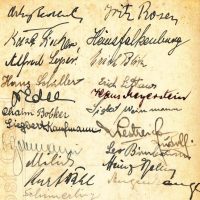
Conscripted Soldiers: Standing, from left to right: ?, Klaus Wilczynski, Heinrich Eggebrecht (“Piepel”), Paul Friedländer (“Bonzo”), Georg Auer, Heinz Altschul. Kneeling: ?, ?, Helmut Rosenthal, Albert Kleeberg, ?, ?. Everyone signed on the back. Who can help identify<mailto:peter@dunera.de> Erwin Dengler, Werner Michels, Kurt Schmahl, Alfred Reichwald (“Fredi”), and Walter Hofstadter ? Photo: Harry Jay, from the Friedländer Archive.

As the Wehrmacht’s military successes in Western Europe mounted, the British grew fearful of an invasion and a “fifth column,” as well as of Nazi spies who might be preparing for one. Churchill ordered the internment of up to 27,000 of the approximately 70,000 German-speaking refugees. Here, too, no distinction was made between friend and foe. Thousands of Jews and opponents of the Nazis, who believed themselves safe from persecution in Great Britain, were put behind bars. Heinz Altschul was arrested on May 24, 1940, and taken to the Oratory Central School[17] Home Office, index cards H. Altschul op.cit., and subsequently detained at the internment camp[18] Wikipedia on British internment camps during the Second World War. Accessed on February 30, 2024. Kempton Park[19] Files for Heinz Altschul, National Archives of Australia (NAA), NAA_ItemNumber9905538. Accessed on April 17, 2025. near London.
Similar to Sigurd Lohde, Heinz Altschul assumed he was being transferred to the Isle of Man and described his shipment to Australia as a mistake. His name on embarkation list No. 12[20] Complete Nominal Roll of Internees ex „DUNERA“, NAA_ItemNumber657104. Accessed on August 10, 2023. was one of 269, but these individuals were not destined for the Isle of Man but rather for the Dunera. The journey began on July 10 in the port of Liverpool, with an initially unknown destination and the guards’ first raid. “It was then a very, very, very terrible journey. (…) The ship was literally like a concentration camp[21] „Erinnerungen“ op.cit., p. 279. …”.
In Australia, Heinz Altschul and about 1,000 “Dunera Boys” were first imprisoned in Hay (New South Wales), Camp 8, and later in a camp near Tatura (Victoria). The anti-fascists were forbidden from engaging in any political activity there. “We formed a youth group with Austrian and German youths. Together, we asked ourselves questions that were on our minds and discussed problems. And then we also had discussions in the camp about the reconstruction of Austria …,” Heinz Altschul reported[22] Ibid., p. 279. later. Incidentally, it took years for the Australian guards to notice the activities of the prisoners of war and Australian Nazis.
Although the British Home Office had ordered Heinz Altschul’s release[23] Home Office, index cards H. Altschul op.cit. from internment on February 15, 1941, it took months for the order to reach Australia and be carried out. Australia did not want to accept any internees and demanded their release on British territory[24] This condition hindered the internees because they first had to be transported to Great Britain in order to gain their freedom. During the war, this could only be done at the risk of their lives. The Australian Menzies government wanted to keep internees out of the country.. Despite the limited and dangerous travel options caused by the war, 747 Dunera internees[25] Carol Bunyan „Ships on which Dunera internees returned tp Britain , 1941 – 1945“ in „Dunera Lives. A Visual History“, p. 518. were returned to England by the end of 1941. Most had volunteered for engineering units in the British Army. Many internees, however, would have preferred to fight the Nazis with arms.
After the first Japanese air raids[26] Wikipedia on the air raids on Australia, accessed on 25 August 2025. on the Australian continent, the government changed course and required all residents—whether citizens, migrants, or internees—to participate in the defense[27] Quoted from June Factor, *Soldiers and Aliens*, Melbourne 2022, ISBN 9780522878585, p. 34.. In early 1942, the internees were offered the opportunity to voluntarily[28] Cf. Minute of the General-Adjudant to Australian Parliarment from 29.3.1946. NAA_ItemNumber4938132, page 28, point d. enlist in the Australian Army.
On July 7, 1942, British authorities announced that there were no objections[29] Newsam (Home Office) am 7.7.1942 an den britischen Beauftragten für die Internierten Julian Layton. In NAA_ItemNumber216018. to Heinz Altschul’s service in the army. Thus, in August 1942, Heinz became a soldier without a rifle in the 8th Employment Company. The unit, consisting of up to 500 men and made up exclusively of internees, performed heavy loading work in the Port of Melbourne and at the railyards in Albury and Tocumwal.

Heinz Altschul as a soldier in the 8th Australian Employment Company. Photo: S. Altschul Archive.
Heinz Altschul’s military file contains a note dated December 18, 1944: The local police alleged that he had “maliciously damaged” a railroad company’s wooden chest[30] Militäry files H. Altschul, Service and Casualty Form, in NAA_ItemNumber6238805. in Tocumwal and ordered him to pay 5 pounds in damages.
“… ways and means …”

Heinz as a soldier with Elizabeth, ca. 1944, in Melbourne. Photo: S. Altschul Archive.
Despite the ban on political activity in the army, Heinz Altschul and many of his comrades from Austria resumed their political activities. “We found ways and means to get around that[31] „Erinnerungen“ op.cit., p. 280..” Not only did they continue to discuss important issues, but they also established contacts with Australians to inform them about the background of the “Anschluss” and their vision for a new Austria. This led to the formation of a group called “Young Austria[32] Ibid., p.282.” in Melbourne, modeled after the British example.
“Even from a distance”—between the army base and private homes in Melbourne—the publication of the small newspaper “Young Australia in Australia” was organized. “Elisabeth, a native Australian (who later became Heinz Altschul’s wife—Ed.), who hadn’t lost her accent even after 45 years in Vienna, turned the crank of the printing press[33] Georg Auer „Down Under - ganz unten drunter …“ (German), in Medien&Zeit 1/88, p 25. Accessed on July 10, 2026. night after night.”
While still serving in the army, Heinz married[34] Military files H. Altschul, op.cit., entry from August 29, 1945. Elizabeth Kemp Kewish (1918–1989) in Melbourne on August 22, 1945. Heinz was discharged from the army on January 11, 1946.
No thought of staying
Staying in Australia was “somehow completely out of the question for my father,” recalled his daughter Susanne[35] Etschmaier, Kainz op.cit.. “He didn’t talk about it much, and I don’t even know how much he really embraced life in Australia.”
“My mother agreed to return with him to bombed-out Vienna. Because for my father, staying in Australia was never an option. He definitely wanted to go back to Austria—where his parents had perished in a concentration camp.”
The Home Office notes[36] Home Office, index cards H. Altschul op.cit. regarding his return are contradictory: On the one hand, there was mention of a “return to the UK for further decision.” A note without a date read: “Re-detained B, released C.” The letters here apparently refer to the categorization, with “B” standing for a suspected Nazi and “C” for a refugee. On another card, however, it was noted: “Returned to the UK on the SS Stirling Castle on April 14, 1946, as a released internee.” Also on board were, among others, the former internees[37] Passenger list via Ancestry. Accessed March 17, 2024. Gerhard Besch and Kurt Schmahl—who were among the youngest internees—as well as Eugen Eckerle and Alfred Rosenthal, who was also from Vienna.
Heinz and Elisabeth, however, had to travel separately[38] „Erinnerungen“ op.cit., p. 285. “for bureaucratic reasons.”
Excerpt from the passenger list of the Stirling Castle (via Ancestry).

Back in destroyed Vienna
In August 1946, Heinz and Elisabeth Altschul arrived in Vienna. They were deeply shaken by the destruction caused by the war. He became politically active in the nonpartisan “Free Austrian Youth” and wrote for its publications. Elisabeth worked as a translator for English and French.
In 1950, Heinz attended an international peace congress in Vienna. Despite limited travel options, 2,000 participants from all over the world had gathered. In 1952, his party sent him to the Austrian Peace Council, where he served as secretary from 1954 to 1968 and was responsible, among other things, for its publications. This organization saw itself as the national representative of the World Peace Council[39] Wikipedia on World Peace Council, Accessed July 20, 2026., which during the Cold War was broadly classified by the West as being under communist control.

Promotional poster for the Chaplin Fund’s writing contest. Source: Charlie Chaplin Archive.
Secretary of the Austrian Peace Council
“I have written repeatedly in the newspaper, essentially always addressing these issues: against nuclear weapons[40] „Erinnerungen“ op.cit., p. 296., against the nuclear threat, and in favor of preserving world peace.” In 1958, the Easter March movement[41] Wikipedia on the Campaign for Nuclear Disarmament amd Easter Marchs, organised for the first time 1958 in UK. originated in England and also took root in Austria. “There were also a number of people involved who are now government officials,” said Heinz Altschul, hinting at the breadth of this anti-war movement[42] „Erinnerungen“ op.cit., p. 297..
In 1954, Charlie Chaplin was honored by the World Peace Council, an award that came with a cash prize. “I believe it is right that the money I received as a peace prize be used to help the disadvantaged[43] M. Massiani „Charlie Chaplin gives Abbe Pierre Part of Communist Sponsored Prize“ in „The Catholic Standard and Times“, Volume 60, Number 4, October 22, 1954. Accessed May 15, 2026.,” the actor explained as he handed over a portion of the prize money to the Catholic priest Abbé Pierre, who cared for the homeless in Paris. The Charlie Chaplin Peace Fund made 110,000 schillings from the prize money available to the City of Vienna to support humanitarian and peace-building activities. On behalf of the Austrian Peace Council, which had been appointed as trustee, Heinz Altschul organized six competitions. The initiative was well received: for the literature competition alone, 220 entries[44] “Large number of entries in the Chaplin Peace Fund competition”, in Österreichische Zeitung, February 18, 1955, page 6, in the ANNO Archive. Accessed on July 20, 2026. were submitted.
Among other activities, the Peace Council also advocated, as part of the Chaplin Fund, for a monument to Bertha von Suttner[45] Wikipedia on Bertha von Suttner. Accessed on July 20, 2026. (1843–1914) in Vienna. Local authorities refused to honor the first recipient of the Nobel Peace Prize and fighter against anti-Semitism, citing flimsy-seeming “architectural heritage reasons[46] “No space yet for a Bertha von Suttner monument”, in Österreichische Zeitung, January 20, 1954, page 3, in the Anno Archive. Accessed July 20, 2026..” It was not until 1958 that a statue created by Siegfried Charoux could be erected at a different location.
Settling Accounts with the KPÖ
The work within the Peace Council was not without—especially internal—conflicts. The Soviet delegates demanded that “everything associated with the Soviet Union be endorsed, and everything coming from the West be condemned,” recalled Heinz Altschul[47] „Erinnerungen“ op.cit., p. 297.. Although he had decided to remain in the KPÖ in the wake of the events in Hungary in 1956, he no longer held back his criticism[48] Ibid. after the end of the Prague Spring in 1968. He was expelled from the KPÖ.

A reunion of the Dunera Boys, Heinz Altschul (third from the left, without a jacket) and Heinz Dehn (to his left), at events organized by the World Peace Council. Here in Eger (Hungary), ca. 1963. Photo: Dehn family archive.
Heinz Altschul served as an editor at the Austrian Press Agency (APA) from 1969 to 1988, becoming managing editor in 1982 and deputy editor-in-chief in 1985. One of his initiatives for the APA was the establishment of a network of correspondents in neighboring Eastern European countries. He retired in 1988 but remained active with the APA—among other things, he reported on the fall of the Berlin Wall.
“With dignity” unacceptable
In 1998, he made headlines himself: “With dignity[49] Sepp Astner in „Kleine Zeitung“ from March 6, 1998 (Family Archive Altschul).,” he returned the Ehrenzeichen für Verdienste um die Republik Österreich[50] Wikipedia on the Ehrenzeichen, accessed on July 15, 2026. (Medal of Honour for Services to the Republic of Austria) for services to the Republic of Austria. At that time, Robert Haider[51] Wikipedia on Robert Haider (German). Accessed July 15, 2026., the father of former right winged FPÖ leader Jörg Haider, had received this country’s highest honor. As a member of the banned paramilitary terrorist organization of the Austrian Nazis, the “Austrian Legion[52] Wikipedia on Österreichische Legion. Accessed in July 15, 2026.,” he actively worked from Bavaria beginning in 1933 to “undermining of the Republic of Austria, which was still independent at the time.” “It is therefore impossible for me to retain possession of even a similar award,” Heinz Altschul explained, justifying the return of the order[53] Newspaper „Der Standard“, Wien, Orbituary for Heinz Altschul (German). Accessed on May 10, 2026.. Incidentally, he would have shared[54] Wikipedia: List of recipients of the Ehrenzeichen. Accessed on July 15, 2026. this view with Hans Globke; the co-author of the Nuremberg Race Laws had risen to become State Secretary in the Federal Chancellery and Adenauer’s “gray eminence[55] Wikipedia about Hans Globke, the „Mann behind Adenauer“ (German), retrieved Aug 1, 2024.”.
Obituaries
Heinz Altschul passed away on April 19, 2011, in Vienna; he is survived by his daughters Susanne (b. 1951) and Margarete (1947–2025). His former colleagues at the APA and others paid tribute to him in obituaries[56] "Der Standard“, Vienna, Orbituary op.cit. :
“Altschul’s credo after World War II was to help build a democratic and free Austria—and its journalistic counterpart—transcending all ideological boundaries. He rejected totalitarian systems, regardless of their ideology.”
“For many years, Heinz Altschul was one of the country’s most distinguished news agency journalists. He was both a critical thinker and a fatherly friend. Altschul will be missed by the APA family.” (APA Editor-in-Chief Michael Lang).
“Heinz Altschul always had a deep understanding of the APA as a whole and of its role in Austrian public life. He rendered extraordinary service to the APA and will remain inextricably linked to the agency’s history.” (APA Managing Director Peter Kropsch).

Heinz Altschul (right) during a meeting at the APA. Photo: S. Altschul archive.
The journalist Georg Tillner[57] Georg Tillner „Orbitury for Heinz Altschul“ (German). Accessed on May 10, 2026. wrote: “I know that he was one of those who, drawing on his own experience and his deep empathy for the world’s cruelties and horrors, did not succumb to selfishness or bitterness. Instead, he drew from them a combative, uncompromising humanism. (…) We need women and men like him who drive all the small and large cogs that make up society, and who do not look away, who do not turn countless small compromises into a great denial.”
“My father survived under difficult circumstances, and it was always a close call. He could have been caught at any moment while fleeing or trying to escape. I owe my life to his escape, if you will.” (…) “To me, this shows how closely luck and misfortune lie side by side. That’s always the case, but even more so in such extreme times. It also shows that people do not flee of their own free will—something we should remind ourselves of time and again, even today.” (Susanne Altschul[58] Etschmaier, Kainz op.cit.)
Georg Auer: “I have one more question: first …, second …, third …”
Georg Auer was born on August 4, 1922[59] Wikipedia on Georg Auer. Accessed May 12, 2026., in Vienna into the Jewish family of Robert (1873–1942) and Ernestine, known as Erna (née Rubinova, 1885–1942). They had married in 1919. Robert[60] Martin Auer „Steine der Erinnerung: Robert und Erna Auer“, online. In addition to a detailed biography of the parents, it also contains letters to Georg and Emil in Australia and to Hugo and Hilde in the USA. Retrieved on 25 July 2026. was a bank clerk and headed the office of the General Directorate of the Wiener Bankverein.
“Left-laning, like his parents”
Robert Auer was sympathetic to social democracy. However, his own experiences of political events may also have shaped his son Georg at an early age: During the Social Democratic uprising of February 1934[61] Wikipedia on the February Uprising. Accessed July 19, 2026. against the Austrofascist dictatorship, government troops fired on the Karl-Marx-Hof workers’ housing complex in Vienna with cannons that had been set up near his parents’ apartment.

Georg Auer, circa 1936, in his Boy Scout uniform. Photo: Auer Archive.
“I was already left-leaning[62] Georg Auer in Erich Makomaski (ed.), “Freie Österreichische Jugend”, pp. 32–33; KPÖ Styria online. Accessed June 20, 2026. thanks to my parents, who were Social Democrats. In 1934, at the age of 12, I joined a Boy Scout troop that was already being led—illegally at the time—by socialist students.”
Georg’s son, Martin Auer, reconstructed the atmosphere toward the end of the Austrofascist dictatorship from 1930 to 1938 and the invasion by Hitler’s Wehrmacht[63] Martin Auer, “Erinnerungen an den 13. März 1938” (Memories of 13 March 1938), published on March 13, 2026 on the blog section of the newspaper "Der Standard". Accessed on June 15, 2026. from the perspective of his father, who was 15 years old at the time:
“Really, that time—those last few days before the Anschluss. Of course, we weren’t learning anything at school anymore. We just went out to demonstrate. Some of them were already pretty openly members of the Hitler Youth, wearing leather pants with those wide belts and white knee-high socks. And the others were just dressed a little differently. And we were out on the streets, we drove all around the Ringstrasse, beating and punching each other and yelling at one another. And the atmosphere in the classroom—we knew, after all, it had long been common knowledge who was a Jew, who was a Red, who was a Christian Socialist, and who was a Nazi. That was common knowledge. We were incredibly politicized. And even if we’d gotten along quite well before, afterward the atmosphere was terrible—it turned into a brawl. That is, in the last few days before the Germans marched in.”
Kindertransport to England
Immediately after Austria’s annexation into the “Greater German” Reich, the Nazis unleashed a wave of anti-Semitic violence. The fact that Jews in Vienna were forced to sweep the sidewalks[64] Wikipedia on the “Reibpartie”. Accessed on March 10, 2026. was the least of it. Of the 542,000 Jews still living in Hitler’s Reich, 192,000 were Austrians; in Vienna, they made up nine percent of the population. Austrian Nazis attempted to bring Jewish businesses into their posession through uncontrolled “Aryanization”[65] An example of ‘rampant Aryanisation’ is the story of Sigmund Berger and his chemist’s shop. and present German profiteers with a fait accompli[66] See Wikipedia on the November pogroms of 1938. Accessed on March 10, 2026.. Georg and his cousin Emil—who was also born in 1922 and was a few weeks younger—were lucky in their misfortune. In December 1938, they were able to escape to England on a Kindertransport[67] Wikipedia on the Kindertransporte. Accessed on July 10, 2026. organized by the Quakers, thus putting them out of the Nazis’ reach. Martin Auer[68] Martin Auer, ‘Erinnerungen …’ op.cit.:
“Those who stay here and those who leave know deep in their hearts that only a miracle can reunite them: the Kindertransport—a program to send non-observant Jewish children, classified as Jewish under the Nuremberg Race Laws, to England. Our young man, now officially a chaperone because he’s just over 16 years old, is among them. He’d actually need a chaperone himself rather than being one right now. So now he leads his little group of wretches to the train—and drags along his own suitcase full of misery.”
The British government spared no expense in rescuing the children. On the contrary: A guarantee of 50 pounds sterling was required for each child so that the government would not have to finance their subsequent remigration, which it deemed desirable.
Georg’s and Emil’s Families
Although Georg’s parents, Robert and Erna, had received a sponsorship (“affidavit”) and ship tickets for the United States in 1941, the Nazis and the war prevented them from fleeing. Nevertheless, they remained in contact with their relatives through the Red Cross. On August 5, 1942, Robert and Erna[69] Martin Auer „Steine der Erinnerung: …“ op.cit. wrote to Hugo and Hilda in the U.S. and to Georg and Emil in Australia:
“We expect to leave Vienna soon. (…) It is uncertain whether we will ever see you again, but our thoughts are always with all of you, with love and loyalty.”
This letter foreshadowed what would happen to them shortly thereafter. Robert and Erna Auer were deported to Theresienstadt on August 13, 1942, and from there were taken to the Treblinka extermination camp on September 26, 1942, where they were murdered.
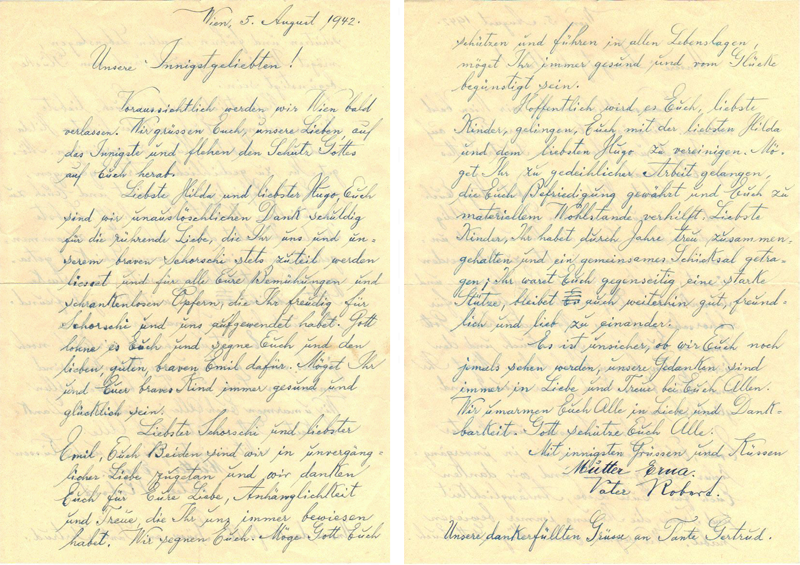
Robert and Erna’s farewell letter (click to enlarge). Source: M. Auer Archive.
Emil’s parents, Hugo and Hilda, were among the lucky ones who were able to flee in time and go to the United States.
“Like the first white people …”
In England, Georg and Emil[70] Georg Auer, Emil Auer, Home Office index cards, via Ancestry. lived on a farm in Trimley (Suffolk). The Home Office listed Georg as an apprentice in furniture joinery at a company in nearby Felixtown. The British tribunals ruled that Georg and Emil were “exempt from internment.” Half a year later, however, this ruling was rendered meaningless due to British fears of a Nazi invasion. Thousands of refugees and a handful of Nazis were arrested in their homes or at their workplaces as potential members of the Nazi “fifth column” and sent to internment camps. Georg was sent to Huyton near Liverpool, while Emil fared much worse in the worst camp Warth Mills[71] Georg Auer, Emil Auer; personnel records held at the National Archives of Australia (NAA). near Bury in Lancaster.
More than 2,000 victims of Nazi persecution, including Georg and Emil, were taken to Liverpool on July 10, 1940, aboard the military transport ship HMT Dunera and shipped to Australia. Georg Auer[72] Auer in Makomaski op.cit. later commented:
“So I arrived in Australia, as one should—just like the first white settlers, on a ship carrying convicts.”
A Delayed Release
After the Dunera docked in Sydney, 2,000 internees were transported to Hay (New South Wales). There were two camps built specifically for this purpose, separated only by a road. Georg and Emil were housed behind barbed wire in Camp 8[73] Georg Auer, Emil Auer; personnel records held at the National Archives of Australia (NAA). near Hay. The Hay internees were transferred in May 1941 to camps in the Tatura area (Victoria), where the climate was more bearable.
The British orders regarding Emil’s and Georg’s release are dated January 25, 1941. Due to Australian objections, their release was granted only on British soil. Anyone who wished to be released had to volunteer for the British engineering corps. The journey depended on available transportation. In addition, there was a great danger from submarine attacks, which had sunk two ships carrying internees—the Abosso and the Waroonga.
Georg, Emil, and hundreds of other internees decided otherwise. The two had to spend another 14 months behind bars. After the Japanese air raids in early 1942, every available hand was needed in the economy. Only then did Australia change its xenophobic policy and offer naturalization or a right of residence to internees who volunteered[74] Cf. Note from the Adjudant-General to the Australian Parliament, March 29, 1946. National Archives of Australia (NAA), NAA_ItemNumber4938132, sheet 28, paragraph d. for the army. In April 1942, Georg and Emil were among the first to enlist in the 8th Employment Company. “I thought it would help in the war against Hitler,” Georg Auer[75] Manfred Bobrowsky, video “Georg Auer spricht über Exiljournalismus” (talks about journalism in exile) as part of the University of Vienna’s "Oral Video History Project” series. Accessed June 16, 2026. recalled of that decision.

“Young Austria” fostered the culture of their homeland. A dance group before their performance at Melbourne City Hall: Emil Auer (top row, left), Georg Auer (middle row, right), and Heinz Altschul (bottom row, second from the right). Source: Verein Kunstplatzl Wien, Young Austria Archive, Sonja Frank.
„Knee-Top-Publishing“
“It was only through my internment and deportation to Australia that I came into contact with a group of members from the KPD and KPÖ[76] KPD: Communist Party of Germany, KPÖ: Communist Party of Austria. who were already active in the internment camp. Austrian members of the group, such as Heinz Altschul, had been in contact with members of Young Austria in England. We parted ways with our German comrades regarding our external work and, with the help of young Austrians living in Australia, founded ‘Young Austria in Australia[77] Auer in Makomaski op.cit..’”
As with their counterparts in England, these groups debated the future of their homeland after the Nazis and fostered Austrian culture. They maintained contact with Australian labor unions and religious groups. This took place even though political activity within the army was technically prohibited. However, they were able to get around this by meeting in private homes, among other places.
“For me, journalism that advocates for specific goals began in Australia: crouching on a straw mattress in a military tent, in 50 degrees in the shade, a worn-out typewriter on my knees, typing out a cool, reasoned argument. (…) That was Knee-Top Publishing[78] Georg Auer, ‘Down under – ganz unten drunter …’ in Medien & Zeit (German) No. 1/88, p. 24. Accessed on July 20, 2026.,” said Georg Auer, alluding to what would later become desktop publishing.
Georg wrote articles for the monthly magazine of the exile organization “Friends of Democratic Austria[79] Maria Bianca Fanta, Short biography of G. Auer in ‘Die Arbeiter der Feder. Journalisten der kommunistischen Parteizeitung “Österreichische Volksstimme” und die Zäsuren ihrer Lebensgeschichten (1945–1956)’; doctoral thesis, p. 131. Accessed on March 10, 2026.”.
“Every article is always reviewed by a communist, a socialist, a conservative Catholic, a devout Catholic, and a devout Jew. (…) That was a good learning experience for me at the ‘Volksstimme’.”
Among other things, one of Thomas Mann’s radio appeals was translated and published. For radio stations, German broadcasts were monitored for a fee, and the texts were translated into English. “I had no journalistic ambitions back then,” Georg Auer emphasized. His goal was to “spread political views[80] Manfred Bobrowsky, video, op.cit. among the people.” Georg Auer joined the Communist Party of Austria (KPÖ) in Australia in 1943.
After his military service ended, Georg and his cousin Emil went their separate ways. Emil had already been discharged in June 1945, married an Australian woman that same year, and became a naturalized citizen in 1947. His marriage to Hazel Doreen ended in divorce in 1952. In 1955, Emil moved to New York, where his parents, Hugo and Hilda, lived.
Back in England
Georg decided to return to England. Immediately after completing his military service on January 10, 1946, he embarked on this journey on February 23 aboard the Athlone Castle. Among the passengers were Franz Stampfl from Vienna—who would later become a highly successful track and field coach—as well as the communists from Berlin: Heinrich Eggebrecht (“Piepel”), Albert Kleeberg, Paul Friedländer (“Bonzo”), Klaus Wilzcynski, and other former internees. All of them had served in the 8th Employment Company.
Editor for the KPÖ in Vienna
After his return, Georg worked briefly in Vienna at the Austria Press Agency (APA) and for a regional newspaper affiliated with the Communist Party of Austria (KPÖ). In January 1947, he became an editor in the local news desk of the KPÖ’s national newspaper, *Volksstimme*. He received a tip about the whereabouts of Ernst Rüdiger Starhemberg, a former Heimwehr leader who had secretly returned from Argentina. Georg Auer had sharply criticized the Austrofascist veteran and proven enemy of democracy. Like the Social Democrats and others, he had demanded that the man be immediately expelled from Austria. On March 15, 1956, Auer traveled to Schruns and photographed the Austrofascist while he was out for a walk. When the man noticed this, he attacked Georg, using his walking stick as a club, and died of a heart attack in the process.
“As I was photographing Starhemberg, he charged at me, cursing and shouting ‘Communist pig’ with his cane raised, but collapsed and died right then and there,” recalled Georg Auer[81] „Freie Österreichische Jugend“ op.cit..

The “Volksstimme” published the photo of the Auer family a few days before Georg began his prison sentence. Photo credit: Martin Auer Archive.
E.R. von Starhemberg
Ernst Rüdiger von Starhemberg[82] Wikipedia on Starhemberg. Accessed on July 8, 2026. (b. 1899) had taken part in Hitler’s march on the Feldherrnhalle in 1923. In 1930, he became the national leader of the paramilitary organization “Heimatschutz.” During the Austrofascist era, he served as Vice Chancellor and, beginning in 1934, also as Minister of Security.
Starhemberg in the uniform of the “Heimatschutz”. Source: Wikipedia.

An attempt to merge his paramilitary forces with the Nazis failed because Hitler did not want to cede leadership[83] Anna Maria Sigmund „Für oder gegen die Nazis“, Austria Forum online (German). Accessed on May 15, 2026. to him. Starhemberg left the government and Austria when the two countries began negotiations in 1936. From then on, he called himself an opponent of the Nazis. After the “Anschluss” in 1938, however, he claimed that he had always been in favor of an alliance with the Nazis.
In 1940, he took the opposite stance and supported de Gaulle and his Forces françaises libres[84] Wikipedia on Free France. Accessed on June 6, 2026.. There, as early as 1941, he withdrew in protest against the Allies’ alliance with the Soviet Union and fled to Argentina. After the war, following years of legal battles, he secured the restitution of his estates—which had been expropriated by the Nazis—and was granted citizenship in 1954. He returned to Austria in secret.
In a separate case, Georg Auer was convicted in 1958 of an alleged “defamation of character.” As a result, Georg Auer was sentenced in 1958 to four weeks in prison for “defamation of character.” He was sentenced to “one month of confinement, compounded by one week of hard bed” for an article written by a colleague at the “Volksstimme”, because he was, at the time, “responsible editor[85] Wikipedia describes the position of “responsible editor” (German) as a consequence of press censorship during the Weimar Republic. Wikipedia quotes the following from B. Traven’s 1929 novel "The White Rose": “Socialist and communist newspapers sometimes have so-called ‘resident editors’ who must serve out, in one form or another, all penalties imposed on the newspapers, so that the newspaper’s more valuable staff members are spared.” This is also consistent with postwar Austrian press law. Retrieved on October 7, 2026.” (Sitzredakteur) under press law. The ruling—which was widely criticized as biased and politically motivated in the context of the Cold War—was intended to harm the “Volksstimme” and the Communists. Even the Association of Newspaper Publishers had described this ruling as a threat to freedom of the press. Auer’s editorial team called it “an overt intervention in the political struggle.”
It is possible that the verdict also reflected a desire on the part of the government. The then Chancellor Julius Raab[86] Wikipedia on Julius Raab. Accessed on July 7, 2026. (1891–1964) and other ministers of the Österreichische Volkspartei[87] Wikipedia on the ÖVP . Accessed on July 16, 2026. (ÖVP, Austrian People’s Party) had taken their first political steps—as functionaries of Starhemberg’s paramilitary groups—by destroying Austrian democracy. The “Ostmärkische Sturmscharen,” led at the time by Raab, had also made the “autonomous elimination of Jewish dominance” their rallying cry—a stance they later, of course, denied any connection to. Raab had, among other things, appointed former Nazis as ministers. Was the aim now to silence critics?
Georg Auer served as an editor at the “Volksstimme” for 23 years. Together with Ernst Fettner, he headed the social policy editorial department for many years. He founded and oversaw the automotive section. In 1970, he left the KPÖ “due to internal party differences[88] Auer in Makomaski op.cit.” over the suppression of the “Prague Spring” and was consequently forced to leave the editorial staff of the party newspaper.
“Schurl,” the “noble pen”
He initially worked as a taxi driver and freelance journalist, then as a motor journalist for the “Wochenpresse” and trade journals. “Georg ‘Schurl’ Auer was a star writer for ‘Auto Information’—who still remembers his weekly ‘Spectator’?” wrote the magazine “Auto & Wirtschaft[89] „Auto & Wirtschaft“ online from March 15, 2022. Accessed on June 8, 2026..” Even in retirement, Georg Auer remained active in this field. He was likely “the world’s oldest active automotive journalist[90] Martin Auer, „Erinnerungen …“, op.cit.,” his son Martin surmised.
Georg had married Gertrude[91] Benedikt Narodoslawsky „Als das Rote Wien die Arbeiterfamilie Sokopp aus dem Elend holte“ (When ‘Red Vienna’ lifted the Sokopp working-class family out of poverty). In „Der Standard“ online from April 16, 2025. Accessed on July 15, 2026. (née Sokopp), who came from a Viennese working-class family. Her father Jakob[92] Report in „Die Arbeit“ from January 9, 1886, p. 3, und obituary from „Arbeiter-Zeitung“ from October 7, 1925, p. 4. Accessed on July 20, 2026. (1855–1925) was a co-founder of the first metalworkers’ union and served as its chairman until 1896. Gertrude’s sister Oswalda[93] A short biography of Oswalda Tonka in Friedensatlas Online (German). Accessed on July 14, 2026. (married name Tonka, 1923–1999) fought against the Nazis in the resistance and alongside Slovenian partisans.
“Marx and Engels are just as little to blame for the misinterpretations[94] Martin Auer, „Erinnerungen …“, op.cit. of their correct insights as Christ is for those of his. That does not make these teachings any less correct.”
“Since I’m not good at anything, I became a journalist.” And: “When I stop working, I’ll probably drop dead,” Georg Auer summed up[95] Michael Völker „Ich arbeite, bis ich umfall“ in Der Standard from May 2, 2001. Accessed on June 17, 2026. his life.
Georg Auer died on October 22, 2004, in Vienna. He is survived by his sons Martin[96] Martin Auer, „Erinnerungen …“, op.cit. (born 1951) an Michael and daughter Marianne.
From an obituary
“‘Schurli,’ as he was also known, wrote for renowned publications such as PS-Report, Automotive News, and the Swiss Automobil Revue. The widely respected expert[97] Neue Reifenzeitung online on October 26, 2004. Accessed on July 20, 2026. in the automotive industry gained fame for his “three questions”—delivered in a strikingly deep voice—during press conferences: ‘I have one more question: first …, second …, third …’
Arthur West: “…the Earth perhaps a little less hellish”
Arthur was born Arthur Rosenthal[98] Arthur Rosenthal: Home Office records via Ancestry, personnel files from the National Archives of Australia (NAA_ItemNumber8618173, NAA_ItemNumber9906992). Accessed June 3, 2026. on August 24, 1922, into a Jewish family in Vienna. His parents were Wilhelm, known as Willi, Rosenthal (1895–1981) and Elisabeth Rausnitz (1896–1983).
The Family
Immediately after their marriage in 1920, Arthur’s parents had moved to Palestine. Willi—now Uri Nadav[99] Records on Arthur Rosenthal in NAA_ItemNumber9906992; family tree Wilhelm Uri Rosenthal (Nadav) via ancestry.de; Uri Nadav in Enzyklopedia of the Founders and Builders of Israel. Accessed on July 7, 2026.—was active in the Zionist sports movement there, just as he had been in Vienna. During the war, he served as an officer in the Royal Army Service Corps. In Palestine, he became known as a leading member of the Maccabi movement.
Elisabeth contracted typhus while pregnant with Arthur and returned to Vienna to receive better medical care. She remained there by Arthur’s side until she knew he was free in 1938. She then went to stay with relatives in Zagreb, where she joined the Yugoslav partisans[100] Wikipedia on Arthur West (German). Accessed on June 20, 2026. during the war. One of her brothers was murdered there by Ustasha fascists. After the victory in Yugoslavia, Elisabeth joined the British Army, according to her grandson Paul West. Elisabeth later moved back to Vienna. She entered into a marriage of convenience with Johann Blühweiss but lived with her brother Rudolf Rausnitz[101] Telephone calls with Hans West on March 19, and July 27, 2026..
As it was for all Jews, the Nazi Wehrmacht’s invasion of Austria (“Anschluss”) in March 1938 marked a turning point for Arthur as well. The 15-year-old was expelled from school. The next major milestone in his life was his escape to Great Britain, arranged by a relief organization. “I was allowed to enter England because someone had assumed ‘selection liability’—that is, provided this guarantee.” Arthur’s statement[102] Manfred Bobrowsky, video „Arthur West. Literat, Journalist“; „Projekt Oral Video History“ Uni Wien, accessed on June 6, 15, 2026. And Phne Calls op.cit. refers to his escape via a Kindertransport. He had been able to take part in it together with his cousin Edith Nachod[103] Email from Paul West dated October 2, 2026.. The British government required the host families of Jewish children from Germany and Austria to provide a guarantee of 50 £[104] Wikipedia on Kindertransporte op.cit.. In today’s terms, that amounts to about 1,500 euros or 2,460 AUD, though purchasing power was significantly higher back then.
Even before the war ended, Elisabeth had tried to find out what had become of Arthur and Edith. A letter[105] Letter from the Metropolitan Police, March 1945. Paul West Archive. informed her that both were now married and that Arthur had taken his wife’s name and was serving in the intelligence section of the 3rd Battalion of the Monmouth Regiment.
Exile in London
In London, Arthur worked as a laborer in a shoe factory under terrible conditions; he could not afford a meal every day[106] Bobrowsky, video, op.cit.. Documents from the British Home Office listed his occupation as “Trainee, Handbag Making.”
On October 3, 1939, a tribunal classified him in Category “B”[107] Home Office, file cards Arthur Rosenthal op.cit.. He himself attributed this to the fact that his passport did not have a “Jewish stamp” because the document had been issued before the relevant Nazi decree[108] Bobrowsky, video op.cit.. In this way, Great Britain placed Arthur and thousands of others persecuted by the Nazis under blanket suspicion of being Nazis! In June 1940, Churchill had ordered the mass internment of refugees who had been considered “enemy aliens” since the start of the war. Agreements were reached with the governments of Canada and Australia to accept thousands of civilian internees and prisoners of war.

Home Office index card for the Jewish refugee Arthur Rosenthal: Suspected of being a Nazi. Via Ancestry.
Internment and Deportation
Having been branded as suspected Nazi sympathizers, Arthur Rosenthal and his fellow sufferers were particularly “suitable” for internment and subsequent deportation overseas. He was arrested at his workplace on May 16, 1940; this was shortly before his weekly wages were to be paid, so he had hardly any cash[109] Ibid. on him. He was interned at the Kempton Park camp near London. This camp, located on a horse racing track with a railroad connection, was “unsuitable[110] Minutes of the House of Commons, August 20, 1940, speech by Anthony Eden. The debate subsequently turned, amongst other things, to the repatriation of ‘deportees’ from Canada; the Dunera was still at sea. Accessed on May 10, 2026. for many of the internees temporarily housed there” due to its completely inadequate facilities. The British Foreign Secretary Anthony Eden[111] Wikipedia on Anthony Eden, Accessed on May 10, 2026. (1897–1977) had to admit in the House of Commons on August 20, 1940. The independent Member of Parliament Eleanor Rathbone[112] Wikipedia about Eleanor Rathbone, accessed September 10, 2025. (1872–1946), who was deeply committed to the cause of the internees, asked Eden[113] House of Commons Minutes, op. cit., speech by Eleanor Rathbone.:
“Is the Representative not aware that there was neither a bed nor a sleeping mat nor a chair there, so that the sick and elderly internees had to sleep on the bare floor; and why was the facility reported as ready, even though it was by no means ready?”
The Secretary was unable to answer this question.
The sinking of the second internment ship Arandora Star on July 2, 1940, and the scandalous events on the Dunera—which later came to light—intensified public and parliamentary criticism of the mass internments. This forced a change in the government’s policy toward refugees. “White Pages[114] See Rachel Pistol, "Routes out of internment – a handy reference guide to White Paper categories" (7/2020). Accessed on July 5, 2026.“, aset of criteria which was expanded several times, established the guidelines for the release of internees beginning in July 1940, regardless of whether they were detained in England or overseas. For the internees who had been deported overseas, this came too late.


Debate in the House of Commons: Eleanor Rathbone sided with the internees, while Foreign Secretary Anthony Eden sided with his political mentor, Churchill. Sources: Wikipedia.
On July 10, 1940, Arthur was deported to Australia on the fifth and final transport aboard the HMT Dunera. His name appears, like that of Heinz Altschul, on list no. 12[115] HMT Dunera, "Embarkation List no.12" in NAA_ItemNumber657104. of the Nominal Roll. The Dunera, with 2,500 prisoners on board, did not arrive in Australia until early September 1940. Arthur Rosenthal was housed (along with Heinz Altschul and Georg Auer) in Internment Camp No. 8[116] Personnel file for Arthur Rosenthal, NAA_ItemNumber9906992, op.cit. near Hay (New South Wales).

Australia, as seen by Emil Wittenberg, a Dunera artist who was also from Vienna, on December 5, 1940, at the Hay camp. Courtesy of Martin F. Burman.
Arthur’s son Hans recalled one of the few stories his father told about Australia. In Hay, an appendectomy was performed botched; the wound had to be sutured with 17 stitches[117] Telefonate aao.. Arthur’s internee file[118] Personal records A. Rosenthal, NAA, op.cit. confirmed his stay at the army hospital and subsequently at the district hospital in Hay from January 20 to February 5, 1941.
Shortly thereafter, the internees were transferred to camps near Tatura (Victoria), which had a more pleasant climate. Arthur West worked as a nurse and, “for the first time in his life,” contributed to a wall newspaper. Initially handwritten, it reported on daily life and events in the camp. It also addressed the status of internees suspected of being Nazis. Internees who were actors read his poems aloud for the first time.
Release and Return to England

Arthur West in a British uniform: Photo: Paul West Archiv.
The aforementioned list of criteria could not be applied in Australia until Major Julian Layton arrived in March 1941 as the British government’s liaison officer. He initially recruited internees to serve in unarmed British engineering units or perform other tasks essential to the war effort in England. By the end of 1941, he had arranged for 747 men to be transported to England.
The Home Office had indeed ordered Arthur’s release and repatriation to England on May 17, 1941. To legalize this, his classification was changed to Category “C” as a refugee[119] Arthur Rosenthal, file cards op.cit.. Because Australia’s xenophobic government refused to grant any release on its territory, the only path to the longed-for freedom in England was the perilous sea route. Until that became possible, Arthur had to spend another five months behind barbed wire.
The Stirling Castle had set sail from Sydney on October 13, 1941, and arrived in Liverpool on November 28, 1941. According to the passenger list, with 378 men on board, it was the largest repatriation transport of German and Austrian internees from Australia. Arthur Rosenthal was part of a group of 80 internees who, according to the passenger list[120] Passenger list for the voyage via Ancestry, accessed on April 25, 2026., embarked on the journey with “special authorization from the Home Office.” 288 internees were listed with the note, “returning to join the Pioneer Corps.”
With “Young Austria” and as a British soldier
Arthur Rosenthal was released upon landing and remained in England. He worked as a cutter in a belt factory and as a lathe operator. He was politically active alongside fellow Austrians in the group “Young Austria.” Their primary focus was the future of their homeland following the defeat of fascism. While in exile in Britain, Arthur joined the Communist Youth League of Austria in 1942. In 1943, he married Edith West (*April 14, 1919), an emigrant and fellow party member from Vienna whom he had met through “Young Austria.” He took her last name. Their friend, the writer Erich Fried, served as one of the best men.
“In the summer of 1943, in a rather spectacular act, we formed a long line in front of a recruitment office in London and signed up for the army. Most of us were accepted,” Arthur recalled[121] Bobrowsky, video, op.cit.. In 1944, Private West took part in the Allied landings in Normandy and fought as a tank grenadier with the 2nd Battalion, Monmouthshire Regiment, until the crossing of the Aller River[122] Wikipedia on the unit, Accessed on June 30, 2026. on April 11, 1945. Among other things, he served as editor of his unit’s newspaper, the “Daily Dragon.” After the war ended, the unit was stationed with the “Central Mediterranean Forces” in Italy. Arthur West entered the one-act play “Why the Bells of St. Mary’s Rang” in a drama competition organized by the Allied armies. Awarded the first prize[123] See photo caption “C.M.F. Arts Festival: Rome 1946”, Imperial War Museum NA 26726. Accessed June 12, 2026., the play was performed in Rome in March 1946.

“Why the Bells of St. Mary’s Rang” on stage in Rome. Photo: Imperial War Museum, No. NA26726.
Return to Vienna
In 1946, Edith and Arthur returned to Vienna, Arthur’s hometown, with their first son, Hans (b. 1946). Their second son, Paul, was born in 1948.
Since the Nazis had prevented him from graduating from high school and formal vocational training had not been possible in exile, his relationship with the language was Arthur’s sole point of reference. The Communist Party of Austria (KPÖ) employed him as an editor at its Vienna-based Globus Publishing House until 1958; afterward, he worked as a proofreader at the party’s printing plant. Between about 1958 and 1964, he also led a group within the KPÖ’s children’s organization, the “Junge Garde,” of which Paul and Hans were also members. From 1967 until his retirement in 1982, he served as culture editor of the party newspaper *Volksstimme* and, beginning in 1969, as head of that department. Unlike the Dunera Boys and editorial colleagues Heinz Altschul and Georg Auer, Arthur was among the party members who supported the suppression of the “Prague Spring” in 1968.

Arthur West spoke on March 12, 1988, in Vienna at a protest against the former UN Secretary-General and Austrian president Kurt Waldheim, who had come under suspicion of being a perpetrator for concealing his membership in the SA. Photo: KPÖ Archive.
By the way …
… 20 Dunera Boys listed “journalist[124] See Paul R. Bartrop and Gabrielle Eisen, "The Dunera Affair: A Documentary Resource Book", list of occupations of those interned in Australia, p 385f.” as their occupation, while another 12 listed “photographer” . Many of them—and others—worked as journalists after their return: In the GDR, Werner Goldstein (1923–2006) was an editor at the SED newspaper *Neues Deutschland*, Klaus Wilczynski (1920–2008) worked for the SED’s regional “Berliner Zeitung.” Hans Jacobus (1923–2003) became known nationwide through “Das Professoren-Kollegium tagt”; the radio and TV program answered questions from the public from 1963 to 1990.
Alfred Joachim Fischer (1909–1992) settled in West Berlin. Unlike his colleagues in the GDR, he worked as a freelancer for, among others, the U.S. propaganda radio station RIAS. He was pro-Israel and known as an anti-communist.
At the annual “Volksstimme” festival in Vienna’s Prater, Arthur was one of the initiators and organizers of “Das Linke Wort[125] Wikipedia on „Das Linke Wort“, accessed on June 10, 2026..” Since 1975, this event has served as a platform for readings and debates on the development of Austrian literature. Prominent authors such as Helmut Zenker[126] Wikipedia über Helmut Zenker (German) became known to German TV viewers as the writer of the satirical crime series ‘Kottan ermittelt’. Accessed on June, 10, 2026. (1949–2003), Peter Turrini[127] Wikipedia on Peter Turrini, whose six-part “Alpensaga” was broadcast on ZDF in 1976 in Germany. Accessed on June 10, 2026., and the 2004 Nobel Prize in Literature laureate Elfriede Jelinek[128] Wikipedia on Elfriede Jelinek (Germas), accessed on June 10, 2026. took part and became friends with Arthur and Edith.
Arthur West
“was not only a long-time member of the Communist Party’s Politburo, but also wrote remarkable poetry and turned the arts section of the party’s official press organ Die Volksstimme into a quasi-liberal cultural section,”
emphasized an author from the newspaper Der Standard[129] Ronald Pohl „Was ist vom Kommunismus ‚made in Austria‘ zu halten?“ (What are we to make of ‘made in Austria’ communism?) in Der Standard online, October 2, 2021..
The writer Gerald Grassl also recalls a cultural-political aspect[130] Gerald Grassl, „Zwei Leben für die Literatur“ (Two Lives Devoted to Literature) in Mitteilungen der Alfred Klahr Gesellschaft 3/2022, pp. 24f. Accessed on June 10, 2026. of Arthur West’s editorial work:
“Under his leadership, the *Volksstimme* was the first daily newspaper in Austria, and for many years it remained the only one to provide detailed coverage of every children’s and youth theater event and every new children’s and youth film.”
In addition to his work as an editor, he became known in Austria for his plays, poetry, prose, essays, cultural-political and political writings, and translations. He had already published his first works in 1943 through an exile publishing house in England. In 1961, his play “Frühling[131] Selma Steinmetz „Arthur Wests ‚Frühling‘ in „Der neue Mahnruf“ Nr. 6/1961, Seite 5 via Anno. Abgerufen am 20.7.2026.,” about the resistance in Austria, won first prize at the Vienna Theater of Courage. The play was performed that same year at the Vienna Festival.
Arthur was active in the Jura Soyfer[132] Wikipedia on the Austrian writer, murdered by the Nazis, an the Jura Soyfer-Gesellschaft (German). Society, which honors the memory of the writer who died of typhus at the age of 26 in the Buchenwald concentration camp.
Belated Official Recognition
Arthur West was honored by the Austrian government relatively late in life: he was awarded the title of professor in 1986. He received the Austrian Cross of Honor for Science and Art in 1995.
Arthur West also left his mark in Gransee, on the outskirts of Berlin: “The impetus to expand Edition Schwarzdruck’s business model to include ‘normal’ publishing came from Arthur West, who complained that the ‘press prints’ published by Schwarzdruck were indeed very beautiful, but also not cheap and took so long to produce,” recalls the publisher’s founder, Marc Berger. Since 1997, numerous works by Arthur West have been published by Edition Schwarzdruck.
Arthur West passed away on August 16, 2000, in Vienna and was laid to rest amid widespread mourning. He is survived by his wife, Edith, and his sons, Hans and Paul.
I can’t make
heaven more heavenly;
but earth perhaps
a little less hellish.

Schwarzdruck Edition preserves the literary estate of Arthur West.
About Edith West
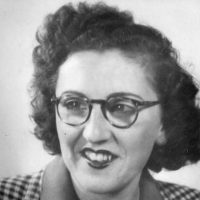
Arthur’s wife Edith West[133] Obituary by the Vienna Communist Party (KPÖ) for Edith West dated August 8, 2022. Accessed June 10, 2026. had fought against the dictatorial “Austrofascism” (“Ständestaat”) as a teenager in the ranks of the illegal Communist Youth League. She was a kindergarten teacher and was able to flee to England with her mother and siblings, where she earned a living as a housekeeper, seamstress, and spinner. Back in Vienna, she worked, among other things, as a secretary at a petroleum trading company. She cared for the writer Theodor Kramer, who returned from exile in 1957 in serious ill health, until his death in 1958. Arthur and Edith made it possible for him to attend readings[134] Gerald Grassl op.cit.. Edith passed away on August 7, 2022, at the age of 104.
Edith West. . Photo: KPÖ Archive.

Videos featuring the three journalists


Heinz Altschul
Georg Auer
Arthur West
The three journalists answered questions from Viennese students about their lives: Heinz Altschul, Georg Auer, and Arthur West (from left to right). The videos were produced as part of the “Oral Video History” project, which ran from 1988 to 1996 at the Institute for Journalism and Communication Studies at the University of Vienna under the direction of Assoc. Prof. Dr. Manfred Bobrowsky. Clicking on a screenshot opens the corresponding video in a new window. Screenshots: dunera.de.
Please note: dunera.de would like to thank the children of the three journalists—Susanne Altschul, Martin Auer, Paul and Hans West—for their assistance with the research and for providing photos and documents, as well as Manfred Murgauer (KPÖ Archives) for granting copyright permissions.
Footnotes
show
- [1]↑Wikipedia on Austrofaschism and Ständestaat (German). Accessed April 10, 2026.
- [2]↑Wikipedia on the „Anschluss“, accessed on April 20, 2025.
- [3]↑Maria Fanta, „Geflüchtet, heimgekehrt, erschüttert“ (Fled, returned home, shaken) on science orf.at. Accessed on March 15, 2026.
- [4]↑Ibid.
- [5]↑Wikipedia on „Volksstimme“ (German). Accessed on March 15, 2026.
- [6]↑Wikipedia über das Volksstimmefest. Abgerufen am 15.3.2026.
- [7]↑„Ein österreichischer Publizist im Widerstand“ (An Austrian Journalist in Resistance) in „Erinnerungen“ Vol. 5 Published by Renate S. Meissner for the National Fund of the Republic of Austria for Victims of National Socialism, Vienna 2018, ISBN 978-3-9504794-8-5, p. 274. The text reproduced there is an adaptation of the interview from the ‘Projekt Oral Video History’ series by Klaus Hübner and Lukas Ressl, University of Vienna, 1992. Accessed on June 16, 2026.
- [8]↑Ibid, p. 275.
- [9]↑Ibid, p.275/276.
- [10]↑Saskia Etschmaier, Carina Kainz, ‘It was always hanging by a thread’. ORF interview with Susanne Altschul, November 23, 2018. The file contains a transcript and videos of the conversation. Accessed on March 22 , 2026.
- [11]↑"Erinnerungen" op.cit. p. 274.
- [12]↑Etschmaier, Kainz, op.cit.
- [13]↑Home Office, index cards: Heinz Altschul. Via Ancestry. Accessed on April 17, 2025
- [14]↑„Erinnerungen“ op.cit., p 278.
- [15]↑The abbreviation ‘S of S’ stands for ‘Secretary of State’, i.e. an unspecified British ministry.
- [16]↑„Erinnerungen“ op.cit., p 278.
- [17]↑Home Office, index cards H. Altschul op.cit.
- [18]↑Wikipedia on British internment camps during the Second World War. Accessed on February 30, 2024.
- [19]↑Files for Heinz Altschul, National Archives of Australia (NAA), NAA_ItemNumber9905538. Accessed on April 17, 2025.
- [20]↑Complete Nominal Roll of Internees ex „DUNERA“, NAA_ItemNumber657104. Accessed on August 10, 2023.
- [21]↑„Erinnerungen“ op.cit., p. 279.
- [22]↑Ibid., p. 279.
- [23]↑Home Office, index cards H. Altschul op.cit.
- [24]↑This condition hindered the internees because they first had to be transported to Great Britain in order to gain their freedom. During the war, this could only be done at the risk of their lives. The Australian Menzies government wanted to keep internees out of the country.
- [25]↑Carol Bunyan „Ships on which Dunera internees returned tp Britain , 1941 – 1945“ in „Dunera Lives. A Visual History“, p. 518.
- [26]↑Wikipedia on the air raids on Australia, accessed on 25 August 2025.
- [27]↑Quoted from June Factor, *Soldiers and Aliens*, Melbourne 2022, ISBN 9780522878585, p. 34.
- [28]↑Cf. Minute of the General-Adjudant to Australian Parliarment from 29.3.1946. NAA_ItemNumber4938132, page 28, point d.
- [29]↑Newsam (Home Office) am 7.7.1942 an den britischen Beauftragten für die Internierten Julian Layton. In NAA_ItemNumber216018.
- [30]↑Militäry files H. Altschul, Service and Casualty Form, in NAA_ItemNumber6238805.
- [31]↑„Erinnerungen“ op.cit., p. 280.
- [32]↑Ibid., p.282.
- [33]↑Georg Auer „Down Under - ganz unten drunter …“ (German), in Medien&Zeit 1/88, p 25. Accessed on July 10, 2026.
- [34]↑Military files H. Altschul, op.cit., entry from August 29, 1945.
- [35]↑Etschmaier, Kainz op.cit.
- [36]↑Home Office, index cards H. Altschul op.cit.
- [37]↑Passenger list via Ancestry. Accessed March 17, 2024.
- [38]↑„Erinnerungen“ op.cit., p. 285.
- [39]↑Wikipedia on World Peace Council, Accessed July 20, 2026.
- [40]↑„Erinnerungen“ op.cit., p. 296.
- [41]↑Wikipedia on the Campaign for Nuclear Disarmament amd Easter Marchs, organised for the first time 1958 in UK.
- [42]↑„Erinnerungen“ op.cit., p. 297.
- [43]↑M. Massiani „Charlie Chaplin gives Abbe Pierre Part of Communist Sponsored Prize“ in „The Catholic Standard and Times“, Volume 60, Number 4, October 22, 1954. Accessed May 15, 2026.
- [44]↑“Large number of entries in the Chaplin Peace Fund competition”, in Österreichische Zeitung, February 18, 1955, page 6, in the ANNO Archive. Accessed on July 20, 2026.
- [45]↑Wikipedia on Bertha von Suttner. Accessed on July 20, 2026.
- [46]↑“No space yet for a Bertha von Suttner monument”, in Österreichische Zeitung, January 20, 1954, page 3, in the Anno Archive. Accessed July 20, 2026.
- [47]↑„Erinnerungen“ op.cit., p. 297.
- [48]↑Ibid.
- [49]↑Sepp Astner in „Kleine Zeitung“ from March 6, 1998 (Family Archive Altschul).
- [50]↑Wikipedia on the Ehrenzeichen, accessed on July 15, 2026.
- [51]↑Wikipedia on Robert Haider (German). Accessed July 15, 2026.
- [52]↑Wikipedia on Österreichische Legion. Accessed in July 15, 2026.
- [53]↑Newspaper „Der Standard“, Wien, Orbituary for Heinz Altschul (German). Accessed on May 10, 2026.
- [54]↑Wikipedia: List of recipients of the Ehrenzeichen. Accessed on July 15, 2026.
- [55]↑Wikipedia about Hans Globke, the „Mann behind Adenauer“ (German), retrieved Aug 1, 2024.
- [56]↑"Der Standard“, Vienna, Orbituary op.cit.
- [57]↑Georg Tillner „Orbitury for Heinz Altschul“ (German). Accessed on May 10, 2026.
- [58]↑Etschmaier, Kainz op.cit.
- [59]↑Wikipedia on Georg Auer. Accessed May 12, 2026.
- [60]↑Martin Auer „Steine der Erinnerung: Robert und Erna Auer“, online. In addition to a detailed biography of the parents, it also contains letters to Georg and Emil in Australia and to Hugo and Hilde in the USA. Retrieved on 25 July 2026.
- [61]↑Wikipedia on the February Uprising. Accessed July 19, 2026.
- [62]↑Georg Auer in Erich Makomaski (ed.), “Freie Österreichische Jugend”, pp. 32–33; KPÖ Styria online. Accessed June 20, 2026.
- [63]↑Martin Auer, “Erinnerungen an den 13. März 1938” (Memories of 13 March 1938), published on March 13, 2026 on the blog section of the newspaper "Der Standard". Accessed on June 15, 2026.
- [64]↑Wikipedia on the “Reibpartie”. Accessed on March 10, 2026.
- [65]↑An example of ‘rampant Aryanisation’ is the story of Sigmund Berger and his chemist’s shop.
- [66]↑See Wikipedia on the November pogroms of 1938. Accessed on March 10, 2026.
- [67]↑Wikipedia on the Kindertransporte. Accessed on July 10, 2026.
- [68]↑Martin Auer, ‘Erinnerungen …’ op.cit.
- [69]↑Martin Auer „Steine der Erinnerung: …“ op.cit.
- [70]↑Georg Auer, Emil Auer, Home Office index cards, via Ancestry.
- [71]↑Georg Auer, Emil Auer; personnel records held at the National Archives of Australia (NAA).
- [72]↑Auer in Makomaski op.cit.
- [73]↑Georg Auer, Emil Auer; personnel records held at the National Archives of Australia (NAA).
- [74]↑Cf. Note from the Adjudant-General to the Australian Parliament, March 29, 1946. National Archives of Australia (NAA), NAA_ItemNumber4938132, sheet 28, paragraph d.
- [75]↑Manfred Bobrowsky, video “Georg Auer spricht über Exiljournalismus” (talks about journalism in exile) as part of the University of Vienna’s "Oral Video History Project” series. Accessed June 16, 2026.
- [76]↑KPD: Communist Party of Germany, KPÖ: Communist Party of Austria.
- [77]↑Auer in Makomaski op.cit.
- [78]↑Georg Auer, ‘Down under – ganz unten drunter …’ in Medien & Zeit (German) No. 1/88, p. 24. Accessed on July 20, 2026.
- [79]↑Maria Bianca Fanta, Short biography of G. Auer in ‘Die Arbeiter der Feder. Journalisten der kommunistischen Parteizeitung “Österreichische Volksstimme” und die Zäsuren ihrer Lebensgeschichten (1945–1956)’; doctoral thesis, p. 131. Accessed on March 10, 2026.
- [80]↑Manfred Bobrowsky, video, op.cit.
- [81]↑„Freie Österreichische Jugend“ op.cit.
- [82]↑Wikipedia on Starhemberg. Accessed on July 8, 2026.
- [83]↑Anna Maria Sigmund „Für oder gegen die Nazis“, Austria Forum online (German). Accessed on May 15, 2026.
- [84]↑Wikipedia on Free France. Accessed on June 6, 2026.
- [85]↑Wikipedia describes the position of “responsible editor” (German) as a consequence of press censorship during the Weimar Republic. Wikipedia quotes the following from B. Traven’s 1929 novel "The White Rose": “Socialist and communist newspapers sometimes have so-called ‘resident editors’ who must serve out, in one form or another, all penalties imposed on the newspapers, so that the newspaper’s more valuable staff members are spared.” This is also consistent with postwar Austrian press law. Retrieved on October 7, 2026.
- [86]↑Wikipedia on Julius Raab. Accessed on July 7, 2026.
- [87]↑Wikipedia on the ÖVP . Accessed on July 16, 2026.
- [88]↑Auer in Makomaski op.cit.
- [89]↑„Auto & Wirtschaft“ online from March 15, 2022. Accessed on June 8, 2026.
- [90]↑Martin Auer, „Erinnerungen …“, op.cit.
- [91]↑Benedikt Narodoslawsky „Als das Rote Wien die Arbeiterfamilie Sokopp aus dem Elend holte“ (When ‘Red Vienna’ lifted the Sokopp working-class family out of poverty). In „Der Standard“ online from April 16, 2025. Accessed on July 15, 2026.
- [92]↑Report in „Die Arbeit“ from January 9, 1886, p. 3, und obituary from „Arbeiter-Zeitung“ from October 7, 1925, p. 4. Accessed on July 20, 2026.
- [93]↑A short biography of Oswalda Tonka in Friedensatlas Online (German). Accessed on July 14, 2026.
- [94]↑Martin Auer, „Erinnerungen …“, op.cit.
- [95]↑Michael Völker „Ich arbeite, bis ich umfall“ in Der Standard from May 2, 2001. Accessed on June 17, 2026.
- [96]↑Martin Auer, „Erinnerungen …“, op.cit.
- [97]↑Neue Reifenzeitung online on October 26, 2004. Accessed on July 20, 2026.
- [98]↑Arthur Rosenthal: Home Office records via Ancestry, personnel files from the National Archives of Australia (NAA_ItemNumber8618173, NAA_ItemNumber9906992). Accessed June 3, 2026.
- [99]↑Records on Arthur Rosenthal in NAA_ItemNumber9906992; family tree Wilhelm Uri Rosenthal (Nadav) via ancestry.de; Uri Nadav in Enzyklopedia of the Founders and Builders of Israel. Accessed on July 7, 2026.
- [100]↑Wikipedia on Arthur West (German). Accessed on June 20, 2026.
- [101]↑Telephone calls with Hans West on March 19, and July 27, 2026.
- [102]↑Manfred Bobrowsky, video „Arthur West. Literat, Journalist“; „Projekt Oral Video History“ Uni Wien, accessed on June 6, 15, 2026. And Phne Calls op.cit.
- [103]↑Email from Paul West dated October 2, 2026.
- [104]↑Wikipedia on Kindertransporte op.cit.
- [105]↑Letter from the Metropolitan Police, March 1945. Paul West Archive.
- [106]↑Bobrowsky, video, op.cit.
- [107]↑Home Office, file cards Arthur Rosenthal op.cit.
- [108]↑Bobrowsky, video op.cit.
- [109]↑Ibid.
- [110]↑Minutes of the House of Commons, August 20, 1940, speech by Anthony Eden. The debate subsequently turned, amongst other things, to the repatriation of ‘deportees’ from Canada; the Dunera was still at sea. Accessed on May 10, 2026.
- [111]↑Wikipedia on Anthony Eden, Accessed on May 10, 2026.
- [112]↑Wikipedia about Eleanor Rathbone, accessed September 10, 2025.
- [113]↑House of Commons Minutes, op. cit., speech by Eleanor Rathbone.
- [114]↑See Rachel Pistol, "Routes out of internment – a handy reference guide to White Paper categories" (7/2020). Accessed on July 5, 2026.
- [115]↑HMT Dunera, "Embarkation List no.12" in NAA_ItemNumber657104.
- [116]↑Personnel file for Arthur Rosenthal, NAA_ItemNumber9906992, op.cit.
- [117]↑Telefonate aao.
- [118]↑Personal records A. Rosenthal, NAA, op.cit.
- [119]↑Arthur Rosenthal, file cards op.cit.
- [120]↑Passenger list for the voyage via Ancestry, accessed on April 25, 2026.
- [121]↑Bobrowsky, video, op.cit.
- [122]↑Wikipedia on the unit, Accessed on June 30, 2026.
- [123]↑See photo caption “C.M.F. Arts Festival: Rome 1946”, Imperial War Museum NA 26726. Accessed June 12, 2026.
- [124]↑See Paul R. Bartrop and Gabrielle Eisen, "The Dunera Affair: A Documentary Resource Book", list of occupations of those interned in Australia, p 385f.
- [125]↑Wikipedia on „Das Linke Wort“, accessed on June 10, 2026.
- [126]↑Wikipedia über Helmut Zenker (German) became known to German TV viewers as the writer of the satirical crime series ‘Kottan ermittelt’. Accessed on June, 10, 2026.
- [127]↑Wikipedia on Peter Turrini, whose six-part “Alpensaga” was broadcast on ZDF in 1976 in Germany. Accessed on June 10, 2026.
- [128]↑Wikipedia on Elfriede Jelinek (Germas), accessed on June 10, 2026.
- [129]↑Ronald Pohl „Was ist vom Kommunismus ‚made in Austria‘ zu halten?“ (What are we to make of ‘made in Austria’ communism?) in Der Standard online, October 2, 2021.
- [130]↑Gerald Grassl, „Zwei Leben für die Literatur“ (Two Lives Devoted to Literature) in Mitteilungen der Alfred Klahr Gesellschaft 3/2022, pp. 24f. Accessed on June 10, 2026.
- [131]↑Selma Steinmetz „Arthur Wests ‚Frühling‘ in „Der neue Mahnruf“ Nr. 6/1961, Seite 5 via Anno. Abgerufen am 20.7.2026.
- [132]↑Wikipedia on the Austrian writer, murdered by the Nazis, an the Jura Soyfer-Gesellschaft (German).
- [133]↑Obituary by the Vienna Communist Party (KPÖ) for Edith West dated August 8, 2022. Accessed June 10, 2026.
- [134]↑Gerald Grassl op.cit.
