
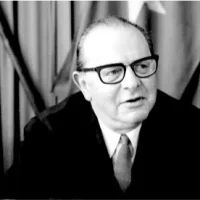

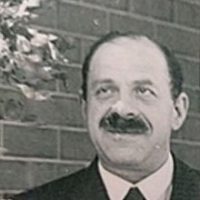
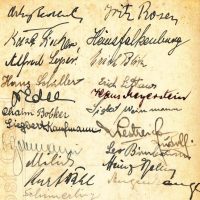
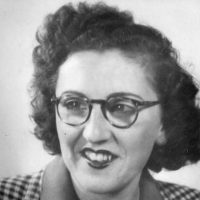
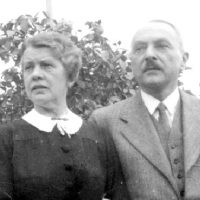
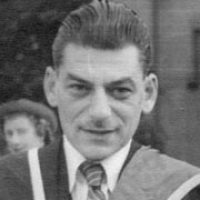
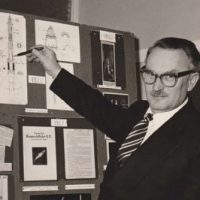
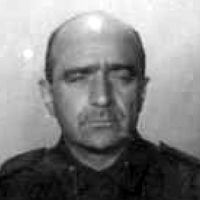
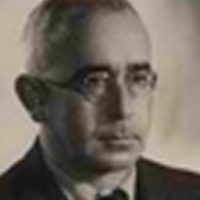
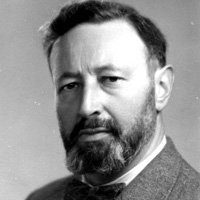

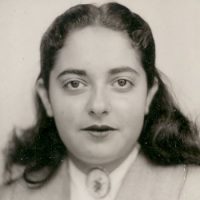
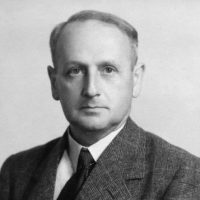
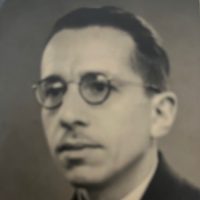
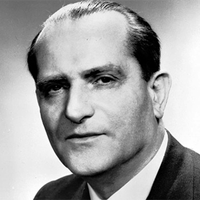
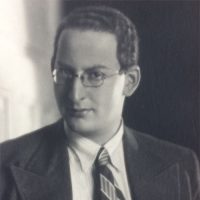
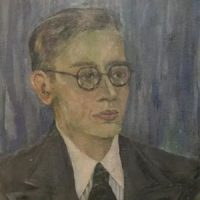
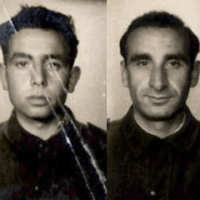

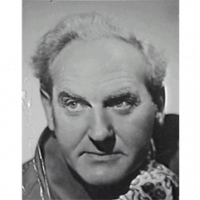
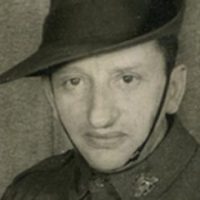
My father, Heinz Dehn’s, first Australian internment site was Hay in the state of New South Wales. There, he was housed in Hut 18. Research into the Australian part of his biography had already uncovered several connections from that period and related to the Dunera or the Queen Mary. This included, for example, my parents’ two wedding witnesses and some of their friends. An initial search for information on Hut 18 yielded eleven names. The response to a mass email yielded further results. I now have 15 names of Heinz Dehn’s barracks mates. Is it a coincidence that most of them were housed in the Kitchener Camp transit camp in England? That seemed to me reason enough to look into the biographies of these men and supplement that with information about the Kitchener Camp and the camps near Hay.
Peter Dehn, February 2027.
A Kitchener Camp connection
As of early 2027, the names of 16 residents of Hut 18 at Camp 7 near Hay in Australia were known. Interesting: For 15 of the 16 known residents of Hut 18, the Kitchener Camp in Sandwich near Richborough (Kent) was their first point of arrival in Great Britain. It was intended as a transit camp for refugees awaiting visas to continue their journey to other countries. The restoration of the buildings at the military camp near the Channel coast—which had lain derelict for decades—was financed entirely by donations made by British citizens in the wake of the pogroms of November 9, 1938. The camp began operations in early 1939 and was evacuated as part of the mass internments in May and June 1940.
Dear readers,
Hut 18 in Camp 7 housed up to 28 internees. Unfortunately, dunera.de is only aware of 16 men. We would also like to report on the Dunera Boys not mentioned here. We would be grateful to receive any information per Email.
The 1939 British census
During the British census[1] About the 1939 Census. The National Archives of the United Kingdom, accessed on October 20, 2026. on September 29, 1939, approximately 3,500 refugees were recorded at Kitchener Camp. Section 14[2] Four “Transcript Books” contain the census data collected in September 1939 on the residents of Kitchener Camp. They are divided into 17 sections, each containing 205 people, and a 18th section listing the staff and containing numerous redacted entries. Via Ancestry. lists some names of those who later became residents of Hut 18. Their names were retrospectively marked with a red cross, as were the names of nearly all the refugees who were deported to Australia in July 1940.
In addition to Heinz Dehn, Section 14 also mentions Max Eckdisch[3] Max Eckdisch and Heinz Dehn were assigned to the camp's road construction crew. Max was able to travel to the United States to settle with his relatives as early as 1940.. It is known that both arrived in Dover on August 17, 1938, and traveled from there to Kitchener Camp, which was only about 16 kilometers away by road. From this, it could be concluded that the other men from Section 14 arrived in England on that day or only slightly earlier or later, too. Seven of the 16 men from Hut 18 may therefore have gotten to know each other during the Channel crossing or on the way from the Channel ferry to the camp. Another name appears in Section 13: Otto Schächter, like Heinz Dehn, was assigned to the camp’s road construction crew—so they likely knew each other.
It is interesting to note that these Kitchener Camp comrades, after the horrors of the voyage on the Dunera, were reunited at the Australian camp and spent about nine months—until the camp was relocated to Tatura in May 1941—in shared quarters.
On May 12, 1940, the British government, led by Winston Churchill, ordered the mass internment of Germans and Austrians. Implementation began that very same day. The 569 individuals classified as Nazis by the tribunals had been interned between November 1939 and February 1940. Now, tens of thousands of the approximately 74,000 refugees—all of whom were victims of fascist persecution on racial or political grounds—were treated as enemies and imprisoned.
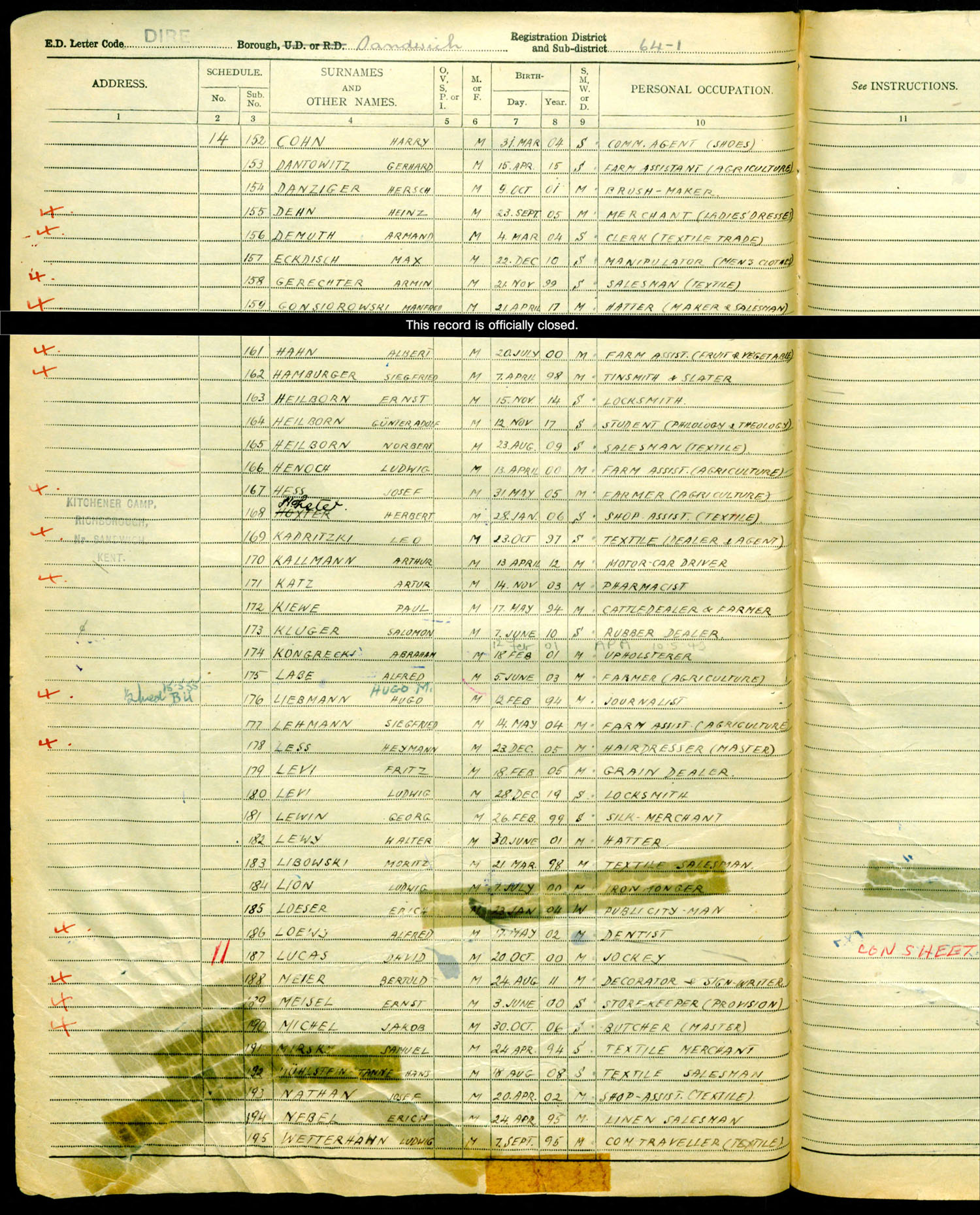
Residents of Kitchener Camp in the 1939 British census: the names Dehn, Gonsiorowski, Kadritzki, A. Katz and Meier, which were later marked with crosses, indicate that they were deported to Australia. Source: ancestry.de. (Click to enlarge).
This also affected up to 4,000 men[4] Clare Ungerson documents the history of Kitchener Camp in her book *Four Thousand Lives: The Rescue of German Jewish Men to Britain, 1939* (Cheltenham, 2014). at Kitchener Camp. Hundreds had not applied to join the British AMPD engineering units because they hoped to obtain papers for third countries such as the U.S., Palestine, or South America and to travel on to those destinations. Many had been transferred from Kitchener Camp to camps on the Isle of Man when the internments began on May 12, 1940. On July 10, 1940, 250 of those remaining were deported to Australia aboard the completely overloaded military transport ship HMT Dunera, along with 1,800 other refugees and 450 survivors of the sinking of the Arandora Star.
By train to the province
On September 6, 1940, the ship passed under the Sydney Harbour Bridge. From Jones Bay Wharf, they were immediately transported under guard to Hay in New South Wales on four passenger trains comprising a total of 44 cars. During the journey, the guards were surprised to find themselves escorting Jews instead of the Nazis they had been told to expect. Dunera Boy Walter Kaufmann[5] Cited from “Dunera,” a teacher’s guide from the National Library of Australia. Retrieved August 16, 2026. recalled:
„We travel into the darkness … At dawn the train halts. In black on the grey station wall is emblazoned the word HAY … Under a cloudless sky and scorching sun … we march from the station … toward the watch-towers.“
The next morning around 7 a.m., the first train arrived in the remote small town small town at the end of the railroad line, which had only 3,156 residents in 1933. From the station, the internees marched a short distance, now called “Dunera Way,” to their new quarters. The local newspaper “The Riverine Grazier[6] “The Riverine Grazier,” September 10, 1940, cited in Dunera News, No. 16, p. 8.” informed its readers:
“The scene there was reminiscent of a big junction and was quite bewildering to many youngsters lining the railway fence, some of whom had never seen so many trains at once.”

The internees on the march from the railway station (in the background) to the camp. Reproduced from: ‘Haywire’ (Hay Historical Society 2006, page 53). Right: David Houston (left) and Paul Dehn in 2019 on the railway station grounds. Photo: Dehn.

David Houston, a local farmer and long-time vice president of the Hay Historical Society, gave Peter and Paul Dehn a tour of Hay and the Dunera Museum there, which was set up in railcars at the former train station. He himself had witnessed the march of the internees. The children—David must have been four or five years old at the time—watched it intently from the roof of a house across from the station, he used to say.
A horse racing track behind barbed wire …
Camps 7 and 8 in Hay were separated only by a road, apart from the triple barbed-wire fence that surrounded them. Camp 8 was located on the grounds of the Hay horse racing track, while Camp 7 was on the other side of the road. The camps were surrounded by numerous watchtowers and a lighting system.
„Many people will remember the excitement[7] “The Riverine Grazier,” October 29, 1946, cited in Dunera News No. 16, pp. 8–9. that was caused in July 1940 when it was announced that the Hay Racecourse and showground, as well as an area of ground to the west had been taken over by the Army for the purpose of building an internment camp. The camp had to be completed almost overnight to house internees that were coming here from England. These internees turned out to be refugees, many of them Russian, German, Polish and Austrian Jews who had fled before the Nazi tyrants from Europe to England, and who were largely men of considerable education and attainments and many of them men of considerable wealth.“
When the internees arrived—whose “considerable wealth[8] Let us remember: The Nazis had left the refugees with little more than the clothes on their backs and 10 Reichsmarks. Many had their last possessions stolen on the Dunera.,” however, cannot be taken seriously—, the construction of Camp 8 was complete. However, Camp 7 was not yet finished, so the internees had to carry out the remaining work themselves. A short distance away,

During the construction work. Courtesy of the Charles Sturt University Archives; RW8.

Camp 6 was established in November 1940 for Italian, and later Japanese, prisoners of war.
… with sparse furnishings

‘Home Sweet Home’ is what Emil Wittenberg wrote on the inside of his Hat No. 13 in Camp 7 on 18 November 1940. Courtesy of Martin F. Burman.
Hut 18 in Camp 7 was, like all the other huts, a raised structure with walls made of oiled (rather than painted) wood and equipped with bunk beds. Four buildings served as dining halls; there were two kitchens, washrooms, restrooms, a workshop, an office, and a canteen. Dr. Georges Morel[9] Report on visits to the internment camps at Hay, New South Wales, by Mr. G. Morel, Representative of the International Red Cross, March 3–6, 1941. In NAA_ItemNumber216013, p. 45 ff., the representative of the International Red Cross in Australia, described the living conditions during his visit to the Hay camps in March 1941:
“The huts are built of weatherboard with galvanized iron roofs. Between the roof and the top of the wall is a ventilation space of 4” covered with canvas as protection against storms. (…) The bedding consists of a straw mattress on a metal frame and two blankets (three in winter). There are no sheets or pillows. Ventilation is provided by 12 windows, which remain open during the day if the weather permits and at night on the instructions of the camp commandant.”
Regarding the furnishings of the huts, Morel noted:
“There are no chairs or cupboards in the sleeping quarters; all that is necessary to enable the internees to make these themselves are a few boards.”
In his summary of the camps’ occupancy, Morel noted that during his visit, 44 internees from the two German camps were in the hospital.
The huts “are not heated, but a steam heating system is being considered. However, the doctor is opposed to heating the sleeping huts because of the possible spread of disease.”
Elsewhere, he referred to numerous cases of rheumatic diseases among the internees. Morel’s demands could also be viewed in this context:
„It is necessary to establish a drainage system that will ensure the removal of stagnant water resulting from torrential rain.“
Eden’s ignorance, Hitler’s malice
After reading the Morel report, the British Foreign Office adopted the demands for drainage and heating. Minister Anthony Eden[10] Roberts, British Foreign Office, to the Home Office, May 26, 1941, NAA_ItemNumber216013. Page 6. had a subordinate official—revealing his embarrassing lack of knowledge of the situation—write to the Home Office:
“Mr. Eden wishes to draw attention to these points, as it would be unfortunate if these deficiencies were used by the Germans as an excuse for measures of reprisal against British civilians in Germany.”

Anthony Eden (1897–1977), Foreign Secretary in Churchill’s wartime cabinet. Photo: Wikipedia.
The German and Austrian internees in question here were exclusively people who were threatened with death by the Nazis and were forced to flee. The Nazi Reich had absolutely no interest in their well-being. Was Eden not aware of whom his government had put behind bars?
Hitler[11] Quoted from Simon Parkin, “‘I remember the feeling of insult’: when Britain imprisoned its wartime refugees”, in The Guardian, 1 February 2022. Retrieved 15 August 2025. was amused by the internments:
“The enemies of Germany are now the enemies of Britain, too. Where are those much-vaunted democratic liberties of which the English boast?”
An equally low-ranking official replied to Eden on behalf of Home Secretary Herbert Morrison[12] Response to the Roberts letter dated June 9, 1941, NAA_ItemNumber216013, p 5.: The internees had since been transferred to camps near Tatura and Orange. Thus, the situation at the Hay camps seemed apparently a closed matter for the bureaucracy. The Italians now housed in Hay were apparently not considered that important.
Occupancy of the huts
Each of the 36 barracks in every camp had 28 sleeping places in bunk beds. Thus, each camp could accommodate a maximum of 1,008 internees. The representative of the International Red Cross[13] Morel Report, op. cit., p. 45. reported in early March 1941 that Camp 7 was occupied by 923 internees, Camp 8 by 946, and Camp 6 by 732 Italians.
It is unclear how the 1,984 Germans and Austrians were divided between the two camps. The claim[14] See Inglis, Spark, Winter, and Bunyan, *Dunera Lives: A Visual History* (Australia, 2018), p. 117. that Camp 8 was the “communist” camp and Camp 7 the “kosher” camp
“is misleading, for hundreds in Camp 7 were not Orthodox Jews, and communists were a small minority in Camp 8,”
historians comment on this claim, which is said to have originated with the military guards. Unfortunately, the exact occupancy records for the sleeping barracks in both camps have not been fully preserved. However, some of the Australian Army’s internee information forms “Report on …[15] These questionnaires about internees were compiled in Hay in late 1940/early 1941 and are filed at NAA under archive numbers 990…. The camp number is listed on the second page of the file (consent or refusal to disclose personal data to the German government and the International Red Cross).” contain the hut number in the upper left corner. A second sheet indicates whether the prisoner was housed in Camp 7 or 8.. Among other things, it notes whether the prisoner was housed in Camp 7 or 8. These sheets were generally created between January and March 1941. Thus, the occupancy of the huts can be researched to a limited extent.

Map of Camp 7. Source: ‘Haywire’, page 189.
Another Australian archival record contains a list, sorted by hut[16] Camp 7 Internees office to the Prisoner of War Information Bureau, undated. From Chief Judge Frederick Jordan’s personal file regarding his visits to the internment camps. In NAA_ItemNumber390299, p. 27ff., of internees who did not wish to be named to the International Red Cross. For Hut 18, two other names are listed in addition to Heinz Dehn.
The men of hut 18
This section compiles brief biographies of the 16 men. The information is based primarily on documents held by the National Archives of Australia, the Australian Army’s Veterans’ Department (DVA), and the genealogy platform Ancestry, which can be researched online. Additional sources are cited in footnotes where applicable.
All of the men were classified by British tribunals in Category “C” as refugees or friendly aliens. Unless otherwise noted, they were Jewish. For 14 of the 16 men, the British authorities had adopted the Nazi-imposed second name “Israel” in their personnel files. This name suffix—which was actually intended to be defamatory—was taken from Home Office records to demonstrate that the British authorities knew full well that, beginning in May 1940, they were not imprisoning Nazis but rather their victims, and were sending them overseas.
Max “Israel” Baum * August 24, 1893, Pleschen (Pleszew, Poland).
Max had served as a soldier in the German Empire during World War I. He was a pharmacist by profession. In 1923, he married Charlotte Berger; both she and their daughter Ruth (born 1924) were murdered in Auschwitz. The last known sign of life from their son Ludwig (born 1927) came in 1944 from the Minsk ghetto. Max was apparently held as an “Aktionsjude” at the Buchenwald concentration camp until December 10, 1938, and then forced to leave Germany. He worked as a nurse at Kitchener Camp. On June 27, 1940, he was arrested and deported to Australia on the HMT Dunera on July 10, 1940. He was one of 28 internees who were allowed to travel to Palestine on the Port Phillip in July 1942. In the port of Port Said, they were initially prevented from leaving the ship: the British authorities had not obtained Egyptian transit visas. A local Jewish organization took care of that.

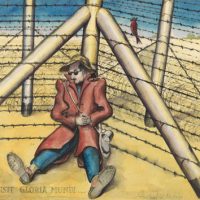
Emil Wittenberg, ‘sic transit gloria mundi’, Hay, 31 January 1941 (‘Thus passes the glory of the world’). Courtesy of Martin F. Burman.
Heinz Joachim “Israel” Bock * March 11, 1907, Frankfurt/Oder.
He listed his occupation as a traveling salesman. In 1937, he married Hildegard Borchardt (born 1913). They lived in Berlin-Schöneberg until he fled. Hildegard was deported to Auschwitz in 1943. He was arrested by the British at Kitchener Camp. At the Tatura camp, he helped organize Jewish religious services. He, too, was able to leave for Australia aboard the Port Phillip.
Gerhard “Israel” Cohn * December 22, 1907, Akmenishken (Russia). He listed his occupation as merchant. He had to leave his wife behind in Tilsit (now Sovetsk, Russia); her fate is unknown. In England, he listed his occupation as language teacher and law student. He, too, was arrested at Kitchener Camp. The return journey from Australia ended with the sinking of the Abosso on October 29, 1942, in the North Atlantic; only one of the 43 internees was rescued. “Lost whilst Returning” is noted by the British Home Office in its records.
Heinz “Israel” Dehn * September 23, 1905, Berlin.
Read a detailed biography here.

This photograph of Camp 7 was taken in January 1944 by Geoffrey McInnes for the Australian Army. Source: Australian War Memorial No. 063214.
Manfred “Israel” Gonsiorowski * April 21, 1917, Nakel (Nakko, Poland).
The hatmaker had married the milliner Walli Goldstrom (*1910, Berlin) in 1938. They lived in Berlin. While still in Australia, he named her as his next of kin. However, the marriage ended in divorce in 1941; the fate of his Jewish wife is unknown. At Kitchener Camp, he worked as a window cleaner. Manfred served in the 8th Employment Company from July 1942 to June 1946. Shortly after his discharge from the army, he became an Australian citizen, lived in Melbourne, and worked as a cutter. In 1949, he traveled to Brazil. It is unclear whether he remained there.
Harry “Israel” Jacobsohn * September 28, 1893, in Strasburg (Brodnica, Poland). He listed his occupation as a woodworking and sawmill specialist. His last place of residence in Germany was Frankfurt/Oder. In July 1942, he was able to travel to London aboard the Themistocles with a large group of internees. His sister, Helene Levin, had managed to flee there. He died on August 19, 1980, in England. The official British estate inventory[17] “Jacobsohn, Harry Israel ...” Inventory of Estates for Great Britain, 1980, letter J. Via Ancestry. still lists him in 1980 under the Nazi first name “Israel”!
Julian “Israel” Kadisch * September 28, 1904, in Dirschau (Tczew, Poland). This merchant from Pomerania, too, had been drawn to Berlin. On August 31, 1938, he married Irene Selma Korn (*1914), a Jewish woman from Berlin. She was deported on the 18th Eastern Transport on August 15, 1942, to the Riga ghetto, where she died on August 18, 1942. His mother, Ernestine, died one day later in the Terezin ghetto. Julian had served in the 8th Employment Company beginning in April 1942 and was discharged as a corporal in November 1945. He was naturalized in June 1946. The certificate still lists Irene as his wife; he likely did not learn of her fate until later. In 1947, he married Anna Mikler (b. 1909), a Jewish woman of Polish descent from Germany who worked as a belt maker. She was one of the few women at Kitchener Camp, where she presumably met Julian. She had arrived in Australia in June 1939 and was naturalized in June 1946. Julian died on June 5, 1976, in Australia.
Leo “Israel” Kadritzki (Leo Kaye) * October 23, 1897, in Slusczyn (Poland). He ran a general merchandise store in Allenstein (East Prussia). He was one of the residents of Kitchener Camp who were detained on May 12, 1940—the day after the internment order was issued. On April 1, 1942, the Home Office entered “unsuccessful emigrant” on his file card. Another note reads: “return authorized for consultation.” He arrived in Liverpool on November 21, 1942, aboard the Themistocles. Presumably because of these notes, he was detained at Camp Hutchinson on the Isle of Man until December 31, 1942. He settled in London, where he married Rosa Lupinsky in April 1948. He died on February 4, 1964. The only known information about his family is that his mother, Ester, died in 1942 at the Jewish retirement home in Königsberg.
Harry “Israel” Kallmann * August 11, 1901, in Neidenburg (Nidzica, Poland). The merchant from Berlin listed farmer and miller as his occupations in England and Australia. Like many men at the Kitchener Camp transit camp, he had been forced to leave his wife, Paula (née Borchert), behind in Berlin. She was deported to the Auschwitz extermination camp in February 1943 with their children Renate (born 1930) and Stefan (born 1935). His mother, Hulda, also fell victim to the Nazis; she died in Terezin in 1942. At the end of March 1942, he was able to travel to Palestine with eleven other “Dunera Boys.”

Emil Wittenberg, ‘Hay – Australia’ (21 April 1941). Courtesy of Martin F. Burman.
Artur “Israel” Katz * November 14, 1903, in Wongrowitz (Wagrowiec, Poland). The pharmacist had married the stenographer Sady Kresch (*1914) in Berlin in 1935. In Australia, in early 1942, he joined the 400 men who were deployed as fruit pickers in the Goulburn Valley before they enlisted in the 8th Employment Company in April. In October, he sustained a serious knee injury. After his health apparently continued to deteriorate, he was discharged as “medically unfit” in late January 1944. After the war, he brought his wife Sady to Australia. They became naturalized citizens in 1946. His mother Selma (b. 1880) arrived in Melbourne from Shanghai in 1947. She died in 1962. Artur and Sady lived in the Melbourne suburb of Brighton, where he died on September 26, 1983, and she died on March 1, 2016.
Werner Hans Katz * December 30, 1898, in Danzig (Gdańsk, Poland). Born into a Jewish family, the musician and composer was married to Margarete, a non-Jewish woman, and converted to Lutheranism. After the November pogroms of 1938, he was denounced as a Jew; he was released from the Dachau concentration camp (prisoner number 33057) on the condition that he leave Germany immediately. Like many other “action Jews,” he had to leave Margarete and their daughter Brigitte behind. He was interned in England on May 26, when Kitchener Camp was converted into an internment camp. As a member of the 20-men camp orchestra[18] See Albrecht Dümling, "The Vanished Musicians* (2016). See pages 139, 147, 260. And *Dunera Lives. Profiles*, op. cit., page 171., he performed there (along with others who later became the Dunera Boys) in several concerts both inside and outside the camp. In the Australian camps at Hay and Tatura, Katz was, among other things, one of the composers for the show with the double-entendre title “Hay Fever” (literally: hay fever), wrote music for the nine-piece orchestra of the show “We Travel Around the World,” an adaptation of “The Good Soldier Švejk,” and the songs “The Naughty 90s.” On his return journey to England, he was a victim of the torpedoing of the Abosso on October 29, 1942.

One of the watchtowers. Photo: Geoffrey McInnes. Source: Australian War Memorial No. 063341.
Franz Massarik (Frank Massarik) * June 26, 1911, in Zwittau (Svitavy, Czech Republic). A trained surveyor, he was at Kitchener Camp to follow his wife Margarete to the U.S. His internment and subsequent deportation to Australia prevented him from doing so. After his internment in Australia, he worked as a fruit picker beginning in February 1942 before reporting for duty with the 8th Employment Company in April 1942. In October 1942, he was transferred to a special land surveying unit that was deployed in New Guinea until April 1944. He was discharged in April 1946 as a corporal from the 2/1 Army Topographical Survey Company. At the end of September of that year, he became an Australian citizen. He settled in Melbourne as a draftsman and married the immigrant Herta Winter in 1947. He died on April 30, 1981, in Melbourne.

Emil Wittenberg, ‘Barbed Wire’ (Hay, 5 December 1940). Courtesy of Martin F. Burman.
Bertold “Israel” Meier (Bertold Irving Myer), known as BIM * August 24, 1911, in Mülheim/Ruhr.
The window display designer and sign painter was married in Osnabrück. His last place of residence in Germany was in Münster. Beginning on November 21, he was imprisoned as one of the “action Jews” at Buchenwald Concentration Camp (No. 25203); his release on December 21, 1938, was conditional on his immediate departure from the country. He thus traveled to Australia via Kitchener Camp and aboard the Dunera. In Camp 7, he illustrated, among other things, announcements for the camp university. From July 4, 1942, to December 11, 1945, he served in the 8th Employment Company, ultimately as a Lance Corporal. During his military service, he changed his name to Bertold Irving Myer. In June 1945, he married Charlotte Adler from Berlin, who had come to Australia with her family in 1938. They were naturalized in July 1946 and settled in Melbourne, where Bertold was known and respected as a commercial artist under his stage name BIM. Their daughter Kathleen[19] Kathleen Whelan, interview with J-Wire, “The One Who Got Away,” June 17, 2010. was born there in 1948. Charlotte died in 1984, and BIM in 1986.
Abraham Arno “Israel” Mendel * January 21, 1905, in Kuckerneese (Jasnoje, Russia). The textile merchant was married to Betty Bennigsohn (*1905); they had two children, Gitta (*1931) and Werner (*1933), and were last living in Allenstein. All three were deported to Auschwitz in 1944 and murdered there. Abraham Arno had managed to flee to England, where he was arrested at Kitchener Camp and then deported on the Dunera. He drowned on the return voyage to England on October 29, 1942, when the Abosso was torpedoed in the North Atlantic. The British Home Office closed his file with the note “Lost whilst returning.”
Hans Max “Israel” Oppenheimer (Johnny Oppenheimer) * November 16, 1912, in Bad Ems. The office worker had married Betty Strauss (*1915) in September 1938. Immediately afterward, she traveled to the U.S. aboard the Hamburg and settled in New York. This marriage, too, did not last due to their separation. Hans was in Colsterworth (Lincolnshire) when he was interned on May 12, 1940. In Australia, he was among the internees who were released in early 1942 to work as fruit pickers in Bendigo (Victoria) before enlisting in the Australian Army in April 1942. His military file from the 8th Employment Company contains a letter dated February 1, 1944, announcing that he would be granted “Refugee Alien[20] Military file of H.M. Oppenheimer, NAA_ItemNumber6257277, p. 6.” status upon his discharge. This is followed by instructions on how to navigate the ensuing bureaucratic process. On March 21, 1946, he was discharged with the rank of corporal. He remained in Australia, was naturalized in August 1946, and died in Melbourne in 1985. Stolpersteine in Bad Ems commemorate Hans’s parents, Moritz and Hedwig, who were deported in 1942 and murdered in Majdanek.
Otto “Israel” Schaechter (Steven Otto Sherwin) * May 18, 1905, in Vienna. This leather goods specialist and traveling salesman was the only Austrian among the known “Hut 18” comrades. He was imprisoned in Dachau[21] See the Dachau admission register dated March 4, 1939, Arolsen Archives. (No. 32662) from March 4 to May 4, 1939. At Kitchener Camp, he—like Heinz Dehn—was assigned to the road construction detail; the two must therefore have known each other since that time. Like about 500 other “Dunera Boys,” he also volunteered for the 8th Employment Company and began his service in June 1942. In January 1944, he was discharged for health reasons. He adopted the name Steven Otto Sherwin and became an Australian citizen in July 1946. He died in Australia in 1999.
From the history of camps 7 and 8
Major Julian Layton[22] Wikipedia on Julian David Layton (19041989), born as Loewenstein. He was commissioned by the British government to wind down the Australian internment camps, retrieved March 15, 2025. had begun serving as a liaison between the internees and the British and Australian authorities in late March 1941. He initially succeeded in having most of the 2,000 internees from Camps 7 and 8 transferred to Tatura (Victoria), where the climate was more tolerable for Europeans. The last transport left Hay in mid-May 1941. One of the transports took about 180 internees to Orange (New South Wales) for a time before they, too, were taken to Tatura.
In Tatura, they were distributed among several of the seven camps there. Some were housed together with the unmarried male internees from the Queen Mary, who had also arrived in Australia in September 1940 from Singapore.
Self-organized camp life
The internees in all camps were given free rein in shaping camp life. The fact that many professionals and intellectuals were among them led to the establishment of camp universities, where numerous subjects in the natural and human sciences were taught. Sports teams were formed and organized tournaments.
“The Schule[23] See Morel-Report op.cit., p. 50. at No. 7 German camp has 101 subjects comprising 181 classes and is attended by 560 pupils. There are classes in languages, natural sciences, technology, agriculture, arts, and religion.”
The numerous musicians, theater artists, and filmmakers organized concerts and performances. Scripts and music, as well as set designs and costumes, were created by the internees themselves. Works of fine art were created, as were handcrafted products.
„Handiwork[24] "The Riverine Grazier", May 23, 1941, Dunera News No. 16, p8. included wood carving (a box of toys wae sent tot he Mayoress for distribution among poor people last Christmas), an a set of dentist’s instruments.“
The remark about dental instruments seems rather an understatement: Dr Reinhard Waldsax[25] Dr. Waldsax, "Dental Treatment", a compilation in the Dunera Museum’s collection, Hay., a dentist held as an internee, had treated 641 patients in Camp 8 prior to his transfer to Tatura.
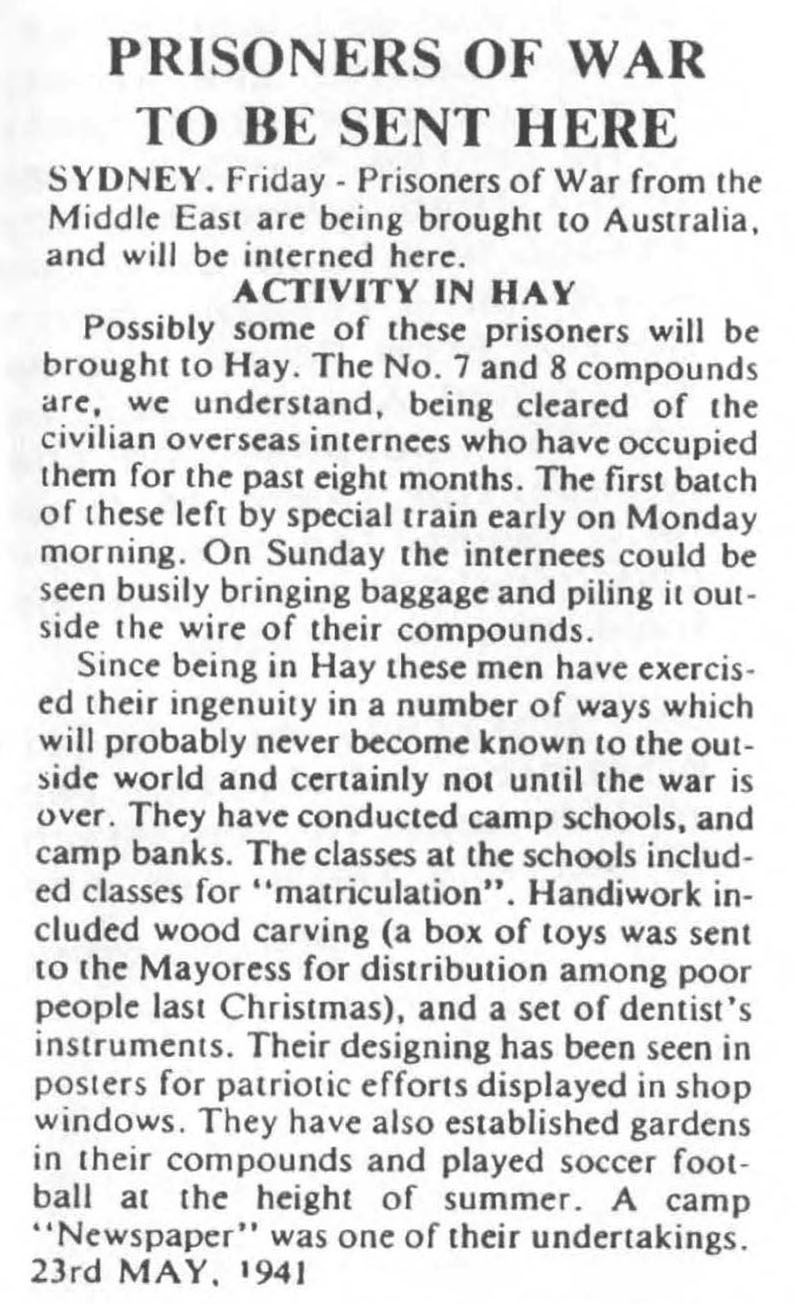
On 23 May 1941, *The Riverine Gracier* reported on the transfer of the Dunera internees.
„All of this and much more was done in quite primitive conditions, at times with implements Waldsax himself made, and for a financial reward of just a shilling a day. According to the Official Visitor, in Hay 16 cases of impacted wisdom teeth had to be operated on with a table-screw turned into a chisel and a self-made wooden mallet.“
This is how historian Peter Monteath[26] See Reinhard Waldsax on “Loveday Lives” online. Accessed September 20, 2023. describes the primitive tools with which Dr. Waldsax, according to his own notes, performed 345 extractions, among other procedures, and provided fellow internees with 718 temporary fillings, 509 cement fillings, and 487 amalgam fillings.
To make volunteer work in the camp more appealing, an internal currency was established in Hay. A camp parliament of “Hut Captains” helped shape opinions and facilitate joint decisions.
Interned Australian Nazis exploited the guards’ lack of interest to take control of a camp near Tatura and hold propaganda events. There, with the camp commander’s permission, an 80-man “Saalschutz” (a synonym for Hitler’s SS) was even established to suppress dissenters.
The end of internment
There is no record of whether the men of Hut 18 were housed together in a Tatura camp. By the end of the internment in the spring of 1942, at the latest, the group had disbanded: Eight men served in the Australian Army’s 8th Employment Company; with the exception of Heinz Dehn [who returned to Germany], they remained in Australia. Three men went to Palestine in 1942. Of the five who returned to England, three were among the victims of the sinking of the Abosso.
Between mid-1941 and April 1946, 29 transports brought nearly 1,300 internees back to England or Palestine; Layton had organized this until his dismissal in January 1945. Beginning in April 1942, internees were allowed to enlist in the Australian Army, an opportunity taken by around 500 men. Some were released to take up employment or pursue university research in Australia. By April 1943, only 180 Dunera Boys[27] See Julian Layton’s diary dated November 23, 1943, cited on the right from in “Julian Layton: Stockbroker and Soldier.” In “Dunera Lives: Profiles,” op. cit., p. 43. remained detained in Tatura.
A large group of the survivors of the Arandora Star’s sinking, who had been brought to Australia on the Dunera, were no longer listed as internees but as prisoners of war beginning in mid-1942. It is impossible to say exactly how many of the 250 Germans in this group—now classified as prisoners of war—were held in Australian custody. It has been documented that more than 40 of these men were refugees—Jews or opponents of the Nazis. Many of the others had either been classified by the tribunals as Nazis or sympathizers, or were automatically assigned to the “B” category of suspects because they had not been classified by the tribunals.
From the diary of
Major Layton, dated 23 November 1943
1. About 90 men who had sailed on the Dunera were still interned, though they were all eligible for release. For one reason or another, they were still in Tatura, alongside about 110 others, some of whom were ineligible for release or unlikely to be called by the Allied Work [sic] Council.
2. There were also Italian internees in Tatura, and their status was not problematic. Mist were reluctant to travel to Britain because of the risk of U-boat attack.
3. Among those who joined Australian forces, the only question still open was who would care for those discharged on medical grounds; or were destitute.
4. Those former detainees doing work of national importance in Australia were to be named ‘refugee aliens’ and therefore eligible to apply for residence in Australia as such. That procedure required monitoring.
5. Some of the rest had been called up to work with the Allied Works Council, and would serve in the Civil Aliens Corps.
A large number of the German survivors of the Arandora Star had been detained in the British colonies in Africa, where most were working as representatives of German companies; others were sailors on ships of the Nazi merchant marine who were arrested while attempting to break the British naval blockade. Many of them were not repatriated until long after the war ended. This also applied to the Italians who remained in Tatura.
After the German and Austrian internees were transferred, Italian prisoners of war were initially housed in Hay. Following a mass breakout from Camp Cowra, Japanese prisoners of war arrived in Hay in February 1945, which was apparently considered a high-security camp. The camps near Hay were evacuated in March 1946 and subsequently demolished. In July 1946, everything that could be sold—comprising 400 lots—was auctioned off, including 850 metric tons of firewood, reported the local newspaper „The Riverine Grazier[28] “The Riverine Grazier,” June 20, 1947, cited in Dunera News No. 16, page 9.“.

Two railway carriages house the Dunera Museum at Hay railway station. The renovated building also houses the archive. Photos: Dehn (2020).

Please note: Many thanks to Alan Morgenroth for sharing his information about the occupancy of Hut 18 with us.
Footnotes
show
- [1]↑About the 1939 Census. The National Archives of the United Kingdom, accessed on October 20, 2026.
- [2]↑Four “Transcript Books” contain the census data collected in September 1939 on the residents of Kitchener Camp. They are divided into 17 sections, each containing 205 people, and a 18th section listing the staff and containing numerous redacted entries. Via Ancestry.
- [3]↑Max Eckdisch and Heinz Dehn were assigned to the camp's road construction crew. Max was able to travel to the United States to settle with his relatives as early as 1940.
- [4]↑Clare Ungerson documents the history of Kitchener Camp in her book *Four Thousand Lives: The Rescue of German Jewish Men to Britain, 1939* (Cheltenham, 2014).
- [5]↑Cited from “Dunera,” a teacher’s guide from the National Library of Australia. Retrieved August 16, 2026.
- [6]↑“The Riverine Grazier,” September 10, 1940, cited in Dunera News, No. 16, p. 8.
- [7]↑“The Riverine Grazier,” October 29, 1946, cited in Dunera News No. 16, pp. 8–9.
- [8]↑Let us remember: The Nazis had left the refugees with little more than the clothes on their backs and 10 Reichsmarks. Many had their last possessions stolen on the Dunera.
- [9]↑Report on visits to the internment camps at Hay, New South Wales, by Mr. G. Morel, Representative of the International Red Cross, March 3–6, 1941. In NAA_ItemNumber216013, p. 45 ff.
- [10]↑Roberts, British Foreign Office, to the Home Office, May 26, 1941, NAA_ItemNumber216013. Page 6.
- [11]↑Quoted from Simon Parkin, “‘I remember the feeling of insult’: when Britain imprisoned its wartime refugees”, in The Guardian, 1 February 2022. Retrieved 15 August 2025.
- [12]↑Response to the Roberts letter dated June 9, 1941, NAA_ItemNumber216013, p 5.
- [13]↑Morel Report, op. cit., p. 45.
- [14]↑See Inglis, Spark, Winter, and Bunyan, *Dunera Lives: A Visual History* (Australia, 2018), p. 117.
- [15]↑These questionnaires about internees were compiled in Hay in late 1940/early 1941 and are filed at NAA under archive numbers 990…. The camp number is listed on the second page of the file (consent or refusal to disclose personal data to the German government and the International Red Cross).
- [16]↑Camp 7 Internees office to the Prisoner of War Information Bureau, undated. From Chief Judge Frederick Jordan’s personal file regarding his visits to the internment camps. In NAA_ItemNumber390299, p. 27ff.
- [17]↑“Jacobsohn, Harry Israel ...” Inventory of Estates for Great Britain, 1980, letter J. Via Ancestry.
- [18]↑See Albrecht Dümling, "The Vanished Musicians* (2016). See pages 139, 147, 260. And *Dunera Lives. Profiles*, op. cit., page 171.
- [19]↑Kathleen Whelan, interview with J-Wire, “The One Who Got Away,” June 17, 2010.
- [20]↑Military file of H.M. Oppenheimer, NAA_ItemNumber6257277, p. 6.
- [21]↑See the Dachau admission register dated March 4, 1939, Arolsen Archives.
- [22]↑Wikipedia on Julian David Layton (19041989), born as Loewenstein. He was commissioned by the British government to wind down the Australian internment camps, retrieved March 15, 2025.
- [23]↑See Morel-Report op.cit., p. 50.
- [24]↑"The Riverine Grazier", May 23, 1941, Dunera News No. 16, p8.
- [25]↑Dr. Waldsax, "Dental Treatment", a compilation in the Dunera Museum’s collection, Hay.
- [26]↑See Reinhard Waldsax on “Loveday Lives” online. Accessed September 20, 2023.
- [27]↑See Julian Layton’s diary dated November 23, 1943, cited on the right from in “Julian Layton: Stockbroker and Soldier.” In “Dunera Lives: Profiles,” op. cit., p. 43.
- [28]↑“The Riverine Grazier,” June 20, 1947, cited in Dunera News No. 16, page 9.
