

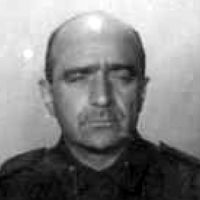
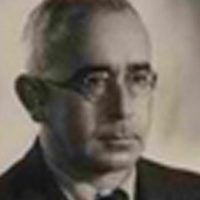
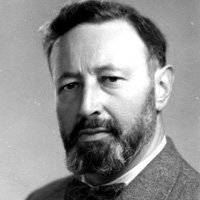

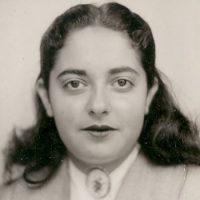
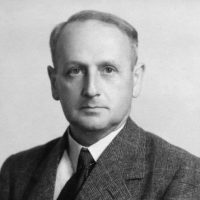
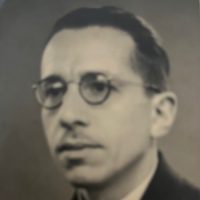
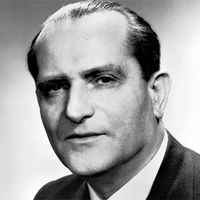
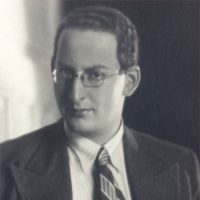
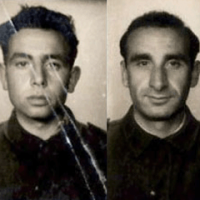

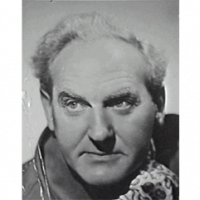
In 1940, the British were afraid of a German invasion. Driven by xenophobia of the worst kind, Winston Churchill’s war cabinet decided to intern tens of thousands of refugees and its own citizens because of their German or Austrian origin or Italian ancestry, and to deport several thousand. This was to affect people aged 16 and over. The Dunera was already underway when exceptions were formulated, including the release of internees over the age of 70. Around 2,800 people were deported from England and Singapore to Australia in 1940.
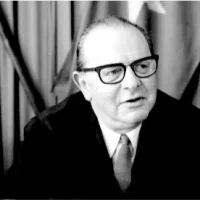
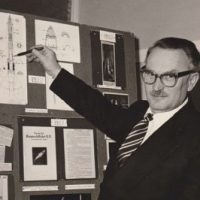
Peter Dehn in October 2025.
The 2,542 men on the Dunera were not told their destination. It was only after two weeks and a stop in Freetown (Sierra Leone) that the internees realized they were headed for Australia. This was in addition to the organized robbery and violence perpetrated by the guards. The 22 criteria[1] RachelPistol, „Routes out of internment - a handy reference guide to White Paper categories“, accessed on October 15, 2025. for the release of interned refugees, which had been enforced by the British public, came too late for those interned in England; the 2,542 men were still on their way to Australia on the Dunera.
Even more dramatic was the situation of the 272 internees from Singapore who arrived in Sydney on the Queen Mary on September 25, 1940. Their consent had been bought with false information that they would be set free in Australia. But they too found themselves behind triple barbed wire in Australia. This group of Germans, Austrians, and Italians included many families with small children. Three men from the German-Austrian group and one Dane were over 70 years old. The oldest member of the Italian Singapore group was born in 1887, making him 53 years “young” at the time of transport.
Ultimately, however, their deportation could also be seen as a lifesaving measure. This is because the British colony was lost to Japan in early 1942.
Deported at an advanced age

Eleanor Rathbone advocated for the rights of internees in the British Parliament.
Source: Wikipedia.
Eleanor Rathbone, MP
In the aforementioned session of the House of Commons, the liberal parliamentarian Eleanor Rathbone[2] Wikipedia about Eleanor Rathbone, accessed September 10, 2025. (1872–1946) pointed out the cardinal error[3] Minutes of the House of Commons loc.cit. of the reckless mass internment of all those “who have been pronounced by the tribunals to be victims of Nazi oppression.” She sharply criticized Winston Churchill’s government: “If you throw your net round all the fish and draw them in, though only a very small minority of the fish are dangerous and suspicious people, you will at any rate get hold of those you want. But you do not get hold of all the dangerous people.”
First, we provide information about the three oldest internees of the Dunera and Queen Mary, who represent all groups of internees.
Josef Rein, geboren am 11. Dezember 1862 (Queen Mary)
The oldest internee in the Queen Mary group was born in Nagy Bojom (Hungary). The widower embarked on his journey to Australia at the age of 78[4] Josef Rein's personnel files in the National Archives of Australia (NAA), via ancestry.. His daughter Irma Furman[5] Irma Rein's personnel files in the National Archives of Australia (NAA), via Ancestry. (*1899) was a nurse. Both were released from internment in October 1941 to the Montefiori Home, a Jewish retirement home in Melbourne St. Kilda that still exists today. He died in 1942. Also deported on the Queen Mary were Josef’s brother Ernst[6] Ernst and Ella Rein's personnel files in the National Archives of Australia (NAA), via Ancestry. (*1895) and his wife Ella (*1897). Ernst was promoted to sergeant in the 8th Australian Employment Company shortly after joining in June 1942, but was discharged[7] Ernst Rein's military file in the National Archives of Australia (NAA), via ancestry. in November 1942 to work for Ellinson Bros. Pty. Ltd. Ernst and Ella were naturalized in 1946.
Vito Gallinari, born on December 14, 1873 (Dunera)
Vito Gallinari, born in Gropparello (province of Piacenza), was already living in London-Camberwell in 1901, according to the census. With his British wife Jessica (24) and their children Joseph (5) and Mary (2), the then 37-year-old 1911[8] Records from the British censuses of 1901, 1911, and 1921, via ancestry. was registered in London-Peckham. When Mussolini plunged Italy into war, he had already been living in England for at least 30 years; both children were adults and British by birth. In 1939, Vito and Jessica[9] Records from the 1939 British census, via ancestry. lived in Camberwell with their son James, born in 1926. Entries in the digitized electoral lists[10] British electoral rolls from 1947, 1954, and 1960, via ancestry can only be found from 1947 onwards.
Immediately after Italy’s declaration of war on June 10, 1940, a wave of arrests of British citizens of Italian descent began. The authorities worked their way through blacklists that the domestic intelligence service MI5 had compiled as a precautionary measure. Most of those arrested had left Italy long before Mussolini came to power and were British citizens. Nevertheless, Vito was arrested on June 12, 1940, as an enemy of Britain. He was one of 707 Italians whose deportation ship, the Arandora Star, was sunk on July 2, 1940. He was unlucky in his good fortune: although he was one of 265 compatriots who were rescued, he and 199 companions still had to endure a 57-day horror trip on the Dunera and years of internment in Australia.
Like many Italian internees, Vito was not released until late: when he reached England on April 19, 1945, he was 71 years old[11] Passenger list of the Dominion Monarch, via ancestry.. He died in London in 1959 at the age of 86[12] Registration list of deceased persons for Q4 1959, via ancestry..
Heinrich Sachs, born on May 7, 1874 (Dunera)
He was the oldest Dunera Boy who managed to escape persecution by the Nazis. Born in Ustron[13] Personnel files of Heinrich Sachs in the National Archives of Australia (NAA) and the British Home Office., Poland, he was Jewish and trained as a cabinetmaker. He moved to Austria and established a cabinet makers workshop in Bruckneudorf, Burgenland, in 1919. A social democrat, he was elected mayor of Bruckneudorf[14] Kathrin Santha, „Erster Bürgermeister der Gemeinde besonders geehrt“ (First mayor of the municipality honored) Special mayor in “Mein Bezirk” online on October 11, 2022, accessed on August 10, 2025. in the first free election on September 28, 1922. After the establishment of the dictatorial corporative state (“Austrofascism”), Heinrich Sachs was removed from office in 1934. With the “Anschluss” through the invasion of the Nazi Reichswehr in March 1938, he was one of the Austrians who were doubly endangered, because as a Social Democrat and head of one of the 14 Jewish families[15] Silvia Maria Schmidt, “das Schicksal der Juden im Bezirk Neusiedl am See 1938–1945," (The Fate of Jews in the District of Neusiedl am See 1938 - 1945 ); thesis at the University of Vienna, 2010, accessed on August 10, 2025. in Bruckneudorf, he had to expect persecution by the Nazis.
He fled via Latvia to England, where he believed he would be safe from persecution. Macabre: at the end of 1939, he was classified by the British authorities[16] Personnel files of Heinrich Sachs from the Home Office, via ancestry. as Category “B”[17] The composition of the tribunals responsible for the classifications made it possible to classify opponents of Nazism and Jews as enemies in order to remove them from political life. – i.e., a potential enemy. On June 7, 1940, he was interned in the Kempton Park[18] The minutes of the House of Commons on August 20, 1940, show that there was “not a single bed, not even a straw mattress or chair, so that the sick and elderly internees had to sleep on the bare floor.” War Minister Anthony Eden blamed “the circumstances” for this situation. camp, where conditions were appalling. A good four weeks later, at the age of 66, he went from bad to worse and was at the mercy of the Dunera guard units.
Although he was released from the Tatura camp to Melbourne in 1942, he was not allowed to travel to England on the Mauretania until August 1945. Back in Austria, he re-established a carpentry business in Bruckneudorf. He had six children with his wife Marie, née Zeuch. He handed over the business to his son Hans in 1947. He continued to be involved in regional political issues. He died on June 19, 1949[19] Website of Hans Sachs Wohnen GmbH, Neusiedl am See, accessed on October 20, 2025. at the age of 75.
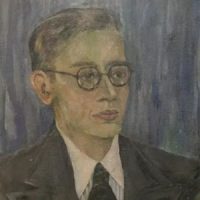
The portrait of Heinrich Sachs, created in Australia by internee Robert Hofmann, has been on display in the town hall since 2022, commemorating both the first mayor of the municipality and 100 years of free elections in Bruckneudorf.

Robert Hofmann painted a portrait of Heinrich Sachs in September 1940 at Camp Hay.
Source: Courtesy of the Mitchell Library, State Library of New South Wales.
The carpentry workshop[20] Website der Firma Hans Sachs Wohnen GmbH, Neusiedl am See, abgerufen am 20.10.2025. was run by his grandson Hans from 1970 onwards. Nina Sachs and Gerd Huszar took over the business from him in 2011, so it remains in the hands of the family. A relative runs a travel agency and a bus company based in Heinrich-Sachs-Gasse in Bruckneudorf.
Another 12 internees, older than 60 years of age
The 12 other internees mentioned here arrived on the Dunera on September 3, 1940, in Melbourne or on September 6, 1940, in Sydney, or, coming from Singapore, on September 25, 1940, on the Queen Mary in Sydney.
Louis Adler …
… born on December 11, 1877, in Linz/Danube. His last residence in Germany was in Nuremberg. In 1922, he was listed on the passenger manifest for a passage to Canada as a British citizen, employed as a merchant at a London company. In 1925, he married Bessie, a British woman of the same age. Churchill’s tribunal expressly exempted him from internment. Nevertheless, he was detained in London on June 28, 1940. In Australia, he was disembarked in Melbourne with the survivors of the Arandora Star and housed in Camp Tatura 4. In August 1942, he was released from internment “on probation.” However, his internment record shows that he did not depart on the Mauretania until August 22, 1945 (!).
Moritz David …
… born on December 18, 1875, in Gimbsheim (Rhineland-Palatinate). He was a rabbi and was imprisoned as an “Aktionsjude” (action Jew) in the Sachsenhausen concentration camp after the pogrom night until November 28, 1938. In England, he lived with his wife Charlotte in Manchester, where he was arrested on June 26, 1940. His internment in Australia ended in July 1942. He later traveled to the USA.
Jean Ewald …
… born on November 22, 1879, in Cologne. He was a ship’s cook in the 1920s. According to his own statement, he was interned on May 29, 1940, in Dunkirk, during the evacuation campaign of the Allied troops to England. It is not known why he was there. In the Australian documents, he described himself as a “refugee from Nazi oppression” after being deported via the Huyton camp and the Dunera to Down Under. In 1943, the Home Office agreed to release him from internment on account of his age (“as aged”). He remained in Australia and died in Warragul (Victoria) in 1970.
Dr. Paul Heinrich Friedrich Hecker …
… born on June 8, 1878, in Fulda. The Catholic stated his occupation in Australia as retired managing director [Ret.Comp.Director] and gave a residence in Switzerland. He was taken off the Dutch steamer Heemskerk in Gravesend, apparently on his way back there, and interned on December 20, 1939. At the beginning of July 1940, he was one of the survivors of the sinking of the Arandora Star and was deported on the Dunera just ten days later. The Home Office refused to release him to Ecuador in 1942. He was only able to return to England after the end of the war in August 1945, where he remained interned until October 1945.
Ferdinand Ernst Jakobeit …
… born on February 6, 1879, in Haffwerda (now Russia) The Protestant was arrested as a sailor on the blockade runner Adolf Woermann on November 22, 1939, on the high seas; he was over 60 years old at the time of his arrest. He also survived Günter Prien’s attack on the Arandora Star. In Australia, he was classified as a prisoner of war. Nevertheless, he was sent for repatriation from the Murchison prisoner-of-war camp in July 1943. However, he did not reach England; he died on August 19, 1943, in British prisoner-of-war camp No. 306 on the Great Bitter Lake in Egypt.
Siegfried Kann (Queen Mary) …
… born on February 20, 1877, in Vienna. He was an accountant and had escaped to Singapore with his wife Johanna and son Herbert (*1909). Two other sons lived in the USA. Siegfried and Johanna were released from internment “on probation” in July 1942 and remained in Australia. After Siegfried’s death in 1948, Johanna moved to the USA. Herbert may have been involved in two businesses, “Bodan & Kann,” in Melbourne.
Nikolaus Meyer …
… born on November 11, 1875, in Strasbourg (Alsace), belonged to the Roman Catholic Church. The background surrounding his arrival in England are unknown. He was arrested on June 25, 1940, at Stillington Hall, Yorkshire. There he had lived in a Christian brotherhood and worked as a nurse. He died on April 23, 1942, in the Australian internment camp Tatura 4. The circumstances of his death are unknown.
Alfred Schwarz …
… born on October 1, 1876, in Hanover. The veterinarian from Peine (Lower Saxony) had served as a veterinarian in World War I. Because he was originally exempt from internment, his classification was changed from “C” to “B” in order to arrest and deport him on June 16, 1940. While he was on the Dunera en route to Australia, he was expatriated by the Nazis as a Jew on August 7, 1940. In Camp Tatura 2, he worked in the farm group, which gave him a card with a poem as a souvenir upon his release. It was not until March 1943 that an opportunity to travel to the USA arose. He died on September 1, 1946, in Hillside, Illinois.
Prof. Dr. Arthur Mendel Seefeld (Queen Mary) …
… born on April 7, 1879, in Kölpin (West Prussia). He was a professor of dentistry. He was the head of a group that included the families of his sons Gerhard and Helmut and Helmut’s mother-in-law Sophie Meier, who had also made it to Singapore. After their release from internment in September 1942, they remained in Australia. Arthur Seefeld died in Melbourne in 1963.
Felix Louis Stern …
… born on December 1, 1875, in Vienna. The printer had served in World War I. He was a widower and had two daughters. In May 1939, he lived in London-Paddington. He was arrested there on June 27, 1940, even though he had a “C” classification. After his release in January 1943, he settled in Sydney. In July 1946, he became a naturalized citizen of Australia. Until his death on May 2, 1950, he lived as a pensioner in Bondi (Sydney).

Based on photographs, the person portrayed by Robert Hofmann in October 1940 at Hay Hospital can be identified as Alfred Schwarz.
Source: Courtesy of the Mitchell Library, State Library of New South Wales.
Alter Josef Sturm …
… born on October 16, 1877, in Dabrowka (Poland). The Austrian merchant first fled to the Netherlands and then on to England. He was interned in Folkstone on May 23, 1940. He was one of the Dunera Boys who were taken from Melbourne to the Tatura 4 camp together with Nazis and fascists. He was able to return to England on the Themistocles in July 1942, but was detained there until the end of December 1942. He joined his wife Helene and three of his four children, who were living in the USA.
Anna Gertrud Wesssolowski (Queen Mary) …
… born on April 26, 1875, in Culmsee (Chelmza). She was the oldest woman in the Queen Mary group who, like her daughter Getrud Hartwig and her family, was deported from Singapore to Australia. In December 1941, she was released from internment in Melbourne “on probation.” She remained there and was naturalized in 1948. Her daughter’s family, including her son Gerald, who was not even two years old at the time of transport, were also released “on probation.” Anna Wessolowski died in Melbourne in April 1954.
Siegfried Wilde …
… born Siegfried Cohn on March 27, 1877, in Tuchel (West Prussia). The merchant had married his wife Johanna (née Praeger, born in 1893) in Berlin in 1914. They were living in Bradford, England, when he was interned on June 1, 1940. He returned there after his release in Australia in October 1942, but was detained in a camp after arriving in England pending further decision and released after being reclassified from “B” to “C.” He died in Bradford, Yorkshire, in 1968.
Please note: Unless otherwise stated, documents from the Home Office and other British authorities (via Ancestry) and the Australian National Archives (NAA) form the basis of these short biographies. The starting point for the research was the lists of internees on the HMT Dunera and Queen Mary in the appendix to the book “Dunera Lives – Profiles.”
Footnotes
show
- [1]↑RachelPistol, „Routes out of internment - a handy reference guide to White Paper categories“, accessed on October 15, 2025.
- [2]↑Wikipedia about Eleanor Rathbone, accessed September 10, 2025.
- [3]↑Minutes of the House of Commons loc.cit.
- [4]↑Josef Rein's personnel files in the National Archives of Australia (NAA), via ancestry.
- [5]↑Irma Rein's personnel files in the National Archives of Australia (NAA), via Ancestry.
- [6]↑Ernst and Ella Rein's personnel files in the National Archives of Australia (NAA), via Ancestry.
- [7]↑Ernst Rein's military file in the National Archives of Australia (NAA), via ancestry.
- [8]↑Records from the British censuses of 1901, 1911, and 1921, via ancestry.
- [9]↑Records from the 1939 British census, via ancestry.
- [10]↑British electoral rolls from 1947, 1954, and 1960, via ancestry
- [11]↑Passenger list of the Dominion Monarch, via ancestry.
- [12]↑Registration list of deceased persons for Q4 1959, via ancestry.
- [13]↑Personnel files of Heinrich Sachs in the National Archives of Australia (NAA) and the British Home Office.
- [14]↑Kathrin Santha, „Erster Bürgermeister der Gemeinde besonders geehrt“ (First mayor of the municipality honored) Special mayor in “Mein Bezirk” online on October 11, 2022, accessed on August 10, 2025.
- [15]↑Silvia Maria Schmidt, “das Schicksal der Juden im Bezirk Neusiedl am See 1938–1945," (The Fate of Jews in the District of Neusiedl am See 1938 - 1945 ); thesis at the University of Vienna, 2010, accessed on August 10, 2025.
- [16]↑Personnel files of Heinrich Sachs from the Home Office, via ancestry.
- [17]↑The composition of the tribunals responsible for the classifications made it possible to classify opponents of Nazism and Jews as enemies in order to remove them from political life.
- [18]↑The minutes of the House of Commons on August 20, 1940, show that there was “not a single bed, not even a straw mattress or chair, so that the sick and elderly internees had to sleep on the bare floor.” War Minister Anthony Eden blamed “the circumstances” for this situation.
- [19]↑Website of Hans Sachs Wohnen GmbH, Neusiedl am See, accessed on October 20, 2025.
- [20]↑Website der Firma Hans Sachs Wohnen GmbH, Neusiedl am See, abgerufen am 20.10.2025.
