

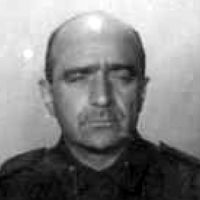
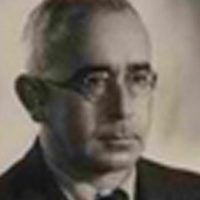
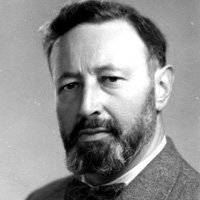

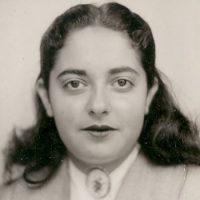
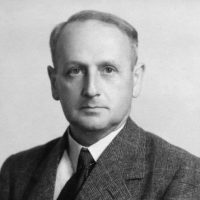
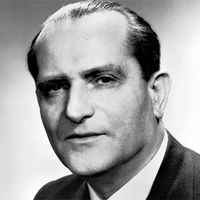
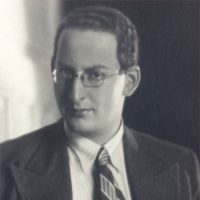
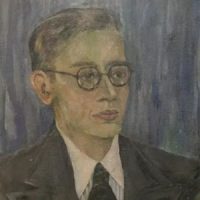
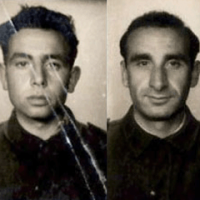

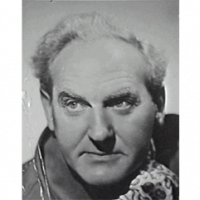
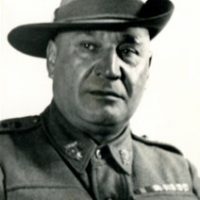
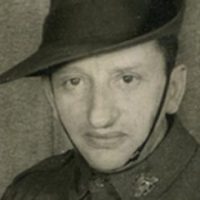
There is no moral justification for the Churchill government’s “collar the lot” policy, which saw tens of thousands of people persecuted by the Nazis put behind bars or even deported overseas in 1940. Sending police officers into schools and businesses to remove young people from there is even less justifiable, even if it may have been formally legal. But why should 16-year-old Jews have been enemies of Great Britain? They had hoped to find refuge from Nazi persecution in England. Some had to celebrate their 16th birthday behind the barbed wire of internment camps before Britain got rid of them. The three youngest, who were deported to Australia on the Dunera on July 10, 1940, had just celebrated their 16th birthday in June.
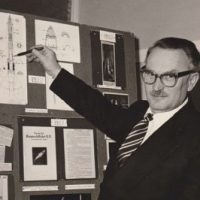
Peter Dehn in October 2025.
The much-quoted slogan “collar the lot,” attributed to Churchill, actually applied to all “enemy aliens” aged 16 and over. The term “enemy aliens” referred not only to known Nazis and potential agents of the Nazi regime, but also to all people who had fled to England to escape racist or political persecution by the Nazis and believed themselves to be safe there.
Branded, arrested, deported
“There are some boys who, after arriving here and since the outbreak of war, have reached the age of 16 and were too late to be brought before the tribunals. They were therefore automatically treated as enemy aliens and subjected to the restrictions of Category B,” Osbert Peake[1] Minutes of the House of Commons from July 10, 1940, item 1211f, accessed on September 10, 2025., Under-Secretary of State for the Home Department, justified this action in the House of Commons in order to take the wind out of the sails of a debate critical of the government. “The result of this was that, in our original plan for B aliens, these boys over the age of 16 were interned. We ordered the release of all boys between the ages of 16 and 18 who were attending full-time education at a boarding school.”
The factual content of this official claim can be verified in the documents of the internees deported to Australia on the Dunera. In fact, the Home Office files of many Jewish refugees between the ages of 16 and 18 contain notes such as “non-tribunal automatic ‘B’ interned.” They did not arrive “too late”: the tribunals had finished their work in February 1940. Many of the young “enemies of the state” did not turn 16 until after the tribunals had ended in February 1940 and fell through the cracks. They were branded as enemies and Nazi sympathizers without any investigation!
“The general internment of Class C aloiens only began on 22nd June,” Peake had told parliamentarians. The “B” categorization of most of the barely 16-year-olds confirms, on the one hand, this systemic defamation of Jewish refugees. On the other hand, 20 of the 16-year-old Dunera internees with a ‘B’ classification were interned only after the aforementioned June 22, and some with a “C” classification were interned before that date.
Peake’s claim in the debate on July 10, 1940—just a few hours after the Dunera had left Liverpool—that “all boys between the ages of 16 and 18” in training had been released did not hold true. There were 325 young people in the age group mentioned by Peake – i.e., those born in 1922, 1923, and 1924 – on board the Dunera. That was 13.5 percent of the 2,542 prisoners on the transport.
Interned and deported
Forty-five of these 325 young people were born in 1924, meaning they were 16 years old. A prime example is the action taken by the authorities against Walter Kaufmann—probably the most famous Dunera Boy in this age group—and two of his classmates of the same age from Bunce Court School[2] Wikipedia entry on the boarding school for refugee children founded by German Jews, accessed on September 20, 2025.. This was a boarding school for Jewish children who had been rescued from the Nazis by the Kindertransports. The Home Office and other authorities involved were aware of this. Several older students from this institution were also deported on the Dunera.


Winston Churchill (l.), Osbert Peake. Source: Wikipedia.
A, B, or C—or maybe A after all?
Initially, around 73,000 refugees who had been accepted into Great Britain were defamed as “enemy aliens” and, starting on September 28, 1939, subjected to interrogation in 120 tribunals. The tribunals completed their work in February 1940. 569 people were assigned to category “A” and immediately interned. These were supposed to be proven Nazis, but that was not always the case. 6,700 people were classified as “suspicious” or “questionable” in category ‘B’ and were not immediately interned, but restrictions were imposed on their daily lives. More than 66,000 people[3] The National Archives (UK), blog dated July 2, 2015, accessed on October 2, 2025. were classified as refugees and victims of Nazi persecution in category “C.”
Eric Koch[4] Quoted from Eric Koch, “Deemed Suspect. A Wartime Blunder,” Toronto 1980, pp. 9/10., who was deported to Canada, assessed the many systematically incorrect classifications as follows: “They at least reflected the state of opinion of the social class from which King’s Counsels (advisers to the king) were drawn.” Several tribunals used inadequate guidelines to follow “their anti-Bolshevik bias by declaring suspect all veterans of the International Brigade which had fought fascists in Spain.” And not only them.
For former Communist Reichstag deputy Karl Olbrysch and 174 internees, this meant death when the Arandora Star was sunk by a Nazi submarine.
Who was assisting whom?
A comparison of personnel files from the Home Office and the Australian authorities shows how thickly Peake had laid it on in the House of Commons: The British police wasted no time in arresting young refugees:
Norbert Leicht was taken to Onchan Camp on the Isle of Man on May 16, almost a month before his 16th birthday on June 13.
Gerhard Katz (classification: “C”) was arrested on his 16th birthday, May 12 (i.e., before May 22!).
For Kurt Schmahl (3 days), Gerhard Besch (4 days), and Alexander Volk (8 days), there was only a short time between their 16th birthday and their internment.
Eight other 16-year-olds were detained between July 2 and 4, only to be deported on the Dunera a week later.
It is also striking that 18 of the 45 young Jews born in 1924 who were deported came from Austria; all but two were born in Vienna.
Only after the last overseas transport had been sent on its way with the Dunera on July 10, 1940, and the British government was under intense public pressure following the debate on the same day, were 22 exceptions formulated by October 1940, according to which internees were allowed to apply for their release. This applied, among others, to all those younger than 16 or older than 70 and students[5] RachelPistol, „Routes out of internment - a handy reference guide to White Paper categories“, accessed on October 15, 2025. of technical disciplines.
For those of both age groups who had been deported to Australia, this came too late. It was not until March 1941 that Major Julian Layton arrived there. As a liaison officer for the Home Office, he spent a year recruiting internees for British pioneer units or organizing their departure via England to third countries. Around 1,100 men among the refugees interned in England and Singapore were thus released.
The youngest deportees on the Dunera
Here, we will first provide more detailed information about the three youngest Dunera “fish” born in 1924. Short biographies of the other 16-year-old Dunera Boys follow further down this page.

Eleanor Rathbone advocated for the rights of internees in the British Parliament.
Source: Wikipedia.
Eleanor Rathbone, MP
In the aforementioned session of the House of Commons, the liberal parliamentarian Eleanor Rathbone[6] Wikipedia about Eleanor Rathbone, accessed September 10, 2025. (1872–1946) pointed out the cardinal error[7] Minutes of the House of Commons loc.cit. of the reckless mass internment of all those “who have been pronounced by the tribunals to be victims of Nazi oppression.” She sharply criticized Winston Churchill’s government: “If you throw your net round all the fish and draw them in, though only a very small minority of the fish are dangerous and suspicious people, you will at any rate get hold of those you want. But you do not get hold of all the dangerous people.”
Gerhard Besch, born on June 24, 1924
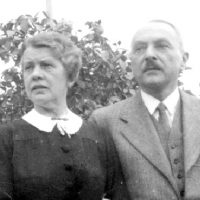
The youngest Dunera Boy comes from Dresden. His parents were Max (1893–1952) and Dilli, née Teig[8] Dresden Registry Office, birth certificate no. 2513 dated August 18, 1896, via ancestry. (1896–1976), who had married in 1917[9] Dresden Registry Office, Marriage Certificate No. 371 dated July 12, 1917, via ancestry, and his older brother Lothar (1922–2006), he last lived in Berlin-Wilmersdorf, at Landhausstraße 9. His father traded in pharmaceuticals in Dresden and, from 1935, in Berlin. His mother and both sons became targets of Nazi hatred because of Dilli’s Jewish origins. Gerhard was only 14 years old when he escaped from Berlin to England on February 15, 1939, probably on a Kindertransport.
There, Gerhard was classified as a “suspected case” in category “B” and was arrested[10] See Gerhard Besch files in the National Archives of Australia, NAA_ItemNumber8616834 and NAA_ItemNumber9905656. in London on June 28, 1940, just four days after his 16th birthday. In Australia, he was initially interned in Camp 7 near Hay. He stated his religion as Protestant and his last occupation as student. It was not until July 1943 – comparatively late – that he was sent from the Tatura internment camp to Melbourne. He remained in Australia for three years[11] See passenger list of the Stirling Castle. Journey with other former internees, via ancestry., but was apparently unable to gain a foothold there. So he traveled to England in 1946 and was officially “exempted” from internment in March 1946. His path then led him to Berlin, where he ran a pharmaceutical business with his brother Lothar from 1947 to 1953. The West Berlin registry office in Zehlendorf recorded that the “pharmacist Leopold Gerhard Besch” died on August 28, 1980[12] Berlin Registry Office, death certificate no. 2003 dated December 4, 1980, via ancestry.. He left behind his wife Rosemarie Martha Besch, née Stoisiek, whom he had married on October 1, 1954.
Honor the brave
It is essential to mention some of the many “unsung heroes” who protected and hid Jewish fellow citizens despite the threat to their own lives: Gerhard’s brother Lothar was protected in Berlin by his girlfriend Ursula Baingo and went into hiding for a time with Willy Kahlert in Berlin-Neukölln and in Paul Fritze’s summer house in Falkensee near Berlin. In November 1944, he escaped imminent arrest by fleeing to Hundham near Rosenheim (Bavaria), where his mother, his aunt Frieda Besch, and his friend Joachim Nave had found illegal accommodation[13] Biography of Ursula Baingo online, accessed on October 1, 2025. with the Schweinsteiger family.
Norbert Wilhelm Helmut Leicht, born on June 13, 1924
The parents of the boy from Vienna were Oskar Leicht[14] Home Office, Akten Oskar Leicht, via ancestry. and Margarete Glueckselig[15] Berlin Registry Office, birth certificate Margarethe Glueckselig No. 1103 dated July 19, 1891, via ancestry.. An Oskar Leicht (born June 26, 1890) was interned in England and released on August 27, 1940. Norbert was arrested —four weeks before his 16th birthday!—on May 16, 1940 in Leeds[16] Home Office, Personalakten Norbert Leicht via ancestry., where he had found refuge with his mother. He was initially taken to the Onchan camp on the Isle of Man. In Australia, he was first interned at Camp 8 near Hay. There he stated that he was a textile worker by profession and Protestant by religion. He was released from internment early and arrived in Liverpool[17] NAA, Personalakten Norbert Leicht. on the Stirling Castle with a large group of Dunera deportees on November 28, 1941. Most of these men wanted to join pioneer units of the British Army or work elsewhere in Great Britain for the Allied war effort. Norbert named Leeds as his destination, where he had been forced to leave his mother in 1940.
Paul Kupfer, born on June 2, 1924
Paul was born in Vienna into a Jewish family. His father Berek (*1882), a shoemaker, was sent to Buchenwald concentration camp (No. 7249, Block 16) on October 2, 1939, where he was forced to perform hard labor carrying stones. From there he was “transferred” on March 11, 1942; he died on March 28, 1942, in Buchenwald[18] Concentration camp files Buchenwald Berek Kupfer in the Arolsen Archives.. His mother, Chaja, née Schmuckler (*1892), and Paul’s younger sister, Herta (*1926), were deported on September 4, 1942, to the extermination camp Maly Trostinez[19] Wikipedia über das Vernichtungslager Maly Trostinez und den Gestzapo-Chef von Minsk Georg Heuser, der nach dem Krieg Chef der Kriminalpolizei von Rheinland-Pfalz (Bundesrepublik) wurde, abgerufen am 1.10. 2025. near Minsk (now Belarus), where they were probably murdered[20] Transport list for Chaja and Herta Kupfer, via the Arolsen Archives. immediately upon arrival.
Paul stated his occupation as shoemaker or bootmaker. In England, he trained as a machinist. The British Home Office noted: “non-tribunal ‘B’ case[21] Home Office, Personalakten Paul Kupfer, via ancestry.”. He was arrested in Walsall on July 5, 1940, and five days later found himself on the Dunera with more than 2,500 other Dunera “passengers,” whose destination, Australia, was kept secret from them. There he was sent to Hay Camp 7. In June 1942, he was discharged to the 8th Employment Company, where he served until October 1946. Although he was punished several times for misconduct, the army supported his naturalization in 1952.
In January 1948, he lived at 24 Wellington Street in the St. Kilda district of Melbourne. Heinz Dehn also lived on this street at the time. Paul changed his place of residence several times until mid-1952, as his ID card[22] ID card in the NAA file Paul Kupfer. reveals. He worked in the restaurant industry, including at a hotel in Brisbane in 1951. During this period, he last listed his occupation as a railway worker.
In 1963, Paul Kupfer worked as a nurse at the Air Force Base in Richmond NSW, north of Sydney. He married Isobel Kathleen Milican (1930–2010), they had a daughter and lived on the air base grounds. They later separated; Paul continued to live at the air base in 1972, while Isobel Kathleen was registered at March Street in Richmond and listed her occupation as seamstress instead of housewife. Paul Kupfer died on October 27, 1996[23] Kupfer/Milican Family Tree, voter registration records, via ancestry.com. in Brightwaters, New South Wales.
The youngest Dunera generation, 1924
Hermann Herbert Baer …
… born on January 17, 1924, in Cologne. Although classified as a Category C refugee and victim of Nazi persecution, he was interned on May 12, 1940 (long before the deadline mentioned by Peake). After his release from internment, he served in the 8th Australian Employment Company from April 1942 to September 1946. He became an Australian citizen in February 1946 and worked as an accountant, among other things.
Max Baer …
… born on January 21, 1924, in Mannheim. He was an apprentice cook in England. After his release from internment, he was a victim of the sinking of the Abosso by a German submarine on his way to England.
Jakob Alfred Benjamin …
… born on May 31, 1924, in Würzburg. He was able to escape anti-Semitic persecution in May 1939 by fleeing to England. The British classified him as a suspected Nazi in category “B” and interned him in London on June 28, 1940. His internment ended in February 1943. He traveled to the USA, where he became a naturalized citizen in 1954 and married in 1957. He died in 2015.
Alfred Broch …
… born on February 11, 1924, in Vienna. The Home Office noted “Automatic ‘B’ case.” He was interned on May 16, 1940, at Benson Camp, an emigrant camp near Chiltern. His release was approved in England on December 30, 1941, but he was not released in Australia until early June 1942. From then on, he served in the 8th Australian Employment Company until October 1946. He was naturalized in Australia in 1947.
Alfred Brunner …
… born on May 23, 1924, in Vienna. The law student was arrested in Manchester on June 28, 1940. After his internment ended, he was released to Palestine in February 1942.
Günther Buch …
… born on March 13, 1924, in Mainz. The Home Office gave him the contradictory classification “Automatic B Child refugee.” Released from internment, he enlisted in the 8th Australian Employment Company in April 1942. After completing his service in September 1946, he was naturalized in October 1946.
Paul Fehl …
… born on January 2, 2024, in Vienna. He was arrested in London on June 28, 1940. In October 1941, he was released to England.
Alfred Georg Fischer …
… born on January 3, 1924, in Gutenstein (Austria). A Catholic, he was first interned at the Huyton camp on July 3, 1940, before being taken to the Dunera on July 10. During his internment, he spent several months in hospital in 1941 before being allowed to travel to England in October 1941.
Herbert Max Fraenkel …
… born on January 16, 1924, in Berlin. He was interned on June 28, 1940. He returned to England in 1942 and set up an engineering office. In 2019, he died alone and almost forgotten[24] „London City Worker Secures Jewish Funeral for 95-Year-Old Man Who Died Alone“ in Jewish Journal, May 8, 2020, accessed October 1, 2025 in London. A social worker of Greek descent organized his Jewish funeral. The Facebook streaming of the ceremony attracted a lot of attention online.
Walter Freiberger …
… born on February 20, 1924, in Vienna. He was not arrested until July 4, 1940, in Wallsall, Staffordshire, and interned in the Huyton camp. After his release from internment, he joined the 8th Australian Employment Company in early 1943 and was discharged in January 1945. He first went to England, then to the US, where he married in 1956 and became a naturalized citizen in 1962. He died in January 2019 in Providence, Rhode Island.
Ulrich Georg Friedmann …
… born on January 6, 1924, in Berlin. The stenographer was interned in Huyton on July 4, 1940. During his internment in Australia, he spent four weeks in hospital in 1943 and was released from internment in Melbourne in December 1943, relatively late in the day. He died in Australia in 1944.
Horst Giesener (Harry Gilbert) …
… born on May 3, 1924, in Stargard. He was training to be an assistant cook. Despite the addition of “Israel” to his name, the British authorities classified him as “Category B” (untrustworthy) without a trial, arrested him on May 16, 1940, in Manchester, and interned him on the Isle of Man. Released from internment in Australia, he arrived in England in February 1942. He married in 1949 and became a British citizen in 1950 as Harry Gilbert. He died in Edgeware, Middlesex, in 2011.
Kurt Siegbert Henle …
… born on February 18, 1924, in Hamburg. He was one of the boys who were taught at Bunce Court School for Jewish refugee children. He was interned on May 12, 1940. In Australia, he was sent to England on the ship Themistocles in October 1942.
Philipp Günther Herbst …
… born on March 4, 1924, in Görlitz (Saxony). He arrived in England in July 1938, where he was defamatorily classified as “Category B” and interned on May 16, 1940, even though he attended the Royal Grammar School in Worcester. After his release from internment, he became a soldier in the 8th Australian Employment Company in August 1942 and served there until December 1946. His Australian citizenship, granted in July 1946, was to be revoked because he had been abroad for many years since 1952: among other things, he was enrolled in a postgraduate program in Philadelphia, USA, after which he studied in London and earned a degree in psychology in 1957.
Paul Heinz Hofmann …
… born on April 4, 1924, in Vienna. His Home Office index card was marked “non-tribunal Automatic ‘B’ case.” He was arrested on May 17, 1940, and taken to Douglas Camp on the Isle of Man. He served in the 8th Australian Employment Company from June 1942 to September 1946.
Walter Hofstädter …
… born on March 30, 1924, in Vienna. His classification in category “C” did not protect him from internment on May 16, 1940 (i.e., see Peake, before May 22). After internment in the Australian camps Hay and Tatura, he served in the 8th Australian Employment Company from June 1942 to January 1946 and returned to England, where he became a naturalized citizen.
Siegfried Kahan …
… born on February 25, 1924, in Berlin. An index card from the Home Office notes “automatic B.” In the spring of 1941, he was released from Australia to Palestine. He died on July 26, 1988, in Netanya, Israel.
Gerhard Hermann Katz …
… born on May 12, 1924, in Zurich. He was taken into internment on his 16th birthday. In November 1941, he was able to travel from Australia to England, where he joined the British Army and became a British citizen.
Walter Kaufmann …
… born on January 19, 1924, in Berlin. He arrived in England on a Kindertransport on his 15th birthday and attended the Jewish Bunce Court School. There he was arrested. At the Huyton internment camp, he volunteered for transfer to Canada because he was promised freedom of movement and work there. But he too was deported to Australia on the Dunera. After his internment, he served in the 8th Australian Employment Company from April 1942 to February 1946. He became an Australian citizen, went to sea, and published his first novel in 1951. In the mid-1950s, he moved to the GDR. As a communist, he was monitored by the Australian domestic intelligence service ASIO until the 1980s. He died in Berlin in 2021.
Julius Mann …
… born on April 6, 1924, in Mainz. According to the Home Office, he was a “‘B’ Cat non-tribunal apprentice.” He was one of the 13 Dunera Boys who were sent back to the Dunera immediately after arriving in Australia, bound for England. However, they were disembarked in Bombay and “forgotten” by the British. It took Julius a year to travel on to the US, where he applied in June 1942 and was drafted into the US Army.
Lothar Hermann Markiewicz …
… born on January 9, 1924, in Berlin. He came to England on a Kindertransport. Although he attended school (School House Sherbourne, Dorset), he was arrested on May 27. After internment, he went to England at the end of 1941, became a British citizen, and married in 1950. He died in 2014.
Joseph Millet …
… born on May 1, 1924, in Vienna. He was arrested on May 18, 1940, while working as a hotel porter in London. After internment, he served in the 8th Australian Employment Company from April 1942 to September 1946, ultimately as a lance corporal. He was naturalized in Melbourne in 1946. He died in Sydney in 1983.
Bob Wolfgang Morgenstern (William Robert Morton) …
… born on May 7, 1924, in Vienna. He was interned on June 28, 1940, at Field House Loughborough College and was classified as “B.” In December 1941, he arrived in England and was officially released from internment. He married and ran a hotel with his wife.
Gerd Hans Moses …
… born on May 4, 1924, in Berlin. He was one of the 13 Dunera Boys who were immediately sent back on the Dunera, but were disembarked in Bombay and then “forgotten.” It was not until 1945 that he was able to travel via England and Argentina to Chile, where he became a citizen in 1960.
Wilhelm Neufeld …
… born on March 27, 1924, in Vienna. Despite being classified as “C,” he was interned at Kempton Park camp on July 3, 1940. In March 1942, he transferred from internment to the 8th Australian Employment Company, where he served until the end of August 1946. He became an Australian citizen in 1947.
Jakob Rattner …
… born on March 29, 1924, in Vienna. He was also a “non-tribunal automatic ‘B’ case.” He was arrested on May 17, 1940, and was interned at Camp Douglas on the Isle of Man prior to his deportation to Australia. After his release from internment, he returned to England in 1942 and died in London in 2008.
Ralf Edgar Rieser …
… born on January 20, 1924, in Berlin. The gardener, a member of the Church of England and classified as a Category C refugee, was arrested in Manchester in June 1940 and taken to Huyton Camp near Liverpool. He was not able to leave Australia and the Tatura internment camp until March 1945. In 1946, he went to Brazil, where he started a family and died in Sao Paulo at the end of 2007.
Herbert Rosenthal …
… born on February 15, 1924, in Frankfurt am Main. He was not yet 16 when he had to give information before a tribunal and was listed in category “C.” Nevertheless, he was picked up by the police on July 2 and imprisoned in the Kempton Park camp. He was released from internment in August 1942. On his journey to England, the 18-year-old fell victim to the sinking of the Abosso by a German submarine.
Walter Salomon …
… born on June 1, 1924, in Berlin. The apprentice in the fur trade was also a “non-tribunal automatic ‘B’ case” and, contrary to the statements quoted, was arrested on June 21, 1940 (three weeks after his 16th birthday) and taken to Kempton Park camp. He was able to return to England on the Stirling Castle at the end of November 1941.
Kurt Schmahl …
… born on May 22, 1924, in Vienna. He worked on a farm, was classified as a “B” case without trial, and was arrested in Oxford on May 25, 1940, just three days after his 16th birthday. Shortly after serving in the 8th Australian Employment Company from June 1942 to January 1946, he went to England, where he immediately got married.
Solomon Seide (Sydney Zajde) …
… born on April 3, 1924, in Elberfeld. He was one of the Dunera 13 who were sent back on the Dunera immediately after arriving in Australia. However, they were disembarked in Bombay and abandoned by the British authorities. It was not until November 1942 that he was able to travel to England. He died there in 2005.
Werner Bernhard (Bernard) Simoni …
… born on January 30, 1924, in Berlin. He was one of the many refugees who were interned and deported despite being classified as category “C” (on June 26, 1940). After his release from internment at the end of 1941, he returned to London, where his mother lived. He was married, had two children, and died in 1991.
Alfred Spier …
… born on January 4, 1924, in Holzhausen. He worked on a farm in Scotland. He was known to the Home Office as a Jew due to the additional name “Israel” included in the British files and, despite being classified as “C,” was interned on May 12, 1940, and deported together with his older brother Julius. In 1942, both were able to travel to England. He later went to Germany. He died in Bielefeld in 2017.
Ernst Steindler …
… born on April 17, 1924, in Salzburg. He, too, was classified as a “non-tribunal case born 17.4.24. ‘B’ Cat.” without a hearing and with reference to his youth. After his arrest on May 17, 1940, he was initially taken to Douglas Camp (Isle of Man) and, according to the Home Office, was to be released on July 11, 1940; by then, the Dunera was already at sea. It was not until 1941 that he was able to go to England, where he became a naturalized citizen and died in 2012.
Rudolf Stern …
… born on May 3, 1924, in Cologne. Category “C” did not protect him from arrest on July 2, 1940, in Manchester. A short period of detention in Huyton Camp was followed by deportation to Australia. On the return journey to England, his ship, the Abosso, was sunk by a German submarine and Rudolf drowned.
Fritz Sternhell …
… born on April 27, 1924, in Vienna. He was saved from Nazi persecution by a Kindertransport. He got a job in a leather factory, but was fired for advocating for better working conditions. Despite his “C” classification, he was arrested on May 12, 1940, and interned first in Huyton, then on the Isle of Man. He volunteered because he was promised Canada as his destination. During the crossing on the Dunera and in Australia, Dr. Wasser took care of him. In 1942, he was able to travel to England, where he served in the army as an interpreter in the Middle East from 1943 onwards. He married in 1948 and died in Oxford in 2020.
Richard Strauss …
… born on April 16, 1924, in Mainz. Before going to England, he had been through an odyssey between his divorced parents (father in Switzerland, mother in Italy). The Rotary Club supported his escape. Despite being in training as a window dresser, he was arrested in Portsmouth. After his internment ended, he initially served in the 8th Australian Employment Company from April 1942. Most recently, he was assigned to the guard unit of the Murchison prisoner-of-war camp with the rank of sergeant until January 1947. He then went to the USA, where he worked as a ship’s cook, among other things. He died in Honolulu in February 1993.
Fritz Tedesco …
…born on February 15, 1924, in Vienna. Despite being classified as “C,” he was arrested on June 26, 1940, at his training site, a farm in Enfield, and imprisoned in the Kempton Park camp. In December 1941, he was released from internment and sent to England.
Kurt Vogel …
… born on February 14, 1924, in Vienna. After the annexation of Austria in March 1938, he fled to France, where he began training as a dental technician. He went to England and was arrested in Dover on June 26, 1940, and interned in Huyton. He was released from Australian internment in September 1942 on probation to Melbourne. From 1943, he sought naturalization, which was granted in 1948. He was married, lived in Sydney, and worked as a toolmaker in the 1940s.
Alexander Volk …
… born on May 14, 1924, in Mainz. On May 22, 1940, he was arrested in London as a “non-tribunal automatic ‘B’ case” and interned at Kempton Park camp. The camp university in the Australian camps Hay and Tatura enabled him to graduate from high school. While still serving in the 8th Australian Employment Company from September 1942, he was able to study as an external student at the University of Melbourne and, after his discharge in February 1946, began a regular engineering degree there, which he successfully completed in 1949. In August 1946, he became an Australian citizen. He died in the US in 2020.
Hans Heinz Wolfsheimer (John Henry Wolham) …
… born on April 3, 1924, in Munich. In England, he was a student at the Jewish Bunce Court School. Nevertheless, and despite being classified as a “C” case, he was arrested by the British authorities on May 12, 1940. After being deported to Australia and the end of his internment, he arrived in England in February 1942. In July 1947, he traveled to the USA, where he became a naturalized citizen in 1956. He died in 2009.
Oswald Veit Graf Wolkenstein …
… born on April 8, 1924, in Munich. He came from a Catholic noble family in Austria. Like his older brother Christoph, he was a student at Ampleforth College in Yorkshire. Both were interned on May 12, 1940, taken to Camp Douglas (Isle of Man) and deported to Australia on the Dunera. Oswald was released in 1942 to attend Xavier College in Melbourne. He became a naturalized Australian citizen in 1946. He started a family in Melbourne and died in 2003.
Please note: We are indebted to Trischi Ward, whose work on her mother Ursula Baigno provided valuable information for Gerhard Besch’s biography. The starting point for the research was the lists of internees on the HMT Dunera and Queen Mary in the appendix to the book “Dunera Lives – Profiles.”
Footnotes
show
- [1]↑Minutes of the House of Commons from July 10, 1940, item 1211f, accessed on September 10, 2025.
- [2]↑Wikipedia entry on the boarding school for refugee children founded by German Jews, accessed on September 20, 2025.
- [3]↑The National Archives (UK), blog dated July 2, 2015, accessed on October 2, 2025.
- [4]↑Quoted from Eric Koch, “Deemed Suspect. A Wartime Blunder,” Toronto 1980, pp. 9/10.
- [5]↑RachelPistol, „Routes out of internment - a handy reference guide to White Paper categories“, accessed on October 15, 2025.
- [6]↑Wikipedia about Eleanor Rathbone, accessed September 10, 2025.
- [7]↑Minutes of the House of Commons loc.cit.
- [8]↑Dresden Registry Office, birth certificate no. 2513 dated August 18, 1896, via ancestry.
- [9]↑Dresden Registry Office, Marriage Certificate No. 371 dated July 12, 1917, via ancestry
- [10]↑See Gerhard Besch files in the National Archives of Australia, NAA_ItemNumber8616834 and NAA_ItemNumber9905656.
- [11]↑See passenger list of the Stirling Castle. Journey with other former internees, via ancestry.
- [12]↑Berlin Registry Office, death certificate no. 2003 dated December 4, 1980, via ancestry.
- [13]↑Biography of Ursula Baingo online, accessed on October 1, 2025.
- [14]↑Home Office, Akten Oskar Leicht, via ancestry.
- [15]↑Berlin Registry Office, birth certificate Margarethe Glueckselig No. 1103 dated July 19, 1891, via ancestry.
- [16]↑Home Office, Personalakten Norbert Leicht via ancestry.
- [17]↑NAA, Personalakten Norbert Leicht.
- [18]↑Concentration camp files Buchenwald Berek Kupfer in the Arolsen Archives.
- [19]↑Wikipedia über das Vernichtungslager Maly Trostinez und den Gestzapo-Chef von Minsk Georg Heuser, der nach dem Krieg Chef der Kriminalpolizei von Rheinland-Pfalz (Bundesrepublik) wurde, abgerufen am 1.10. 2025.
- [20]↑Transport list for Chaja and Herta Kupfer, via the Arolsen Archives.
- [21]↑Home Office, Personalakten Paul Kupfer, via ancestry.
- [22]↑ID card in the NAA file Paul Kupfer.
- [23]↑Kupfer/Milican Family Tree, voter registration records, via ancestry.com.
- [24]↑„London City Worker Secures Jewish Funeral for 95-Year-Old Man Who Died Alone“ in Jewish Journal, May 8, 2020, accessed October 1, 2025
