
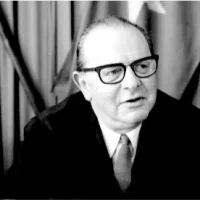

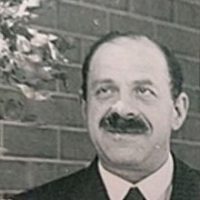
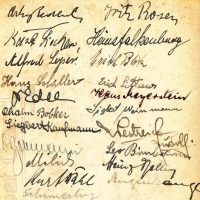
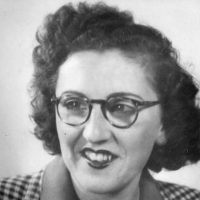
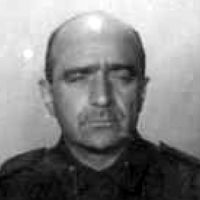
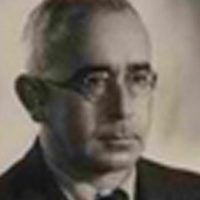
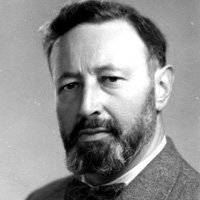

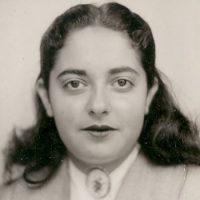
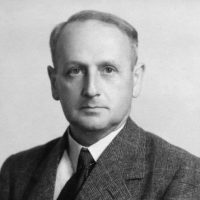
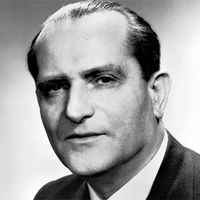
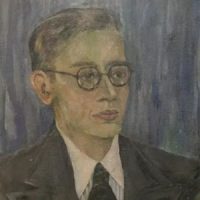
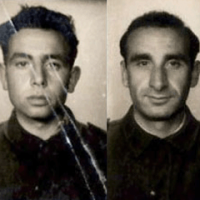

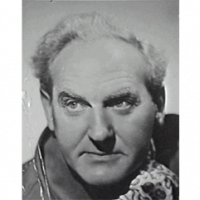
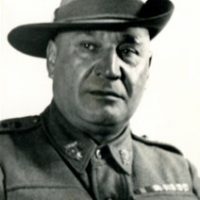
Today, one would probably say: He was really cool. An unusual commander of one of the most unusual Allied units of World War II. As a Maori, Gallipoli veteran Captain Edward Renata Muhunga Broughton had experienced discrimination himself. In 1940, he volunteered and in 1942 was placed in command of the 8th Australian Employment Company. The unit consisted exclusively of people persecuted on racial and political grounds by the Nazi regime—volunteers who had previously been British prisoners in Australian custody (“internees”). Captain Broughton, known as “Tip,” was deeply committed to “his” soldiers; he made many things possible that helped them transition to civilian life. No wonder that the nearly 600 men who passed through the unit remembered him with great respect. That is reason enough to introduce the “Skipper” of the 8th Australian Employment Company here. We thank Prof. Emeritus Bill Gammage and the publisher for the publication rights to his biography from the book “Dunera Lives – Profiles.”
Peter Dehn, June 2026.
‘One of only two coloured officers in the Australian Army’, observers noted of Edward Renata Muhunga Broughton. This comment says a lot about Australia, and about Broughton. He was an Australian captain[1] dunera.de: This officer rank, which is common in Australia and elsewhere, is equivalent to that of a Hauptmann in the German Armed Forces. — a lieutenant for a few minutes — only because he had been a New Zealand Expeditionary Force (NZEF) captain in the Great War, but his appointment matched a most remarkable commanding officer with the most unusual military unit in Australian history.

The book “Dunera Lives – Profiles,” from which this biography is taken, was published in 2020 by Monash University Press in Melbourne.
Childhood and Family
Aspects of Broughton’s ancestry are uncertain, but it seems that his father, Wiremu (William) Muhunga Broughton, was born in 1856 to Guillaume (William) Goff (1820—80), a Wanganui storekeeper originally from Finistere in west Brittany, France, and Te Oiroa, or Oriwia, Hohaia (1822—60). The parents separated soon after his birth, and in about 1858 Oriwia married Edward Thomas Broughton (1834—93), who came to Wanganui with his parents James and Elizabeth and his brother Charles in January 1852. From 1860, Charles was a captain and native interpreter for the government during the Maori Wars, until killed by Hauhau men on 1 October 1865[2] Thomas W Gudgeon, The Defenders of New Zealand, (Auckland: H Brett, 1887), pp.327—9, 332—3, Tip's notes on p.326; Broughton Papers courtesy Suzanne Connell, Port Macdonnell, SA.. Edward was a volunteer in the Wanganui Rifles during the war; he and Oriwia had a son, Edward Turia Broughton, in 1859, about the time they adopted Wiremu. When Oriwia died in 1860, Renata (Leonard) Kawepo took up Wiremu’s care.
Kawepo was a Ngati Te Upokoiri man who became a Ngati Kahungunu rangatira (chief). He had great mana (spiritual authority), fought valiantly for the government during the Maori Wars, held about 7500 acres [c3000 hectares] at Fernhill near Omahu inland from Napier, and was said to be a later signatory to the Waitangi Treaty[3] Dunera.de: The war between the British and the Māori ended on February 6, 1840, with the Treaty of Waitangi: 45 chiefs pledged allegiance to the British Crown; New Zealand became a colony. In return, they were guaranteed ownership of their land, fishing grounds, etc. The treaty is the island nation’s first constitutional document. Wikipedia on the treaty. Retrieved on May 3, 2026.. When Kawepo died on 14 April 1888, Wiremu inherited some of his mana and responsibilities as a civic leader. Kawepo’s will left him considerable wealth, but another of Kawepo’s adopted children, Airini Donnelly, contested it. The ensuing court cases ran for years and set some legal precedent for dealing with succession to customary land title, but left only lawyers better off. Wiremu remained a respected citizen and well-to-do sheep farmer at Fernhill until he hanged himself on a visit to Wanganui in March 1908. He is buried beside Kawepo[4] Australian National University (ANU), Noel Butlin Archives (hereafter ADB file), NZDB records, Broughton ADB file; Ian Campbell to Bill Gammage 3/7/18; National Library ofAustralia (NLA), KS Inglis Dunera/Queen Mary papers, Broughton file (hereafter Broughton file); ADB vol.13, pp.270—I; Wairarapa Daily Times 11/3/08; Richard P Boast, 'Ihe Omahu Affair, the Law of Succession and the Native Land Court', VUWLau, Reports, 46, 2015, pp.841-74; Broughton Papers..
At Omahu on 19 June 1882, Wiremu married Atiria Hauwaho (c1860— c1921), of Turanganui near Gisborne. Their first son Edward, or ‘Tip’ as family and friends would call him, was born on 6 September 1884 at Ngapuke, east of Taumarunui, the eldest of about nine children. He grew up on his father’s farm until in 1893 he enrolled at Heretaunga School in Hastings, in 1895—96 playing for the school in rugby and cricket. In 1897 he moved to Wanganui Collegiate School[5] NZDB records, ADB file; Hereworth School Archives courtesy Victoria Hamilton; Wanganui Collegiate School (WCS) Archives courtesy Frances Gibbons; ADB vol.13, pp.270—1; Len Ormsby interview, c1994, ADB file; Suzanne Connell to Bill Gammage 21/9/18; Broughton file., excelling in English and Drama, and was an above-average sportsman in rugby, athletics (long jump and 100, 220 and 440 yards), swimming and boxing. He remained at the school until the first term of his matriculation year, 1899, then went back to the farm. By this time the farm was breeding racehorses as well as sheep — Tip would follow the races all his life.

Edward was the oldest child of Wiremu and Atiria. Photos: Ancestry.

In April 1900, Maori people performed a dance they had created themselves to petition for permission to fight in the First Boer War, but the British refused their request on racist grounds. Source: Kura Heritage Collections.
Too young, yet a soldier
On 25 February 1902, aged 17, he volunteered for the South African War[6] Dunera.de: Also known as the Second Boer War; see Wikipedia, accessed on March 30, 2026.. He said he was 21, which meant he didn’t need parental consent to enlist, and was accepted into the 9th Contingent, North Island Regiment, NZ Mounted Rifles. He sailed on 19 March, already, the army noted, tattooed on chest and arms. The war was nearly over, and may have been over when he wrote to his old school[7] Collegian 60, December 1902, WCS Archives. from Vereeniging, where peace was signed on 31 May:
We came up through Natal, and from Estcourt to Ladysmith one can see monuments and graves on either side of the line… Ladysmith, where we stayed four hours, is the dirtiest town that I ever saw; it is chiefly populated by Jews, Persians, Hindoos, and Kafflrs, with a sprinkling of Dutch. The Town Hall, about which we had heard so much, is about the size of a four-roomed cottage and has its tower half blown off. The hands of the clock are at a quarter to three.
He was discharged in New Zealand on 26 August 1902, but in September went back onto army pay while recovering from measles and bronchitis.
Then, such was Queen Victoria’s mana that, although she died 13 months before Tip enlisted, he went back to the farm with the Queen’s Medal and ‘Transvaal’ and ‘1902’ clasps.
In May 1906 Tip married Rangiapoa Waikari (c1886—1921), daughter of Waikari Keraitiana Te Rango and Imaima Hekenui of Taihape. Their son Wiremu Muhunga Rangi Broughton (‘Wi’) was born in 1908, and as a boy was crippled, reportedly by a fall from a tree. By 1909, Tip was in Wellington, working as a newly licensed native interpreter second grade, and secretary to the chief judge of the Native Land Court. Later he became a licenced land agent and native agent. In August 1914 another war came, by which time Tip had begun proceedings to divorce Rangiapoa. He was granted a dissolution of marriage in November. Rangiapoa married again in 1916, and died in Wanganui Hospital [8] ADB vol.13, pp.270—I; ADB file; Evening Post 8/10/09, 19/11/14; Dunera News 24, June 1992, p.4.on 13 June 1921.
Volunteering for World War I
Tip enlisted as 16/518 in the original Maori Battalion NZEF on 4 January 1915. He was single, a land broker for the Native Department, his address the Civil Service Club in Wellington, and his next-of-kin his mother at Fernhill. For ‘Religion’ he wrote ‘None’. Unusually for him at the start of a war, he stated his age accurately.
The Battle of Gallipoli

Gallipoli in July 1915: Maori soldiers haul a large water tank uphill. Image source: Australian War Memorial, C01812.
He was a sergeant in the battalion’s East Coast Company when it sailed for Egypt on 14 February 1915, and when it landed at Anzac[9] Dunera.de: ANZAC steht für das Australian and New Zealand Army Corps, eine im 1. Weltkrieg gebildete gemeinsame Armeeeinheit, die u.a. in Gallipoli im Einsatz war. Der Jahrestag der dort am 25. April 1915 begonnenen Schlacht ist Nationalfeiertag in Australien und Neuseeland (Anzac Day). Die Verwendung in diesem Text bezieht sich auch auf die „Anzac Cove“, wo diese Truppen an Land gesetzt wurden. Wikipedia über ANZAC und Anzac Day, abgerufen am 30.3.2026. on 3 July. The battalion was attached to Tip’s old unit, the NZ Mounted Rifles, now a brigade stationed on Anzac’s north flank. Maoris dug the famous Great Sap along North Beach towards Suvla, 8 feet deep by 5 wide, and for the August offensive were distributed among Mounted Rifles units, which engaged in heavy fighting during the night attack into the hills below Chunuk Bair on 6 August and at Hill 60 on 29 August. The battalion began August with 16 officers and 461 men; by September it had no officers and 60 men, losses so heavy that the survivors were distributed among the four New Zealand infantry battalions. Tip’s company was attached to the Otago Battalion. On 15 November, he was promoted to 2nd lieutenant, one of only two Maoris[10] Christopher Pugsley, Te Hokowhitu a tu: The Maori Pioneer Battalion in the First World War, (Auckland: Reed, 1995), pp.36, 40, 43—4, 85, 89; ADB file; National Library NZ, Broughton service record 1914—18; NZDB records. promoted to officer rank at Anzac.
Anzac was evacuated in December, but in Egypt the battalion was not reformed until February 1916, when it became a Pioneer Battalion, a labour battalion. The slight to these warrior people was felt in Egypt and in New Zealand, but Maoris would not be spared the war’s horrors. In recognition of his good work at Gallipoli, in April 1916 Tip was one of a cadre selected to return home to help train Maori reinforcements and bring them back to the war. He was posted to Narrow Neck Camp near Auckland until, on 23 September, he embarked in charge of the battalion’s 8th reinforcements for England. On 3 November, he was promoted to lieutenant and made a Lewis gun officer, and took his reinforcements to join Pioneer details at the NZEF camp at Sling, like most colonial camps on bleak Salisbury Plain. In December they crossed the Channel and on 17 January 1917 joined the Maori Pioneers in the field. Three weeks later Tip was evacuated to a casualty clearing station and then to a field hospital[11] Pugsley pp.45—6., probably ill, but rejoined on 18 February. Thus he missed the hard work under fire the Pioneers endured in the terrible mud of Flers during the bitter 1916—17 winter, though the February was cruel enough.
The Battle of Messines
At and behind the Front, Tip found the Maoris digging trenches and dugouts, repairing roads and carting supplies. By May they were working under fire at Hill 63; and during the Messines[12] Dunera.de: A town in West Flanders (Belgium). attack on 7—8 June, bombarded by enemy artillery, they dug 5000 yards of trench from the old British frontline through the captured German trenches and into the new no man’s land. The battalion lost 150 men (17 killed, 88 wounded and 45 gassed), but Tip survived, and after the battle withdrew with his ‘C’ Company to a ‘rest’ camp at Nieppe. On the night of 12 June, the company’s huts were shelled. Running towards them in the dark, Tip tripped over a gutter and sprained his ankle, and was sent to hospital in England.
By this stage of the war, any wound or injury possibly self-inflicted demanded an official inquiry. Tip’s was held on 21 July. He was exonerated, convalesced in England, and while on leave in August was promoted to captain to replace a fellow officer, Captain Pekama Kaa, killed in action. In September he was posted to Sling, and in October to Pioneer officer training at Reading, not rejoining the battalion in France[13] Pugsley pp.61, 67, 107, 133. until just after Christmas 1917. Again he missed heavy fighting, at Passchendaele.
End of the War and Discharge
When Germany launched its great offensive in March 1918, the Pioneers were rushed from Flanders to the Somme, where they spent most of the rest of the war. The German advance was stopped, in July—August Tip was given a remarkable 17 days’ Paris leave, and on 30 September he was appointed company commander until 31 December. In March 1919 he was mentioned in despatches for distinguished and gallant service and devotion to duty since September 1918. The New Zealand Division fought until the Armistice, capturing Le Quesnoy on 4 November, but records do not say what Tip did to merit his award. In April 1919 the Maori Pioneer Battalion came home as a unit, the only New Zealand or Australian fighting formation to do so. It lost 336 of its men dead and 734 wounded – not heavy losses for 1914-18, but many more than the 230 New Zealand dead in South Africa. Tip was demobbed on 4 May, having served four years and 121 days[14] Pugsley pp.72, 77, 81..

Officers of the New Zealand Pioneer Battalion in 1919, likely shortly before the unit was disbanded. Broughton is sixth from the left in the front row.
Photo: Auckland Museum (MS 624).
He returned to sheep farming and horse breeding, but about 1922, perhaps after his mother’s death, he went to Sydney. Decades later a nephew heard talk that he had sold the Fernhill land which had been left in shares to him and his brothers and sisters, and left New Zealand with the money. An embittered family told him never to return, and he never did. By 1926, he was living at Middle Park, Melbourne, a professional punter and picnic bookmaker, and by 1940 a ‘retired bookmaker[15] Dunera News 24, June 1992, pp.5, 8; Alan Gill, ADB file.‘ and ‘investor’, still following the horses.
Volunteerly back in the Army
On 10 June 1940, he volunteered for the AIF[16] Dunera.de: The abbreviation originally stood for the First Australian Imperial Force of World War I. The 2nd AIF, a volunteer combat force formed in 1939, was intended to carry on its traditions. From 1916 to 1980, the Australian armed forces as a whole were known as the Australian Military Forces (AMF). Links on Wikipedia, accessed on March 30, 2026., claiming to have been born in 1900, giving his son Wiremu as next of kin, and stating his religion as his mother’s faith, Catholic. Briefly attached to the 5th Infantry Training Depot, he was a private then a corporal in the 2140th and 2124th Battalions, but on 16 September was discharged from the AIF and appointed to Melbourne’s Recruit Reception Depot in Royal Park as temporary captain in the 3rd Garrison Battalion[17] Dunera.de: The 33 Garrison Battalions were formed from the Army Reserve and were primarily deployed for security duties within the country. The 3rd Garrison Battalion was assigned to coastal defense in the state of Victoria. The soldiers in units that guarded internment and prisoner-of-war camps (such as the 17th Garrison Battalion in the Tatura area) were not reservists. Australian War Memorial, accessed on March 30, 2026., Australian Military Forces. About mid-1941, probably, he was tasked to raise a labour battalion, and for help was given an uneven mix of officers and other ranks, many ex—First AIF men. By April 1942, not yet assigned a base, he had set up the 8th Labour Company[18] dunera.de: Offizieller Gründungstag der Einheit war der 7. April 1942, damals noch als "Labour Company". Die Umbenennung in "Employment Company" erfolgte am 8. Oktober 1942. (vgl. Australian War Memorial, Kriegstagebuch der Einheit, AWM52 22-1-17-1, Blatt 2 und AWM52 22-1-17-2, Blatt 105). in the grandstand at Caulfield Racecourse, ready for the first ‘volunteer’ intake. Soon he transferred to Camp Pell in Royal Park, but not until October was he confirmed as Commanding Officer[19] Broughton Papers; National Archives of Australia (NAA), B884, V6151; ADB vol.13, pp.270-1; ADB file. (CO) of the renamed 8th Employment Company.

Emil Wittenberg, an architect from Vienna who was interned on the Dunera, designed this emblem as a woodcut for the 8th Employment Company. Courtesy of Martin Burman.
CO of the 8th Employment Company
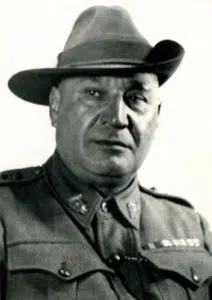
Harry Jeidels (Jay), a Jewish refugee from Berlin, photographed the “Skipper” in 1943. Courtesy of the Jewish Museum of Australia.
Choosing an ex-Pioneer officer to lead a labour battalion was clever; it proved to be brilliant. The ‘volunteers’ were all ex-internees, most ex-Dunera or ex-Queen Mary. In time, there were almost 700 of them, probably the biggest company in the army — in the Great War, by 1918, no AIF or NZEF battalion, let alone company, could field so many. Eighty per cent were Jewish, forming possibly the largest Jewish unit in the world at the time. All were in the army only to be free, but Tip soon had them on side.
On the company’s first evening, 8 April, he gave everyone leave. The army magazine Salt[20] “Salt,” Vol. 6, No. 4, April 26, 1943, pp. 36–39. Taken from a collection by Harry Jay (Jeidels), cited in Bartrop/Eisen, op. cit., pp. 365ff. reported, ‘Broughton knows each man, his past, his ability, his worth to the unit. He has graded his unit according to health, strength and age… the men appreciate this’. The grading[21] Cyril Pearl, The Dunera Scandal, (Sydney: Angus & Robertson, 1983), p.198; Klaus Loewald, 'The Eighth Employment Company', AJPH, 31(1), 1985, p.83. can’t have been easy. Most of the men were more or less fit, but middle-class, not used to hard work, let alone on docks or in railway yards. In July 1942, Melbourne’s Controller of Docks[22] NAA, MP508/1, 255/702/1915; EO Milne Report 31/7/42. 14 Dunera News 24, June 1992, pp.7, 6. reported:
8 Labour Coy (Internee Alien) in a large measure is composed of men quite unused to heavy manual labour. Craftsmen and professional men are in large proportion. Many are unfitted by age and condition for manual work… They have, however, throughout the three months… under Docks control, given willing and obedient service, superior to that given by any Australian unit… The sickness rate is higher than usual, attributable to the men being unaccustomed to open-air life and manual labour. They eagerly offer for technical work of any sort … they make up in diligence and pleasant obedience for their lack of physical strength… The report cannot be closed without reference to the good performance of Captain Broughton… He is by training and temperament very well suited to the handling of such a cosmopolitan unit.
Respect for his men
Among so many so strongly resentful of their ‘capture’ and treatment, Tip had made men willing, obedient, diligent, and pleasant. Only someone special could do that.
His NCOs were not much help, though they obeyed him willingly enough. ‘Half of them’, Tip recalled, ‘could not have lifted a paper-back and the other half would have dropped it. Others would have been useless cleaning latrines and showers and would have been walking disasters in the kitchen. But they could all give orders, which no-one obeyed anyway’. On parade he once greeted a suggestion[23] Dunera News 24, June 1992, p.7,6. with:
anyone with the perspicacity of a grasshopper can see that this would not be helpful… Sergeant Major, do you know what the word perspicacity means? ‘No Sir, can’t say I do’. Private Mayer, do you know what the word perspicacity means? ‘It means’, said Henry, looking smug, ‘the same as perspicuity or the power of perception’. The Captain turned back to the old S.M., his eyes in typical Broughton fashion scanning the heavens. ‘Did you hear that, Sar Major? And he is only a private and a foreigner to boot’.

Albury Station: The track from Victoria, featuring the Southern Hemisphere’s longest platform at 455 meters and a gauge of 1,435 mm, ended here. To the right behind the building, the 1,600-mm gauge tracks from New South Wales ended. It wasn’t until 1962 that the system was fully converted to 1,435 mm, and the stations in Albury and Tocumwal lost their significance. Photo: Dehn.
The captain leavened his command by appointing ex-internee NCOs, though one said that he appointed only musicians, to protect their hands, and another thought Dunera NCOs more officious than the Australians[24] Dunera News 24, June 1992, p.8; Felix Werder to Ken Inglis 8/1/10; National Library of Australia (NLA), KS Inglis Dunera / Queen Mary Papers, Werder file..
He was eccentric. He slept in the open with a brick for a pillow, perhaps a hint of his time during the Great Depression, and he wore his captain’s uniform only when strictly necessary. He wore it at the funeral[25] Alan Gill, Interrupted Journeys: Young Refugees from Hitler's Reich, (East Roseville: Simon & Schuster, 2004), p.226. 17 Gill, p.226. of one of his lieutenants, said a few words, and concluded, ‘He ate too much, he drank too much, he didn’t exercise and now the angels have him’.

Men of the 8th Employment Company form a guard of honor for their “Skipper.” The photo was taken in 1943.
Gift from Heinz Lippmann to the Australian National Maritime Museum, Sydney, No. ANMS022-006.
Ev’rybody thinks we’re a funny looking crowd,
Beeing in the Army makes us feeling mighty proud,
We adore the Skipper and salute the Rising Sun,
Until Victory is won,
For Peace and Victory,
FOR VICTORY!
From „8th Aust Employment Coy. March“
(Words & music: Sergeant Sigurd Lohde).
Broughton’s Company Routine Orders
His discipline was correct but not harsh. He drilled his men using shovels as rifles, and was ‘reasonably formal, we saluted and called him Sir… Outside the camp, anyone with an accent was immediately treated differently. He would have none of that and wouldn’t tolerate it in any of his sergeants[26] Gill, p.226. either’. His Company Routine Order (CRO) for 17 August 1942 read:
Members of this Coy are once again warned against the practice of parading in the streets with their jackets unbuttoned and their hats incorrectly creased. If this practice continues, it will cast a reflection on the whole of the 8th Labour Coy, apart from the disciplinary action that will be taken. Further all members, when attending dances, are hereby ordered not to remove their tunics and move about on the dance floor in a most unsatisfactory and unmilitary manner. This also casts great discredit on the Company in general.
For 3 September:
The A.P.M. (Assistant Provost Marshal[27] Dunera.de: The abbreviation APM stands for “assistant chief of the military police.”) has been instructed to maintain in future a standing patrol of NOT less than 1 NCO and 2 0/R[ank] to detect breaches of discipline and saluting in the streets of the Metropolitan Area… The C.O. will take the necessary steps to ensurethat personnel of this Coy will not be amongst those found guilty of not saluting or of not observing dress regulations.
And for 1 March 1943[28] AWM22/1/17, CROs 117, 134&313.:
a number of men are getting too much to drink at the canteen… Another source of trouble is the number of men on leave who come into the Camp particularly on weekends. This practice cannot be prevented, as although a check has been made at the gates, a number of men have climbed over the fence. Some trouble has been caused by these visitors who generally arrive here after a session at hotels, and once established in the canteen are difflcult to remove.
With pride and respect
Yet he was proud of his men and paraded their many talents. Revues first performed in Hay and Tatura were refined and went public under his command, with performances at the University, in one of which, Sergeant Snow White, in 1943, Tip played himself[29] Dunera.de: Ken Inglis, Seumas Spark, Jay Winter with Carol Bunyan „Dunera Lives. A Visual History“, Melbourne 2018, pages 343–344.. In August 1943, the company’s Summer Detachment went north to work at the break of railway gauge[30] Dunera.de: The railways in the states of New South Wales and Victoria operated on different track gauges. As a result, freight had to be transferred at the border stations mentioned above. at Tocumwal and Albury[31] Dunera.de: At the time, Albury was Australia's largest station with a track-changing., and in November Tip led it on parade through Tocumwal’s streets, and had a four-man band play, to raise funds for a Commonwealth war loan. He circulated a letter of thanks: ‘Allow me to express my sincere thanks to you, your officers, N.C.O.s and men for the splendid ‚show‘ you gave us in the Rally on the 6th November last … I have no hesitation in stating that it was largely due to your co-operation that Tocumwal had such a great response[32] AWM 22/1/17, CRO 488, 18/12/43.‘.

Private Erich Liffmann as Prince Charming with the seven dwarfs, in the style of the 8th Employment Company in “Sergeant Snow White,” photographed by Harry Jeidels (Jay). Courtesy of the Jewish Museum of Australia.
“He knew most of his men by name”
Truly extraordinary were Tip’s efforts to make his men feel at home. He was responsive far beyond the call of duty to the dietary and other ritual requirements of the more Orthodox among them, became familiar with Jewish religious and festive days, and began learning German so that occasionally he could address his men in it. This was appreciated, at least by the ex-internees: in April 1943 Private Hans Gottlieb gave him an English—German—French phrase book. On parade he had his German corrected: imagine a commanding officer speaking, and standing behind him an ex-internee NCO, a veteran of the Kaiser’s army and an enemy alien, quietly correcting his German[33] Dominion Post 29/9/06, p.85; ADB file; Broughton Papers.!

Led by their “skipper,” the 8th Employment Company marches on. The photo was likely taken in Albury or Tocumwal. Courtesy of Suzanne Connell.

This cartoon of Captain Broughton appeared on the cover of The 8th Gazette, No. 1, Vol. 1, in 1943. Courtesy of the Jewish Museum of Australia, Collection No. 3447.
He knew most of his men by name and what their needs and abilities were. He gave students leave at lecture times, bought a sculptor clay, gave a musician clerical work, and on the first night of Passover ensured that anyone who wanted Mazzoth had unleavened bread. He attended his flock’s weddings, sometimes as best man, permitted a jovially informal sketch of him on the cover of the company’s first 8th Gazette, and may well have been the man who contributed to it ‘tips’ from a ‘racing reporter[34] Dunera.de: Inglis et. al „Dunera Lives. A Visual History“, pages 336–337.‘. When in May 1943 Erich Liffmann[35] Dominion Post 29/9/06, p.85•, Gill p.226; AWM 22/1/17, CRO 357, 25/3/43; Ken Inglis, Seumas Spark and Jay Winter, with Carol Bunyan, Dunera Lives: A Visual History, (Melbourne: Monash University Publishing, 2018), p.349., an accomplished and popular singer, found civilian work and could therefore quit the army, Tip wrote to him in Maori, then translated: ‘My Sin[cere] Salutation! These be words of affection founded on thoughts emanating from the depths of my Soul that some day you will ascend to the peak of the mountain of Song and there dwell for ever. May the Creator bless you and guide you always’. Did any other officer in any army think like that?
Yet there were limits. When a soldier asked for weekend leave, his captain asked:
Is it to go out with your girlfriend? Yes.
Is she married? Yes.
In that case, no leave[36] Gill, pp.224-5..
That may hark back to his divorce.
Respect for religions
Brought up Anglican, of no religion during the Great War, and by this time Roman Catholic, he made sure that no-one took advantage of the Jewish faith. His church parades were on Saturdays, and at the first parade at Caulfield, on 11 April, he gave his men a choice: the synagogue or work. Most ‘volunteered’ for the synagogue. Of two Jewish special days, Rosh Hashanah[37] Dunera.de: Wikipedia on the Jewish New Year, accessed on March 30, 2026., he believed, was a fun day while Yom Kippur was a day of atonement. Tip warned[38] Loewald, p. 82., ‘Those of you who want special leave for Rosh Hashanah will not obtain passes for Yom Kippur’. For Christmas 1942[39] AWM 22/1/17, CRO 233, 11/12/42. he announced:
members of this Coy will be fully occupied at various labour tasks on the 25th of December, and the following day, Saturday, will, if possible, be set apart for the Rest Day. Jewish members of this unit are reminded that they have already participated in their own religious festivities (Rosh Hashanah and Yom Kippur) for this year.
His men adored him. Years later one wrote, ‘For us the wheel of fortune turned at last, when we marched into the Caulfield Racecourse on April 8th 1942’. In September 1943, the Summer Detachment had just settled in at Tocumwal when Tip was sent to Heidelberg Hospital. Several dozen telegrams followed from Australians and ex-internees under his command, wishing him a speedy recovery and a quick return, and within days a similar wad wished him happy birthday. By October he was back, and that Christmas Bruno Kluger[40] Broughton Papers; Dunera News 24, June 1992, p.4. sent a photo of himself in army uniform, ‘in remembrance of the happiest time of my life in having the pleasure to be under [your] command. With pride and admiration!’. Early in 1944, Bruno heard a rumour that Tip had applied for discharge, and wrote urging him not to.

Greeting card to Captain Broughton from Corporal Bruno Kluger, one of the first soldiers to be promoted to NCO. Courtesy of Suzanne Connell.
By 1944 perhaps a quarter of the company had found civilian work, and that June Camp Pell was moved from Royal Park to Broadmeadows. Tip’s appointment was terminated on 24 May, Empire Day, his men said because the army learnt his real age, but he wore publicly his South Africa Queen’s Medal, and his age was why he was transferred from the AIF in 1940. Perhaps he was sacked because he was approaching 60, or because of the shift to Broadmeadows, or because he drank heavily. On 15 June 1943 Julian Layton[41] Wiener Library, London, Layton diary, courtesy Jay Winter. wrote, ‘Afternoon called at camp Pell. Was most disappointed with Captain Broughton who appeared to be under the influence of drink’. After the war several men recalled him as often drunk, but well able to hold his drink. It may have been a legacy of the bookmaker’s life, or of the offlcers’ mess in two world wars. It made no difference at all to the reverence his men had for him.
Back to civilian life
Tip went back to Middle Park, then in May 1945 to Alice Springs as assistant personnel officer at Allied Works Council (AWC) headquarters. There, on 5 September, he wrote to sculptor Karl Duldig[42] Dunera News 103, July 2018, p9.:
My Dear Karl,
… I sincerely hope and trust that you and your exhibition will be very successful and by means thereof get the publicity and patronage your talents merit … Dress is most informal thank goodness off duty in the daytime I rarely wear s shirt. This month everything goes to plan I and the rest of the HQrs Staff on the AWC will be transferred to Darwin. I’ve been here 15 weeks & not unlike most wanderes would appreciate a change of abode …
Please convey my best wishes to Mrs. Duldig… Auf Wiedersehen.
In tiefer Verehrung [with deep respect]
Edward R. Broughton

Karl Duldig created the plaster bust of Captain Broughton in 1942. Photo: Duldig Studio.
By January 1946 he was with the AWC in Darwin, at the time being phased into the Commonwealth Department of Works. He may have returned to Melbourne before re-appearing in Darwin as manager of an officers‘ club, with a Dunera man as his assistant. In 1947 Gert Sonnewald knew him there. ‚I Can still see him in my mind‘, Gert wrote in 1992,
strutting around with only a pair of shorts on, absolving his not very onerous task of mainly talking zu the members of the club… Unless you knew him, you would not knwo that he was already high in brandy from the early afternoon…[Having been a bookmaker] stood him in good stead, as most of the talk in the club , or fort hat, in the town as well, was about horse racing and gambling in general. I do rememver him as a very big hearted, jocial and generous man, always ready to help you, but somehow strange and sometimes very moody.
In October 1947, Tip gave £2 at Roman Catholic school fete, giving his address as the Darwin Club, and in July 1948 the Darwin papaer remarked, ‚It would be easier to guess the number of drops in a bottle than to nominate correctly Ted Broughton’s age‘. He was in Darwin on 1950, and recorded as working as a storeman living in the Department of Works K9 Camp[43] Broughton Papers; Gert Sonnewald to Horst Barnett, ADB file; Dunera News 24, June 1992; Northern Standard 3/10/47, 2/7/48; Ted Egan to Bill Gammage 18/4/19. for single men at Parap on the April 1954 census roll.
Last years in Melbourne
On his return south he lived at various Middle Park addresses, and finally in a flat at 70 Patterson Street, not far from his niece Maureen Peel-Walker and her family, who owned a milk bar in Langridge Street and lived next to it. Tip went there for dinner every night, and to the races every Saturday — he may have helped Maureen’s husband Renata run an SP (starting price) shop in a lane behind the Middle Park Hotel. He kept in touch with his ‘boys’ across the world. ‘He wrote to us, followed our careers, came to our weddings and our children’s bar mitzvahs.’

Edward Renata Muhunga Broughton. Courtesy of Suzanne Connell.
He sent a card to Martin Reichwald[44] Gill, p.228; Card courtesy Ron Reichwald; Dunera News 24, June 1992, pp.6—7. with a printed goodwill message in English, Maori and German, and a typical handwritten flourish: ‘To ex V378381 Martin Reichwald — Ex Comrade in arms & friend. Wishing both him and Mrs Reichwald a bright and Merry Xmas and a very Happy 1954. Edward R Broughton. Beste Grusse [best wishes] 22/12/53’. When Walter Pollak was badly injured in 1954, Tip visited him every week, and sat with him discussing science, literature, music, religion, philosophy, and psychology — anything but his family.
Now never drunk, or not obviously, he worked hard to keep fit. He walked everywhere and swam almost daily. On 9 May 1955 he went for his early morning swim with the Brighton Icebergers in the sea baths. He went home, and was cooking bacon and eggs when he had a heart attack. Dr Paul Schatzki[45] Dunera.de: Dr. Paul Schatzki and other internees had assisted Army doctor Dr Brooks during the Dunera voyage., Hamburg medical graduate in 1934 and ex-Dunera, tried to revive him, but he died, officially of hypertensive coronary vascular disease. He was 70. Next day he was buried in Fawkner Cemetery, Grave U7213, Roman Catholic section, ‘at the very far end’. ‘A brief prayer in Latin’, the Australian Jewish News reported, ‘an equally brief prayer and pater noster in English, and without further comment by priest or press, almost unceremoniously an extraordinary man passed away’.
Maureen put a notice in a Melbourne paper, possibly a racing paper: ‘Broughton — On May 9 (Tip), well-known identity of Middle Park, St Kilda, and racing circles, a gentleman of jovial disposition, well respected amongst his friends’. His brothers and sisters knew of his death, but for decades his grave was unmarked, and only decades later did a young nephew enter his name in the family bible. He left in trust for his grand-niece Suzanne PeelWalker substantial income from Maori lands payments, but died intestate — his ultimate beneficiary was his son Wiremu, freezing works employee, of Whakatu, Hawkes Bay. He left an estate[46] Broughton Papers; Connell to Gammage 21/9/18, Broughton file; Dominion Post 29/9/06, 85; ADB vol.13, pp.270-1; NZDB records, ADB file; Ormsby interview, ADB file; Australian Jewish News 13/5/55. 31 Australian Jewish News 13/5/55. of some value, E1643 16s 3d, almost all in Melbourne. A bronze bust of him, ‘in memory of an understanding and compassionate man’, is in Melbourne’s Jewish Museum; another is in the Australian War Memorial.

“Tip” Broughton. The photograph was taken around 1950. Source: Ancestry.
‘Grown men shed tears’, and Erwin Frenkel[47] Australian Jewish News 13/5/55., ex-Arandora Star and Dunera, paid homage:
‘The 8th Australian Employment Company was no ordinary unit and it took an extraordinary man to handle it. Captain Broughton certainly was that man. Keenly intelligent, well read, endowed with a superb sense of humour, completely untainted by any racial prejudice, deeply interested in human beings, he did not only gain immediate respect and obedience, but also the love and affection of the unit.
He enjoyed hugely being at the head of this unit, learned and meticulously respected Jewish custom, and was immensely proud of the unit because of the splendid work it did, humbly unaware of the fact that it was only he who could have turned these people into willing manual labourers.
He knew every member of the unit by name, and their personal histories. For years after he had been retired from the Army, he kept in touch with the boys like a benevolent father, triumphed with the successful and suffered with the failures.
He engaged in an incessant publicity war on our behalf and fought hard to have our status changed, only to be booted out by the Army eventually… After being shoved around as flotsam and jetsam for many years he managed by his attitude to make us feel like human beings again. He restored our faith in man. .. He was a scholar and a gentleman.
In about 1994, men of his old company found his grave, with some effort, and put a bronze plaque on it, ‘in cherished memory’. In April 2005 Keith Hooper, a New Zealand—born journalist, visited the lonely site. ‘I felt angry that a veteran of three wars was ignored by both nations for which he had fought. I tried to persuade the New Zealand Government to give Broughton a decent grave.’ Unsuccessful, he tried the Australian Government. Unsuccessful again, he contacted the president of the Victorian Returned and Services League (RSL), David McLachlan, who visited the grave and declared, ‘This man deserves a decent grave’. McLachlan saw that he got it, having the Victorian RSL pay to refurbish it, and on 18 September 2006 unveiling ‘letters of gold’ on a black marble headstone[48] Herald Sun 19/9/06; Wartime 37, 2007, p.18. „Dunera Lives. A Visual History“ p.492..

On September 19, 2006, the Herald Sun reported on the replacement of the tarnished bronze plaque on his grave and the belated tribute to Captain Broughton. Reproduction: Connell Collection.
Some of his old comrades were there. Reinhold Eckfeld told the press, ‘He was a first-class man. A leader of men, and so kind to us, too’, and Erwin Lamm said, ‘I am here to give him honour, here in a Catholic part of a cemetery, although I am an Orthodox Jew’. Tip might have smiled at that. Caste and creed meant nothing to him. Through all his years in Australia, this remarkable man, whose powerful mind, uncompromising independence and generous heart gave so much to so many, was obliged to see himself differently. ‘It doesn’t matter how many years I’ve been in this country and what I did for it’, he told Walter Pollak, fin the end I am, and will always remain, a bloody Maori[49] Herald Sun 19/9/06; Gill, p.227.‘. Haere ra, rangatira![50] Dunera.de: Maori language: “Let’s go, Chief!”
Please note: dunera.de would like to thank historian Prof. Emeritus Bill Gammage and Sallie Butler of Monash University Press, Melbourne, for granting permission to reproduce Bill’s article from “Dunera Lives – Profiles.” We also extend our gratitude to Edward Broughton’s grandniece, Suzanne Connell, for providing photographs from her archive.
The footnotes from the original have been reproduced unchanged. The editors of dunera.de hope that additional footnotes, marked “dunera.de,” will aid in better understanding — especially for readers outside Australia. Designations of units and departments have been taken from the English original; passages in the original text written in German are marked in italics as they appear there. Translation and subheadings by Peter Dehn, dunera.de editorial team.

Professor Emeritus William Leonard Gammage (b. 1942) taught at the Humanities Research Centre at the Australian National University in Canberra. His research focused, among other things, on the Battle of Gallipoli, and he served as a consultant on Peter Weir’s film of the same name.
Footnotes
show
- [1]↑dunera.de: This officer rank, which is common in Australia and elsewhere, is equivalent to that of a Hauptmann in the German Armed Forces.
- [2]↑Thomas W Gudgeon, The Defenders of New Zealand, (Auckland: H Brett, 1887), pp.327—9, 332—3, Tip's notes on p.326; Broughton Papers courtesy Suzanne Connell, Port Macdonnell, SA.
- [3]↑Dunera.de: The war between the British and the Māori ended on February 6, 1840, with the Treaty of Waitangi: 45 chiefs pledged allegiance to the British Crown; New Zealand became a colony. In return, they were guaranteed ownership of their land, fishing grounds, etc. The treaty is the island nation’s first constitutional document. Wikipedia on the treaty. Retrieved on May 3, 2026.
- [4]↑Australian National University (ANU), Noel Butlin Archives (hereafter ADB file), NZDB records, Broughton ADB file; Ian Campbell to Bill Gammage 3/7/18; National Library ofAustralia (NLA), KS Inglis Dunera/Queen Mary papers, Broughton file (hereafter Broughton file); ADB vol.13, pp.270—I; Wairarapa Daily Times 11/3/08; Richard P Boast, 'Ihe Omahu Affair, the Law of Succession and the Native Land Court', VUWLau, Reports, 46, 2015, pp.841-74; Broughton Papers.
- [5]↑NZDB records, ADB file; Hereworth School Archives courtesy Victoria Hamilton; Wanganui Collegiate School (WCS) Archives courtesy Frances Gibbons; ADB vol.13, pp.270—1; Len Ormsby interview, c1994, ADB file; Suzanne Connell to Bill Gammage 21/9/18; Broughton file.
- [6]↑Dunera.de: Also known as the Second Boer War; see Wikipedia, accessed on March 30, 2026.
- [7]↑Collegian 60, December 1902, WCS Archives.
- [8]↑ADB vol.13, pp.270—I; ADB file; Evening Post 8/10/09, 19/11/14; Dunera News 24, June 1992, p.4.
- [9]↑Dunera.de: ANZAC steht für das Australian and New Zealand Army Corps, eine im 1. Weltkrieg gebildete gemeinsame Armeeeinheit, die u.a. in Gallipoli im Einsatz war. Der Jahrestag der dort am 25. April 1915 begonnenen Schlacht ist Nationalfeiertag in Australien und Neuseeland (Anzac Day). Die Verwendung in diesem Text bezieht sich auch auf die „Anzac Cove“, wo diese Truppen an Land gesetzt wurden. Wikipedia über ANZAC und Anzac Day, abgerufen am 30.3.2026.
- [10]↑Christopher Pugsley, Te Hokowhitu a tu: The Maori Pioneer Battalion in the First World War, (Auckland: Reed, 1995), pp.36, 40, 43—4, 85, 89; ADB file; National Library NZ, Broughton service record 1914—18; NZDB records.
- [11]↑Pugsley pp.45—6.
- [12]↑Dunera.de: A town in West Flanders (Belgium).
- [13]↑Pugsley pp.61, 67, 107, 133.
- [14]↑Pugsley pp.72, 77, 81.
- [15]↑Dunera News 24, June 1992, pp.5, 8; Alan Gill, ADB file.
- [16]↑Dunera.de: The abbreviation originally stood for the First Australian Imperial Force of World War I. The 2nd AIF, a volunteer combat force formed in 1939, was intended to carry on its traditions. From 1916 to 1980, the Australian armed forces as a whole were known as the Australian Military Forces (AMF). Links on Wikipedia, accessed on March 30, 2026.
- [17]↑Dunera.de: The 33 Garrison Battalions were formed from the Army Reserve and were primarily deployed for security duties within the country. The 3rd Garrison Battalion was assigned to coastal defense in the state of Victoria. The soldiers in units that guarded internment and prisoner-of-war camps (such as the 17th Garrison Battalion in the Tatura area) were not reservists. Australian War Memorial, accessed on March 30, 2026.
- [18]↑dunera.de: Offizieller Gründungstag der Einheit war der 7. April 1942, damals noch als "Labour Company". Die Umbenennung in "Employment Company" erfolgte am 8. Oktober 1942. (vgl. Australian War Memorial, Kriegstagebuch der Einheit, AWM52 22-1-17-1, Blatt 2 und AWM52 22-1-17-2, Blatt 105).
- [19]↑Broughton Papers; National Archives of Australia (NAA), B884, V6151; ADB vol.13, pp.270-1; ADB file.
- [20]↑“Salt,” Vol. 6, No. 4, April 26, 1943, pp. 36–39. Taken from a collection by Harry Jay (Jeidels), cited in Bartrop/Eisen, op. cit., pp. 365ff.
- [21]↑Cyril Pearl, The Dunera Scandal, (Sydney: Angus & Robertson, 1983), p.198; Klaus Loewald, 'The Eighth Employment Company', AJPH, 31(1), 1985, p.83.
- [22]↑NAA, MP508/1, 255/702/1915; EO Milne Report 31/7/42. 14 Dunera News 24, June 1992, pp.7, 6.
- [23]↑Dunera News 24, June 1992, p.7,6.
- [24]↑Dunera News 24, June 1992, p.8; Felix Werder to Ken Inglis 8/1/10; National Library of Australia (NLA), KS Inglis Dunera / Queen Mary Papers, Werder file.
- [25]↑Alan Gill, Interrupted Journeys: Young Refugees from Hitler's Reich, (East Roseville: Simon & Schuster, 2004), p.226. 17 Gill, p.226.
- [26]↑Gill, p.226.
- [27]↑Dunera.de: The abbreviation APM stands for “assistant chief of the military police.”
- [28]↑AWM22/1/17, CROs 117, 134&313.
- [29]↑Dunera.de: Ken Inglis, Seumas Spark, Jay Winter with Carol Bunyan „Dunera Lives. A Visual History“, Melbourne 2018, pages 343–344.
- [30]↑Dunera.de: The railways in the states of New South Wales and Victoria operated on different track gauges. As a result, freight had to be transferred at the border stations mentioned above.
- [31]↑Dunera.de: At the time, Albury was Australia's largest station with a track-changing.
- [32]↑AWM 22/1/17, CRO 488, 18/12/43.
- [33]↑Dominion Post 29/9/06, p.85; ADB file; Broughton Papers.
- [34]↑Dunera.de: Inglis et. al „Dunera Lives. A Visual History“, pages 336–337.
- [35]↑Dominion Post 29/9/06, p.85•, Gill p.226; AWM 22/1/17, CRO 357, 25/3/43; Ken Inglis, Seumas Spark and Jay Winter, with Carol Bunyan, Dunera Lives: A Visual History, (Melbourne: Monash University Publishing, 2018), p.349.
- [36]↑Gill, pp.224-5.
- [37]↑Dunera.de: Wikipedia on the Jewish New Year, accessed on March 30, 2026.
- [38]↑Loewald, p. 82.
- [39]↑AWM 22/1/17, CRO 233, 11/12/42.
- [40]↑Broughton Papers; Dunera News 24, June 1992, p.4.
- [41]↑Wiener Library, London, Layton diary, courtesy Jay Winter.
- [42]↑Dunera News 103, July 2018, p9.
- [43]↑Broughton Papers; Gert Sonnewald to Horst Barnett, ADB file; Dunera News 24, June 1992; Northern Standard 3/10/47, 2/7/48; Ted Egan to Bill Gammage 18/4/19.
- [44]↑Gill, p.228; Card courtesy Ron Reichwald; Dunera News 24, June 1992, pp.6—7.
- [45]↑Dunera.de: Dr. Paul Schatzki and other internees had assisted Army doctor Dr Brooks during the Dunera voyage.
- [46]↑Broughton Papers; Connell to Gammage 21/9/18, Broughton file; Dominion Post 29/9/06, 85; ADB vol.13, pp.270-1; NZDB records, ADB file; Ormsby interview, ADB file; Australian Jewish News 13/5/55. 31 Australian Jewish News 13/5/55.
- [47]↑Australian Jewish News 13/5/55.
- [48]↑Herald Sun 19/9/06; Wartime 37, 2007, p.18. „Dunera Lives. A Visual History“ p.492.
- [49]↑Herald Sun 19/9/06; Gill, p.227.
- [50]↑Dunera.de: Maori language: “Let’s go, Chief!”
